[ View menu ]

Archive

new book – ‘The Tribal Imagination: Civilization and the Savage Mind’

March 23, 2011

The Tribal Imagination

The Tribal Imagination: Civilization and the Savage Mind by Robin Fox (Harvard University Press, 2011)

(amazon.co.uk)

Product description from the publisher:

We began as savages, and savagery has served us well—it got us where we are. But how do our tribal impulses, still in place and in play, fit in the highly complex, civilized world we inhabit today? This question, raised by thinkers from Freud to Levi-Strauss, is fully explored in this book by the acclaimed anthropologist Robin Fox. It takes up what he sees as the main—and urgent—task of evolutionary science: not so much to explain what we do, as to explain what we do at our peril.

Ranging from incest and arranged marriage to poetry and myth to human rights and pop icons, Fox sets out to show how a variety of human behaviors reveal traces of their tribal roots, and how this evolutionary past limits our capacity for action. Among the questions he raises: How real is our notion of time? Is there a human “right” to vengeance? Are we democratic by nature? Are cultural studies and fascism cousins under the skin? Is evolutionary history coming to an end—or just getting more interesting? In his famously informative and entertaining fashion, drawing links from Volkswagens to Bartok to Woody Guthrie, from Swinburne to Seinfeld, Fox traces our ongoing struggle to maintain open societies in the face of profoundly tribal human needs—needs which, paradoxically, hold the key to our survival.

See also: Author’s website, interview on WNYC

Comments (0) - culture,mind,new books

Consciousness books – 2011

March 18, 2011

This is a list of books on consciousness published or forthcoming in 2011, based on a search at WorldCat, with links to Amazon [& publication month in square brackets]:

Altering Consciousness: Multidisciplinary Perspectives, 2 vols. ed. by Etzel Cardeña; Michael Winkelman (Santa Barbara, Calif.: Praeger, 2011-) [May] (amazon.co.uk – May)

Chimeras and Consciousness: Evolution of the Sensory Self ed. by Lynn Margulis; Celeste A Asikainen; Wolfgang E Krumbein (Cambridge, Mass.: MIT Press, 2011) [Apr] (amazon.co.uk – Mar)

Consciousness: An Introduction, 2nd ed. by Susan J Blackmore (New York: Oxford University Press, 2011) [Feb] (amazon.co.uk – Apr)

Consciousness and the Prospects of Physicalism (Philosophy of Mind) by Derk Pereboom (New York: Oxford University Press, 2011) [Mar] (amazon.co.uk – May)

Embodiment, Emotion, and Cognition by Michelle Maiese (Basingstoke, Hampshire; New York, NY: Palgrave Macmillan, 2011) [Feb] (amazon.co.uk – Dec 2010)

The Emergence of Mind: Representations of Consciousness in Narrative Discourse in English (Frontiers of Narrative) ed. by David Herman (Lincoln: University of Nebraska Press, 2011) [listed as May, but already available in March 2011] (amazon.co.uk – May)

Experimental Phenomena of Consciousness: A Brief Dictionary, Revised Edition by Talis Bachmann; Bruno G Breitmeyer; Haluk Ögmen (New York: Oxford University Press, 2011) [Apr]

Investigating Pristine Inner Experience: Moments of Truth by Russell T Hurlburt (Cambridge ; New York: Cambridge University Press, 2011) [Jul] (amazon.co.uk -Jul)

Living Consciousness: The Metaphysical Vision of Henri Bergson by G William Barnard (Albany: State University of New York Press, 2011) [Dec] (no Amazon link yet – publisher info)

The Living Mind: From Psyche to Consciousness by Richard Dien Winfield (Lanham, Md.: Rowman & Littlefield Publishers, 2011) [Jul] “explores the biological foundations of psychology from a broadly Hegelian perspective”

The Mind: Leading Scientists Explore the Brain, Memory, Consciousness, and Personality by John Brockman (New York: Harper Perennial, 2011) [Aug] (amazon.co.uk – Aug)

Perplexities of Consciousness (Life and Mind: Philosophical Issues in Biology and Psychology) by Eric Schwitzgebel (Cambridge, Mass.: MIT Press, 2011) [Feb] (amazon.co.uk – Feb)

Phenomenal Consciousness: Understanding the Relation Between Experience and Neural Processes in the Brain by Dimitris Platchias (Montreal; Ithaca, NY: McGill-Queen’s University Press, 2011) [Mar] (amazon.co.uk – Oct 2010)

Philosophy, Neuroscience, and Consciousness by Rex Welshon (Montreal: McGill-Queen’s University Press, 2011) [Feb] (amazon.co.uk – Nov 2010)

Predictions in the Brain: Using Our Past to Generate a Future ed. by Moshe Bar (New York: Oxford University Press, 2011) [May] (amazon.co.uk – May)

Soul Dust: The Magic of Consciousness by Nicholas Humphrey (Princeton, N.J.: Princeton University Press, 2011) [Feb] (kindle ed.), (amazon.co.uk – Jan)

Wednesday’s Child: From Heidegger to Affective Neuroscience, a Field Theory of Angst by Gregory Schulz (Eugene, Or.: Wipf & Stock, 2011) [Jan] (amazon.co.uk – Jan)

Who Was Mrs Willett?: Landscapes and Dynamics of Mind by Chris Nunn (Exeter: Imprint Academic, 2011) [Jan] (amazon.co.uk – Jan)

Why Red Doesn’t Sound Like a Bell: Understanding the feel of consciousness by J K O’Regan (New York: Oxford University Press, 2011) [Jun] (amazon.co.uk – Jun)

Willful Blindness: Why We Ignore the Obvious at Our Peril by Margaret Heffernan (New York: Walker, 2011) [Mar] (kindle ed.), (amazon.co.uk – Feb)

*****
These MIT Press titles listed on WorldCat could not be found at Amazon or on the publisher’s website, but may turn up later:

Meditating selflessly: practical neural Zen by James H Austin (Cambridge, Mass.: MIT Press, 2011)

Re-emergence: locating conscious properties in a material world by Gerald Vision (Cambridge, Mass.: MIT Press, 2011)

The wonder of consciousness: understanding the mind through philosophical reflection by Harold L Langsam (Cambridge, Mass.: MIT Press, 2011)

See also: Consciousness books 2007-2010

Comments (1) - consciousness

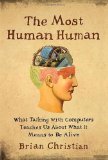
new book – ‘The Most Human Human: What Talking with Computers Teaches Us About What It Means to Be Alive’

March 14, 2011

The Most Human Human

A notable recent title with “starred reviews” from both Publisher’s Weekly and Booklist:

The Most Human Human: What Talking with Computers Teaches Us About What It Means to Be Alive by Brian Christian (Doubleday, 2011)

(kindle edition), (amazon.co.uk)

Product description from the publisher:

The Most Human Human is a provocative, exuberant, and profound exploration of the ways in which computers are reshaping our ideas of what it means to be human. Its starting point is the annual Turing Test, which pits artificial intelligence programs against people to determine if computers can “think.”

Named for computer pioneer Alan Turing, the Tur­ing Test convenes a panel of judges who pose questions—ranging anywhere from celebrity gossip to moral conundrums—to hidden contestants in an attempt to discern which is human and which is a computer. The machine that most often fools the panel wins the Most Human Computer Award. But there is also a prize, bizarre and intriguing, for the Most Human Human.

In 2008, the top AI program came short of passing the Turing Test by just one astonishing vote. In 2009, Brian Christian was chosen to participate, and he set out to make sure Homo sapiens would prevail.

The author’s quest to be deemed more human than a com­puter opens a window onto our own nature. Interweaving modern phenomena like customer service “chatbots” and men using programmed dialogue to pick up women in bars with insights from fields as diverse as chess, psychiatry, and the law, Brian Christian examines the philosophical, bio­logical, and moral issues raised by the Turing Test.

One central definition of human has been “a being that could reason.” If computers can reason, what does that mean for the special place we reserve for humanity?

See also: “Mind vs Machine,” The Atlantic, March 2011 (adapted from the book),
Author on The Daily Show

Related title: Final Jeopardy: Man vs. Machine and the Quest to Know Everything

Comments (0) - cognitive science,mind,new books

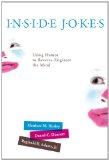
new book – ‘Inside Jokes: Using Humor to Reverse-Engineer the Mind’

March 11, 2011

Inside Jokes

Inside Jokes: Using Humor to Reverse-Engineer the Mind by Matthew M. Hurley, Daniel C. Dennett and Reginald B. Adams, Jr. (MIT Press, 2011)

(amazon.co.uk)

Product description from the publisher:

Some things are funny—jokes, puns, sitcoms, Charlie Chaplin, The Far Side, Malvolio with his yellow garters crossed—but why? Why does humor exist in the first place? Why do we spend so much of our time passing on amusing anecdotes, making wisecracks, watching The Simpsons? In Inside Jokes, Matthew Hurley, Daniel Dennett, and Reginald Adams offer an evolutionary and cognitive perspective. Humor, they propose, evolved out of a computational problem that arose when our long-ago ancestors were furnished with open-ended thinking. Mother Nature—aka natural selection—cannot just order the brain to find and fix all our time-pressured misleaps and near-misses. She has to bribe the brain with pleasure. So we find them funny. This wired-in source of pleasure has been tickled relentlessly by humorists over the centuries, and we have become addicted to the endogenous mind candy that is humor.

Hurley, Dennett, and Adams describe the evolutionary reasons for humor and for laughter. They examine why humor is pleasurable and desirable, often sharable, surprising, playful, nonsensical, and insightful. They give an “inside,” mechanistic account of the cognitive and emotional apparatus that provides the humor experience, and they use it to explain the wide variety of things that are found to be humorous. They also provide a preliminary sketch of an emotional and computational model of humor, arguing that (Star Trek‘s Data to the contrary) any truly intelligent computational agent could not be engineered without humor.

Comments (0) - cognitive science,new books

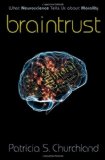
new book by Patricia Churchland – ‘Braintrust: What Neuroscience Tells Us About Morality’

March 9, 2011

Braintrust

Braintrust: What Neuroscience Tells Us about Morality by Patricia S. Churchland (Princeton University Press, 2011)

(amazon.co.uk)

Product description from the publisher:

What is morality? Where does it come from? And why do most of us heed its call most of the time? In Braintrust, neurophilosophy pioneer Patricia Churchland argues that morality originates in the biology of the brain. She describes the “neurobiological platform of bonding” that, modified by evolutionary pressures and cultural values, has led to human styles of moral behavior. The result is a provocative genealogy of morals that asks us to reevaluate the priority given to religion, absolute rules, and pure reason in accounting for the basis of morality.

Moral values, Churchland argues, are rooted in a behavior common to all mammals–the caring for offspring. The evolved structure, processes, and chemistry of the brain incline humans to strive not only for self-preservation but for the well-being of allied selves–first offspring, then mates, kin, and so on, in wider and wider “caring” circles. Separation and exclusion cause pain, and the company of loved ones causes pleasure; responding to feelings of social pain and pleasure, brains adjust their circuitry to local customs. In this way, caring is apportioned, conscience molded, and moral intuitions instilled. A key part of the story is oxytocin, an ancient body-and-brain molecule that, by decreasing the stress response, allows humans to develop the trust in one another necessary for the development of close-knit ties, social institutions, and morality.

A major new account of what really makes us moral, Braintrust challenges us to reconsider the origins of some of our most cherished values.

See also: Braintrust on Facebook

Comments (0) - cognitive science,culture,new books,philosophy of mind