[ View menu ]

Archive

new release on kindle – ‘Use Philosophy to Be Happier – 30 Steps to Perfect the Art of Living’ by Mark Vernon

April 27, 2013

(Paperback ed. due in August.)

(amazon.co.uk)

Book description from the publisher:

Happiness. We all want it – but how can we get it? Author Mark Vernon has solved the problem by collecting the wisdom of the greatest minds in history and making their thinking on the important things in life accessible and, above all, practical. Full of everyday examples to make sometimes high-blown philosophy entertaining and relevant, this book shows you how you can crack the secret to living The Good Life.

Comments (0) - happiness,new books

Kindle ebook sale – “100 Religion & Spirituality Books” for $3.99 or Less” through May 5

April 26, 2013

Now through May 5 – Amazon’s Kindle store is offering 100 Religion & Spirituality Books for $3.99 or less. (Amazon: “Individual titles may have additional territory restrictions, and not all deals are available in all territories. Amazon may modify the selection of books offered at any time.”)

Along with a wide variety of books on Buddhism, Christianity, Krishnamurti, the selection includes:

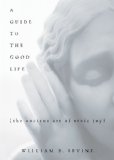
Guide to the Good Life

A Guide to the Good Life: The Ancient Art of Stoic Joy by William Irvine for $1.99.

Book description from the publisher:


One of the great fears many of us face is that despite all our effort and striving, we will discover at the end that we have wasted our life. In A Guide to the Good Life, William B. Irvine plumbs the wisdom of Stoic philosophy, one of the most popular and successful schools of thought in ancient Rome, and shows how its insight and advice are still remarkably applicable to modern lives.
In A Guide to the Good Life, Irvine offers a refreshing presentation of Stoicism, showing how this ancient philosophy can still direct us toward a better life. Using the psychological insights and the practical techniques of the Stoics, Irvine offers a roadmap for anyone seeking to avoid the feelings of chronic dissatisfaction that plague so many of us. Irvine looks at various Stoic techniques for attaining tranquility and shows how to put these techniques to work in our own life. As he does so, he describes his own experiences practicing Stoicism and offers valuable first-hand advice for anyone wishing to live better by following in the footsteps of these ancient philosophers. Readers learn how to minimize worry, how to let go of the past and focus our efforts on the things we can control, and how to deal with insults, grief, old age, and the distracting temptations of fame and fortune. We learn from Marcus Aurelius the importance of prizing only things of true value, and from Epictetus we learn how to be more content with what we have.
Finally, A Guide to the Good Life shows readers how to become thoughtful observers of their own lives. If we watch ourselves as we go about our daily business and later reflect on what we saw, we can better identify the sources of distress and eventually avoid that pain in our life. By doing this, the Stoics thought, we can hope to attain a truly joyful life.

Comments (0) - Uncategorized

Over 60 “top-rated nonfiction” titles in today’s Kindle Daily Deal (4/25)!

April 25, 2013

Today’s Kindle Daily Deal includes a great selection of nonfiction, 61 books!

 
(Amazon: “Individual titles may have additional territory restrictions, and not all deals are available in all territories. Amazon may modify the selection of books offered at any time.”)

Selections include:

The Secret Life of Pronouns

The Secret Life of Pronouns by James W. Pennebaker for $2.99

Art Instinct

The Art Instinct by Denis Dotton for $2.99


Survival of the Beautiful

Survival of the Beautiful by David Rothenberg for $2.99


Moral Lives of Animals

The Moral Lives of Animals by Dale Peterson for $2.99


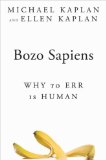
Bozo Sapiens

Bozo Sapiens: Why To Err is Human by Michael & Ellen Kaplan for $2.99


(Note: I receive a small referral fee for purchases made through these links, at no extra charge to you as the buyer.)

Comments (0) - Uncategorized

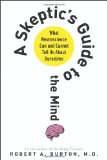
new book – ‘A Skeptic’s Guide to the Mind: What Neuroscience Can and Cannot Tell Us About Ourselves’ by Robert Burton

April 23, 2013

Skeptic's Guide to the Mind

A Skeptic’s Guide to the Mind: What Neuroscience Can and Cannot Tell Us About Ourselves by Robert Burton (St Martin’s Press, 2013)

(kindle ed.), (amazon.co.uk)

Book description from the publisher:

What if our soundest, most reasonable judgments are beyond our control?

Despite 2500 years of contemplation by the world’s greatest minds and the more recent phenomenal advances in basic neuroscience, neither neuroscientists nor philosophers have a decent understanding of what the mind is or how it works. The gap between what the brain does and the mind experiences remains uncharted territory. Nevertheless, with powerful new tools such as the fMRI scan, neuroscience has become the de facto mode of explanation of behavior. Neuroscientists tell us why we prefer Coke to Pepsi, and the media trumpets headlines such as “Possible site of free will found in brain.” Or: “Bad behavior down to genes, not poor parenting.”

Robert Burton believes that while some neuroscience observations are real advances, others are overreaching, unwarranted, wrong-headed, self-serving, or just plain ridiculous, and often with the potential for catastrophic personal and social consequences. In A Skeptic’s Guide to the Mind, he brings together clinical observations, practical thought experiments, personal anecdotes, and cutting-edge neuroscience to decipher what neuroscience can tell us – and where it falls woefully short. At the same time, he offers a new vision of how to think about what the mind might be and how it works.

A Skeptic’s Guide to the Mind is a critical, startling, and expansive journey into the mysteries of the brain and what makes us human.

See also: Author’s website

Comments (0) - cognitive science,mind,new books

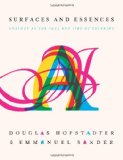
new book – ‘Surfaces and Essences: Analogy as the Fuel and Fire of Thinking’ by Douglas Hofstadter and Emmanuel Sander

Surfaces and Essences

Surfaces and Essences: Analogy as the Fuel and Fire of Thinking by Douglas Hofstadter and Emmanuel Sander (Basic Books, 2013)

(kindle ed.), (amazon.co.uk)

Book description from the publisher:

Analogy is the core of all thinking. This is the simple but unorthodox premise that Pulitzer Prize–winning author Douglas Hofstadter and French psychologist Emmanuel Sander defend in their new work. Hofstadter has been grappling with the mysteries of human thought for over thirty years. Now, with his trademark wit and special talent for making complex ideas vivid, he has partnered with Sander to put forth a highly novel perspective on cognition.

We are constantly faced with a swirling and intermingling multitude of ill-defined situations. Our brain’s job is to try to make sense of this unpredictable, swarming chaos of stimuli. How does it do so? The ceaseless hail of input triggers analogies galore, helping us to pinpoint the essence of what is going on. Often this means the spontaneous evocation of words, sometimes idioms, sometimes the triggering of nameless, long-buried memories.

Why did two-year-old Camille proudly exclaim, “I undressed the banana!”? Why do people who hear a story often blurt out, “Exactly the same thing happened to me!” when it was a completely different event? How do we recognize an aggressive driver from a split-second glance in our rearview mirror? What in a friend’s remark triggers the offhand reply, “That’s just sour grapes”? What did Albert Einstein see that made him suspect that light consists of particles when a century of research had driven the final nail in the coffin of that long-dead idea?

The answer to all these questions, of course, is analogy-making—the meat and potatoes, the heart and soul, the fuel and fire, the gist and the crux, the lifeblood and the wellsprings of thought. Analogy-making, far from happening at rare intervals, occurs at all moments, defining thinking from top to toe, from the tiniest and most fleeting thoughts to the most creative scientific insights.

Like Gödel, Escher, Bach before it, Surfaces and Essences will profoundly enrich our understanding of our own minds. By plunging the reader into an extraordinary variety of colorful situations involving language, thought, and memory, by revealing bit by bit the constantly churning cognitive mechanisms normally completely hidden from view, and by discovering in them one central, invariant core—the incessant, unconscious quest for strong analogical links to past experiences—this book puts forth a radical and deeply surprising new vision of the act of thinking.

Google Books preview:

See also: Book website
Comments (0) - cognitive science,language,new books