[ View menu ]

Archive for 'psychology'

new book – ‘The Brain and the Meaning of Life’

February 16, 2010
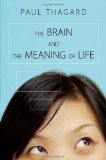
Brain and the Meaning of Life

The Brain and the Meaning of Life by Paul Thagard (Princeton University Press, 2010).

(link for UK)

Product description from the publisher:

Why is life worth living? What makes actions right or wrong? What is reality and how do we know it? The Brain and the Meaning of Life draws on research in philosophy, psychology, and neuroscience to answer some of the most pressing questions about life’s nature and value. Paul Thagard argues that evidence requires the abandonment of many traditional ideas about the soul, free will, and immortality, and shows how brain science matters for fundamental issues about reality, morality, and the meaning of life. The ongoing Brain Revolution reveals how love, work, and play provide good reasons for living.

Defending the superiority of evidence-based reasoning over religious faith and philosophical thought experiments, Thagard argues that minds are brains and that reality is what science can discover. Brains come to know reality through a combination of perception and reasoning. Just as important, our brains evaluate aspects of reality through emotions that can produce both good and bad decisions. Our cognitive and emotional abilities allow us to understand reality, decide effectively, act morally, and pursue the vital needs of love, work, and play. Wisdom consists of knowing what matters, why it matters, and how to achieve it.

The Brain and the Meaning of Life shows how brain science helps to answer questions about the nature of mind and reality, while alleviating anxiety about the difficulty of life in a vast universe. The book integrates decades of multidisciplinary research, but its clear explanations and humor make it accessible to the general reader.

See also: Website for the book, including a sample chapter and links to cited websites.

Comments (1) - cognitive science,new books,philosophy of mind,psychology
excerpts from ‘How People Change’ by Allen Wheelis

January 24, 2010

How People Change

In every situation, for every person, there is a realm of freedom and a realm of constraint. One may live in either realm. One must recognize the irresistible forces, the iron fist, the stone wall—must know them for what they are in order not to fall into the sea like Icarus—but, knowing them, one may turn away and live in the realm of one’s freedom. A farmer must know the fence which bounds his land but need not spend his life standing there, looking out, beating his fists on the rails; better he till his soil, think of what to grow, where to plant the fruit trees. However small the area of freedom, attention and devotion may expand it to occupy the whole of life.

p. 31

Being the product of conditioning and being free to change do not war with each other. Both are true. They coexist, grow together in an upward spiral, and the growth of one furthers the growth of the other. The more cogently we prove ourselves to have been shaped by causes, the more opportunities we create for changing. The more we change, the more possible it becomes to see how determined we were in that which we have just ceased to be.

What makes a battleground of these two points of view is to conceive of either as an absolute which excludes the other.


The realm of experience is not, therefore, to be divided like Ireland into the free and the ruled. The distinction is hierarchic. Any realm can, in principle, be demonstrated as determined, and in this process there will be created another realm, hierarchically removed, which is free and which then may free the first realm which has just been proven to be determined.

p. 87-89
from How People Change by Allen Wheelis (Harper, 1975)

Comments (1) - psychology

new book – ‘Crazy Like Us: The Globalization of the American Psyche’

January 23, 2010

Crazy Like US

A new book that seems to be generating lots of discussion is Crazy Like Us: The Globalization of the American Psyche by Ethan Watters (Free Press, 2010)
(link for UK)

Product description from the publisher:

It is well known that American culture is a dominant force at home and abroad; our exportation of everything from movies to junk food is a well-documented phenomenon. But is it possible America’s most troubling impact on the globalizing world has yet to be accounted for? In Crazy Like Us, Ethan Watters reveals that the most devastating consequence of the spread of American culture has not been our golden arches or our bomb craters but our bulldozing of the human psyche itself: We are in the process of homogenizing the way the world goes mad.

America has been the world leader in generating new mental health treatments and modern theories of the human psyche. We export our psychopharmaceuticals packaged with the certainty that our biomedical knowledge will relieve the suffering and stigma of mental illness. We categorize disorders, thereby defining mental illness and health, and then parade these seemingly scientific certainties in front of the world. The blowback from these efforts is just now coming to light: It turns out that we have not only been changing the way the world talks about and treats mental illness — we have been changing the mental illnesses themselves.

For millennia, local beliefs in different cultures have shaped the experience of mental illness into endless varieties. Crazy Like Us documents how American interventions have discounted and worked to change those indigenous beliefs, often at a dizzying rate. Over the last decades, mental illnesses popularized in America have been spreading across the globe with the speed of contagious diseases. Watters travels from China to Tanzania to bring home the unsettling conclusion that the virus is us: As we introduce Americanized ways of treating mental illnesses, we are in fact spreading the diseases.

In post-tsunami Sri Lanka, Watters reports on the Western trauma counselors who, in their rush to help, inadvertently trampled local expressions of grief, suffering, and healing. In Hong Kong, he retraces the last steps of the teenager whose death sparked an epidemic of the American version of anorexia nervosa. Watters reveals the truth about a multi-million-dollar campaign by one of the world’s biggest drug companies to change the Japanese experience of depression — literally marketing the disease along with the drug.

But this book is not just about the damage we’ve caused in faraway places. Looking at our impact on the psyches of people in other cultures is a gut check, a way of forcing ourselves to take a fresh look at our own beliefs about mental health and healing. When we examine our assumptions from a farther shore, we begin to understand how our own culture constantly shapes and sometimes creates the mental illnesses of our time. By setting aside our role as the world’s therapist, we may come to accept that we have as much to learn from other cultures’ beliefs about the mind as we have to teach.

See also: Website for the book

“Mad in America” at Cognition and Culture

Neuroanthropology.net on “Americans exporting mental illness”

Comments (0) - culture,new books,psychology

new book – ‘Mindsight: The New Science of Personal Transformation’

January 12, 2010

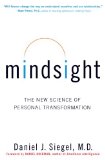
Mindsight

Mindsight: The New Science of Personal Transformation by Dr Daniel J Siegel (Bantam, 2010)

(link for UK)

Product description from the publisher:

From a pioneer in the field of mental health comes a groundbreaking book on the healing power of “mindsight,” the potent skill that is the basis for both emotional and social intelligence. Mindsight allows you to make positive changes in your brain–and in your life.

• Is there a memory that torments you, or an irrational fear you can’ t shake?
• Do you sometimes become unreasonably angry or upset and find it hard to calm down?
• Do you ever wonder why you can’t stop behaving the way you do, no matter how hard you try?
• Are you and your child (or parent, partner, or boss) locked in a seemingly inevitable pattern of conflict?

What if you could escape traps like these and live a fuller, richer, happier life? This isn’t mere speculation but the result of twenty-five years of careful hands-on clinical work by Daniel J. Siegel, M.D. A Harvard-trained physician, Dr. Siegel is one of the revolutionary global innovators in the integration of brain science into the practice of psychotherapy. Using case histories from his practice, he shows how, by following the proper steps, nearly everyone can learn how to focus their attention on the internal world of the mind in a way that will literally change the wiring and architecture of their brain.

Through his synthesis of a broad range of scientific research with applications to everyday life, Dr. Siegel has developed novel approaches that have helped hundreds of patients heal themselves from painful events in the past and liberate themselves from obstacles blocking their happiness in the present. And now he has written the first book that will help all of us understand the potential we have to create our own lives. Showing us mindsight in action, Dr. Siegel describes

• a sixteen-year-old boy with bipolar disorder who uses meditation and other techniques instead of drugs to calm the emotional storms that made him suicidal
• a woman paralyzed by anxiety, who uses mindsight to discover, in an unconscious memory of a childhood accident, the source of her dread
• a physician–the author himself–who pays attention to his intuition, which he experiences as a “vague, uneasy feeling in my belly, a gnawing restlessness in my heart and my gut,” and tracks down a patient who could have gone deaf because of an inaccurately written prescription for an ear infection
• a twelve-year-old girl with OCD who learns a meditation that is “like watching myself from outside myself” and, using a form of internal dialogue, is able to stop the compulsive behaviors that have been tormenting her

These and many other extraordinary stories illustrate how mindsight can help us master our emotions, heal our relationships, and reach our fullest potential.

A book as inspiring as it is informative, as practical as it is profound, Mindsight offers exciting new proof that we aren’t hardwired to behave in certain ways, but instead have the ability to harness the power of our minds to resculpt the neural pathways of our brains in ways that will be life-transforming.

See also: Author’s website & a Google talk from last April:

Comments (1) - meditation,mind,new books,psychology

‘This Emotional Life’ & ‘The Human Spark’ on PBS this week

January 3, 2010

This Emotional Life at PBS

This Emotional Life

This Emotional Life is hosted by Dr Daniel Gilbert, author of Stumbling on Happiness. Three 2-hr episodes will be shown this coming week – Jan. 4, 5, 6.

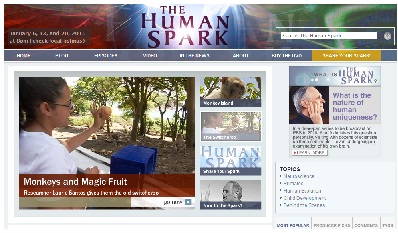
The Human Spark at PBS

The Human Spark

The Human Spark, a look at “the nature of human uniqueness” with Alan Alda, is airing Jan 6, 13, & 20, 2010.

Comments (0) - happiness,psychology