May 27, 2007
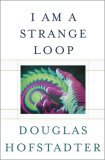 I am almost finished reading this book and just want to note a few points that have struck me along the way.
First, if there are any awards for back-of-the book indexing, Hofstadter should get one! In keeping with the book’s theme, the index includes a reference to itself: “index, ordeal of making a good, 374.” The index also features a wonderful extensive list of “analogies, serious examples of” – such as “between brain and oil refinery” or “between edibility and provability” or “between Leafpilishness and Consciousness.”
The wordplay is quite lively throughout; one of my favorite examples is the use of the term “freewilly-nilly” in a discussion of free will (“we move willy-nilly but not freewilly-nilly.”) Hofstadter accepts that we have will but not that it is free will.
My interest in the book really started to pick up at Ch. 13, where issues of the self and consciousness begin to come to the fore. Leading up to that there is a lot about levels of analysis, Gödel, and the idea of the strange loop.
Hofstadter equates the self with consciousness and develops the idea that “every normal adult human soul is housed in many brains at varying degrees of fidelity and therefore every human consciousness or “I” lives at once in a collection of different brains, to different extents.” (p 259) Personal identity is not coextensive with the physical body but has a “blurriness” enabling low-resolution instantiations of a self to appear in other minds.
In Ch. 21 Hofstadter discusses Derek Parfit’s Reasons and Persons and finds Parfit’s views to be compatible with his own.
A video called “Victim of the Brain,” based on Hofstadter’s earlier work, is available from Google Video.
Wikipedia has entries for strange loop and for the book I Am a Strange Loop, though the latter is just a stub at this time.
Comments (0)
- consciousness,self
May 24, 2007
The Neurophilosophy blog points to “The Subjective Brain” by Pete Mandik. Mandik is posting chapters of this work-in-progress online. So far “Ch 0. Introduction: Consciousness and the Invisible Brain” and “Ch 1. The Metaphysics of the Neuron” are available. Mandik also has posted his unpublished doctoral dissertation, a number of articles and book chapters, and some presentations.
Comments (0)
- consciousness
May 23, 2007
Cognitive Computing 2007 was a two-day event held earlier this month in Berkeley, sponsored by CITRIS (Center for Information Technology Research in the Interest of Society). The event was billed as “a multi-disciplinary synthesis of neuroscience, computer science, mathematics, cognitive neuroscience, and information theory.” “Engineering the mind by reverse engineering the brain” is one slogan for the theme. One of the speakers was Roger Shepard, Professor Emeritus from Stanford, whose presentation was entitled “Principles of cognition as adaptations to the world.”
Videos are available here.
Comments (0)
- cognitive science
Celebrities in Cognitive Science from Martin Ryder at University of Colorado at Denver is a great list with lots of links, some overlap with the Conversations on Consciousness crowd I posted on recently. The cognitive science list starts with Charles Babbage and ends with Ludwig Wittgenstein, with names in between such as Douglas Hofstadter, George Lakoff, and Hilary Putnam.
Comments (0)
- cognitive science
May 21, 2007
Scott Adams, creator of Dilbert, has made his book ‘God’s Debris’ available as a free ebook. The link to download is available here: http://www.andrewsmcmeel.com/godsdebris/
“Synopsis
Imagine that you meet a very old man who—you eventually realize—knows literally everything. Imagine that he explains for you the great mysteries of life—quantum physics, evolution, God, gravity, light, psychic phenomenon, and probability—in a way so simple, so novel, and so compelling that it all fits together and makes perfect sense. What does it feel like to suddenly understand everything? God’s Debris isn’t the final answer to the Big Questions. But it might be the most compelling vision of reality you will ever read. The thought experiment is this: Try to figure out what’s wrong with the old man’s explanation of reality. Share the book with your smart friends then discuss it later while enjoying a beverage.”
Comments (0)
- reality