‘Gut Feelings’ on Linda the bank teller
November 4, 2007
Wikipedia on the “conjunction fallacy”:
The conjunction fallacy is a logical fallacy that occurs when it is assumed that specific conditions are more probable than a single general one.
The most oft-cited example of this fallacy originated with Amos Tversky and Daniel Kahneman:
- Linda is 31 years old, single, outspoken, and very bright. She majored in philosophy. As a student, she was deeply concerned with issues of discrimination and social justice, and also participated in anti-nuclear demonstrations.
- Which is more likely?
- Linda is a bank teller.
- Linda is a bank teller and is active in the feminist movement.
85% of those asked chose option 2. However, mathematically, the probability of two events occurring together (in “conjunction”) will always be less than or equal to the probability of either one occurring alone.
 In Gut Feelings: The Intelligence of the Unconscious, researcher Gerd Gigerenzer (director at the Max Planck Institute for Human Development) criticizes this view of the conjunction fallacy, suggesting that the problem plays on ambiguities in the meaning of probable and and. When rephrased in numerical terms (ie, out of a 100 persons who fit the description above, how many are (a) bank tellers or (b) bank tellers and active in the feminist movement?) the fallacy disappears, as the number assigned to (a) is larger than the number for (b). (p. 93-97)
For further reading, the European Rationalist has posted “Reason and Rationality” an in-depth article by Richard Samuels, Stephen Stich and Luc Faucher that evaluates “the nature and plausibility of the pessimistic view of human rationality often associated with the heuristics and biases tradition.”
“Linda the bank teller” is also discussed at “Overcoming Bias.”

 by Daniel Lord Smail (U of California Press, 2007)
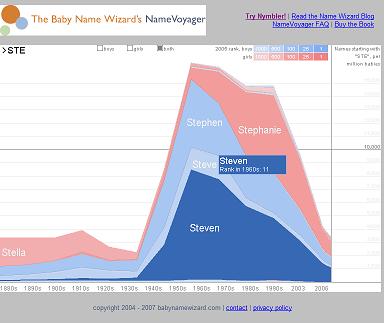
 . So far I’ve especially enjoyed the chapter on names, which includes discussion on
  (
(
 by Stanley Lieberson