[ View menu ]

Archive

out in paperback – ‘Beyond Reduction: Philosophy of Mind and Post-Reductionist Philosophy of Science’

December 21, 2011

Beyond Reduction

Beyond Reduction: Philosophy of Mind and Post-Reductionist Philosophy of Science by Steven Horst (Oxford University Press, USA, 2012)

(amazon.co.uk), (hardcover ed. at amazon.co.uk), (hardcover at amazon.com), (kindle ed., 2007)

Product description from the publisher:

Contemporary philosophers of mind tend to assume that the world of nature can be reduced to basic physics. Yet there are features of the mind consciousness, intentionality, normativity that do not seem to be reducible to physics or neuroscience. This explanatory gap between mind and brain has thus been a major cause of concern in recent philosophy of mind. Reductionists hold that, despite all appearances, the mind can be reduced to the brain. Eliminativists hold that it cannot, and that this implies that there is something illegitimate about the mentalistic vocabulary. Dualists hold that the mental is irreducible, and that this implies either a substance or a property dualism. Mysterian non-reductive physicalists hold that the mind is uniquely irreducible, perhaps due to some limitation of our self-understanding.

In this book, Steven Horst argues that this whole conversation is based on assumptions left over from an outdated philosophy of science. While reductionism was part of the philosophical orthodoxy fifty years ago, it has been decisively rejected by philosophers of science over the past thirty years, and for good reason. True reductions are in fact exceedingly rare in the sciences, and the conviction that they were there to be found was an artifact of armchair assumptions of 17th century Rationalists and 20th century Logical Empiricists. The explanatory gaps between mind and brain are far from unique. In fact, in the sciences it is gaps all the way down. And if reductions are rare in even the physical sciences, there is little reason to expect them in the case of psychology.

Horst argues that this calls for a complete re-thinking of the contemporary problematic in philosophy of mind. Reductionism, dualism, eliminativism and non-reductive materialism are each severely compromised by post-reductionist philosophy of science, and philosophy of mind is in need of a new paradigm.

Horst suggests that such a paradigm might be found in Cognitive Pluralism: the view that human cognitive architecture constrains us to understand the world through a plurality of partial, idealized, and pragmatically-constrained models, each employing a particular representational system optimized for its own problem domain. Such an architecture can explain the disunities of knowledge, and is plausible on evolutionary grounds.

See also: Review of hardcover edition at Notre Dame Philosophical Reviews

Google Books preview:
Comments (1) - new books,philosophy of mind

giftworthy recent book – ‘The World Book of Happiness’

December 18, 2011

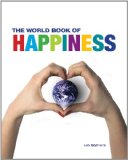
The World Book of Happiness

I came across this book at the library today — a well-illustrated book on happiness, more for browsing than for deep reading, but it looks like it would make a great gift.

The World Book of Happiness by Leo Bormans (Firefly Books, 2011)

(amazon.co.uk)

Book description from the publisher:

The knowledge and wisdom of 100 happiness professors from around the world.

It may be surprising to learn the amount of scientific research conducted on happiness and that there is a World Database of Happiness, a cumulative and continuous register of that research. In fact, the United States ranks higher than average in happiness, though not as high as the Nordic countries, including the happiest of nations, Denmark. So perhaps there is a lot to be learned about happiness and how to achieve it.

The World Book of Happiness is a fascinating compilation of brief essays by 100 of the most prominent experts in positive psychology working in 50 countries. Writing from their own areas of expertise in language free of academic jargon, the contributors examine the principles of happiness, also known as subjective well-being, and how to achieve it. These expert recommendations are shown as “keys” to happiness.

The book reveals many paths to happiness. From the founder of positive psychology, it is “other people matter.” From Germany it is “pride, modesty and gratitude.” In Malaysia it is “nourish the soul,” and in Austria “fitness, friends and fun” bring happiness. And in Denmark, home to the happiest: “Believe in yourself.” But what, too, of genetics, geography and health? The experts also consider these factors and recommend keys to happiness that address what we think we cannot control.

Positive psychology may not be widely known, but the desire to be happy is universal. By transforming information into knowledge and knowledge into wisdom, The World Book of Happiness brings readers a hopeful and practical guide to that elusive state of being.

See also: Book website

Look inside the book:

Comments (1) - happiness,new books

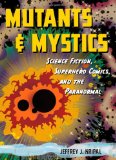
recent book – ‘Mutants and Mystics: Science Fiction, Superhero Comics, and the Paranormal’ by Jeffrey J. Kripal

December 17, 2011

Mutants & Mystics

Mutants and Mystics: Science Fiction, Superhero Comics, and the Paranormal by Jeffrey J. Kripal (University of Chicago Press, 2011)

(amazon.co.uk)

Product description from the publisher:

In many ways, twentieth-century America was the land of superheroes and science fiction. From Superman and Batman to the Fantastic Four and the X-Men, these pop-culture juggernauts, with their “powers and abilities far beyond those of mortal men,” thrilled readers and audiences—and simultaneously embodied a host of our dreams and fears about modern life and the onrushing future.

But that’s just scratching the surface, says Jeffrey Kripal. In Mutants and Mystics, Kripal offers a brilliantly insightful account of how comic book heroes have helped their creators and fans alike explore and express a wealth of paranormal experiences ignored by mainstream science. Delving deeply into the work of major figures in the field—from Jack Kirby’s cosmic superhero sagas and Philip K. Dick’s futuristic head-trips to Alan Moore’s sex magic and Whitley Strieber’s communion with visitors—Kripal shows how creators turned to science fiction to convey the reality of the inexplicable and the paranormal they experienced in their lives. Expanded consciousness found its language in the metaphors of sci-fi—incredible powers, unprecedented mutations, time-loops and vast intergalactic intelligences—and the deeper influences of mythology and religion that these in turn drew from; the wildly creative work that followed caught the imaginations of millions. Moving deftly from Cold War science and Fredric Wertham’s anticomics crusade to gnostic revelation and alien abduction, Kripal spins out a hidden history of American culture, rich with mythical themes and shot through with an awareness that there are other realities far beyond our everyday understanding.

A bravura performance, beautifully illustrated in full color throughout and brimming over with incredible personal stories, Mutants and Mystics is that rarest of things: a book that is guaranteed to broaden—and maybe even blow—your mind.

Google Books preview:

Kripal’s previous book Authors of the Impossible: The Paranormal and the Sacred has recently been issued in paperback. (amazon.co.uk)

Product description from the publisher:

Most scholars dismiss research into the paranormal as pseudoscience, a frivolous pursuit for the paranoid or gullible. Even historians of religion, whose work naturally attends to events beyond the realm of empirical science, have shown scant interest in the subject. But the history of psychical phenomena, Jeffrey J. Kripal contends, is an untapped source of insight into the sacred and by tracing that history through the last two centuries of Western thought we can see its potential centrality to the critical study of religion.

Kripal grounds his study in the work of four major figures in the history of paranormal research: psychical researcher Frederic Myers; writer and humorist Charles Fort; astronomer, computer scientist, and ufologist Jacques Vallee; and philosopher and sociologist Bertrand Méheust. Through incisive analyses of these thinkers, Kripal ushers the reader into a beguiling world somewhere between fact, fiction, and fraud. The cultural history of telepathy, teleportation, and UFOs; a ghostly love story; the occult dimensions of science fiction; cold war psychic espionage; galactic colonialism; and the intimate relationship between consciousness and culture all come together in Authors of the Impossible, a dazzling and profound look at how the paranormal bridges the sacred and the scientific.

Google Books preview:

See also: Author’s website

Comments (0) - consciousness,culture,mind,new books

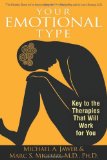
recent book – ‘Your Emotional Type: Key to the Therapies That Will Work for You’

December 16, 2011

Your Emotional Type

Your Emotional Type: Key to the Therapies That Will Work for You by Michael A. Jawer and Marc S. Micozzi (Healing Arts Press, 2011)

(kindle ed.), (amazon.co.uk)

Product description from the publisher:

Your emotional type as the means to finding the right treatment for your chronic illness or pain

• Provides an easy questionnaire to find your emotional type

• Identifies the connections between emotional type and 12 common chronic ailments: asthma, allergies, chronic fatigue, depression, fibromyalgia, hypertension, irritable bowel, migraines, PTSD, psoriasis, rheumatoid arthritis, and ulcers

• Explains which of 7 mind/body healing therapies works best for each emotional type

Different people process their feelings in different ways–your emotional style is a fundamental aspect of who you are. It affects more than just your outlook on life; it can affect your well-being as well. Many chronic ailments are not the result of germs or genes but are rooted in our emotional biology. The link between emotional type and health explains why modern medicine–which views treatment as “one size fits all”–often fails to successfully treat chronic pain and illness.

Examining the interplay of emotions, chronic illness and pain, and treatment success, Michael Jawer and Dr. Marc Micozzi reveal how chronic conditions are intrinsically linked to certain emotional types and how these ailments are best treated by choosing a healing therapy in line with your type. Explaining the emotional ties behind the 12 most common chronic illnesses–asthma, allergies, chronic fatigue, depression, fibromyalgia, hypertension, irritable bowel syndrome, migraines, post-traumatic stress disorder, psoriasis, rheumatoid arthritis, and ulcers–the authors provide an easy assessment survey that allows you to identify your emotional type as well as the ailments you are susceptible to. Extending this connection between mind and body, they assess 7 alternative healing therapies–acupuncture, hypnosis, biofeedback, meditation, yoga, guided imagery, and relaxation techniques–and indicate which methods work best for each emotional type. Empowering you as a patient to seek out the therapies that will work best for you, this book offers a welcome path to effective pain relief and sustainable health.

See also: Book website

Comments (0) - mind,psychology

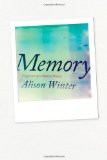
new book – ‘Memory: Fragments of a Modern History’

December 14, 2011

Memory: Fragments of a Modern History

Memory: Fragments of a Modern History by Alison Winter (University of Chicago Press)

(amazon.co.uk – 29 Dec)

Product description from the publisher:

Picture your twenty-first birthday. Did you have a party? If so, do you remember who was there? Now step back: how clear are those memories? Should we trust them to be accurate, or is there a chance that you’re remembering incorrectly? And where have the many details you can no longer recall gone? Are they hidden somewhere in your brain, or are they gone forever?

Such questions have fascinated scientists for hundreds of years, and, as Alison Winter shows in Memory: Fragments of a Modern History, the answers have changed dramatically in just the past century. Tracing the cultural and scientific history of our understanding of memory, Winter explores early metaphors that likened memory to a filing cabinet; later, she shows, that cabinet was replaced by the image of a reel of film, ever available for playback. That model, too, was eventually superseded, replaced by the current understanding of memory as the result of an extremely complicated, brain-wide web of cells and systems that together assemble our pasts. Winter introduces us to innovative scientists and sensationalistic seekers, and, drawing on evidence ranging from scientific papers to diaries to movies, explores the way that new understandings from the laboratory have seeped out into psychiatrists’ offices, courtrooms, and the culture at large. Along the way, she investigates the sensational battles over the validity of repressed memories that raged through the 1980s and shows us how changes in technology—such as the emergence of recording devices and computers—have again and again altered the way we conceptualize, and even try to study, the ways we remember.

Packed with fascinating details and curious episodes from the convoluted history of memory science, Memory is a book you’ll remember long after you close its cover.

Google Books preview:

Comments (0) - cognitive science,culture,new books