[ View menu ]

Archive

new book by Paul Churchland – ‘Plato’s Camera: How the Physical Brain Captures a Landscape of Abstract Universals’

January 28, 2012
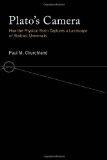
Plato's Camera

Plato’s Camera: How the Physical Brain Captures a Landscape of Abstract Universals by Paul M. Churchland (MIT Press, 2012)

(amazon.co.uk)

In Plato’s Camera, eminent philosopher Paul Churchland offers a novel account of how the brain constructs a representation–or ‘takes a picture’–of the universe’s timeless categorical and dynamical structure. This construction process, which begins at birth, yields the enduring background conceptual framework with which we will interpret our sensory experience for the rest of our lives. But, as even Plato knew, to make singular perceptual judgments requires that we possess an antecedent framework of abstract categories to which any perceived particular can be relevantly assimilated. How that background framework is assembled in the first place is the motivating mystery, and the primary target, of Churchland’s book.

His account draws on the best of the recent philosophical literature on semantic theory, and on the most recent results from cognitive neurobiology. The resulting story throws immediate light on issues that have been at the center of philosophy for at least two millennia, such as how the mind represents reality, both in its ephemeral and in its timeless dimensions.

Unexpectedly, this neurobiologically grounded account of human cognition also provides a systematic story of how such low-level epistemological activities are integrated within an enveloping framework of linguistic structures and regulatory mechanisms at the social level. As Churchland illustrates, this integration of cognitive mechanisms at several levels has launched the human race on an epistemological adventure denied to all other terrestrial creatures.

Google books preview:

Comments (1) - cognitive science,new books,philosophy of mind
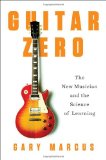
new book – ‘Guitar Zero: The New Musician and the Science of Learning’ by Gary Marcus

January 27, 2012

Guitar Zero

Guitar Zero: The New Musician and the Science of Learning by Gary Marcus (Penguin, 2012)

(kindle ed.), (amazon.co.uk)

Product description from the publisher:

On the eve of his 40th birthday, Gary Marcus, a renowned scientist with no discernible musical talent, learns to play the guitar and investigates how anyone—of any age —can become musical. Do you have to be born musical to become musical? Do you have to start at the age of six?

Using the tools of his day job as a cognitive psychologist, Gary Marcus becomes his own guinea pig as he takes up the guitar. In a powerful and incisive look at how both children and adults become musical, Guitar Zero traces Marcus’s journey, what he learned, and how anyone else can learn, too. A groundbreaking peek into the origins of music in the human brain, this musical journey is also an empowering tale of the mind’s enduring plasticity.

Marcus investigates the most effective ways to train body and brain to learn to play an instrument, in a quest that takes him from Suzuki classes to guitar gods. From deliberate and efficient practicing techniques to finding the right music teacher, Marcus translates his own experience—as well as reflections from world-renowned musicians—into practical advice for anyone hoping to become musical, or to learn a new skill.

Guitar Zero debunks the popular theory of an innate musical instinct while simultaneously challenging the idea that talent is only a myth. While standing the science of music on its head, Marcus brings new insight into humankind’s most basic question: what counts as a life well lived? Does one have to become the next Jimi Hendrix to make a passionate pursuit worthwhile, or can the journey itself bring the brain lasting satisfaction?

For all those who have ever set out to play an instrument—or wish that they could—Guitar Zero is an inspiring and fascinating look at the pursuit of music, the mechanics of the mind, and the surprising rewards that come from following one’s dreams.

Google books preview:

See also: Author’s website, New York Times article

Comments (0) - cognitive science,new books,psychology

new book – ‘Quiet: The Power of Introverts in a World That Can’t Stop Talking’

January 24, 2012

Quiet

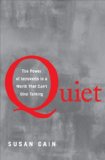
Quiet: The Power of Introverts in a World That Can’t Stop Talking by Susan Cain (Crown)

(kindle ed.), (amazon.co.uk – 29 Mar 2012)

Product description from the publisher:

At least one-third of the people we know are introverts. They are the ones who prefer listening to speaking, reading to partying; who innovate and create but dislike self-promotion; who favor working on their own over brainstorming in teams. Although they are often labeled “quiet,” it is to introverts that we owe many of the great contributions to society–from van Gogh’s sunflowers to the invention of the personal computer.

Passionately argued, impressively researched, and filled with indelible stories of real people, Quiet shows how dramatically we undervalue introverts, and how much we lose in doing so. Taking the reader on a journey from Dale Carnegie’s birthplace to Harvard Business School, from a Tony Robbins seminar to an evangelical megachurch, Susan Cain charts the rise of the Extrovert Ideal in the twentieth century and explores its far-reaching effects. She talks to Asian-American students who feel alienated from the brash, backslapping atmosphere of American schools. She questions the dominant values of American business culture, where forced collaboration can stand in the way of innovation, and where the leadership potential of introverts is often overlooked. And she draws on cutting-edge research in psychology and neuroscience to reveal the surprising differences between extroverts and introverts.

Perhaps most inspiring, she introduces us to successful introverts–from a witty, high-octane public speaker who recharges in solitude after his talks, to a record-breaking salesman who quietly taps into the power of questions. Finally, she offers invaluable advice on everything from how to better negotiate differences in introvert-extrovert relationships to how to empower an introverted child to when it makes sense to be a “pretend extrovert.”

This extraordinary book has the power to permanently change how we see introverts and, equally important, how introverts see themselves.

Google books preview:

See also: Book website

Comments (0) - culture,new books,psychology,Uncategorized

new book – ‘Simplexity: Simplifying Principles for a Complex World’

January 23, 2012

Simplexity

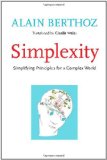
Simplexity: Simplifying Principles for a Complex World (An Editions Odile Jacob Book) by Alain Berthoz, tr. Giselle Weiss (Yale University Press, 2012)

(kindle ed.), (amazon.co.uk)

Product description from the publisher:

In this book a noted physiologist and neuroscientist introduces the concept of simplexity, the set of solutions living organisms find that enable them to deal with information and situations, while taking into account past experiences and anticipating future ones. Such solutions are new ways of addressing problems so that actions may be taken more quickly, more elegantly, and more efficiently.

In a sense, the history of living organisms may be summed up by their remarkable ability to find solutions that avoid the world’s complexity by imposing on it their own rules and functions. Evolution has resolved the problem of complexity not by simplifying but by finding solutions whose processes—though they can sometimes be complex—allow us to act in the midst of complexity and of uncertainty. Nature can inspire us by making us realize that simplification is never simple and requires instead that we choose, refuse, connect, and imagine, in order to act in the best possible manner. Such solutions are already being applied in design and engineering and are significant in biology, medicine, economics, and the behavioral sciences.

Google books preview:

Comments (0) - cognitive science,mind,new books

new book – ‘Consciousness and the Self: New Essays’

January 19, 2012

Consciousness and the Self

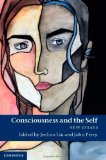
Consciousness and the Self: New Essays ed. by JeeLoo Liu and John Perry (Cambridge University Press, 2012)

(amazon.co.uk – 17 Nov 2011)

Product description from the publisher:

‘I never can catch myself at any time without a perception, and never can observe any thing but the perception.’ These famous words of David Hume, on his inability to perceive the self, set the stage for JeeLoo Liu and John Perry’s collection of essays on self-awareness and self-knowledge. This volume connects recent scientific studies on consciousness with the traditional issues about the self explored by Descartes, Locke and Hume. Experts in the field offer contrasting perspectives on matters such as the relation between consciousness and self-awareness, the notion of personhood and the epistemic access to one’s own thoughts, desires or attitudes. The volume will be of interest to philosophers, psychologists, neuroscientists, cognitive scientists and others working on the central topics of consciousness and the self.

Table of Contents

Introduction: consciousness and the self
1. Awareness and identification of self – David Rosenthal
2. Self-representationalism and the explanatory gap – Uriah Kriegel
3. Thinking about the self – John Perry
4. Ordinary self-consciousness – Lucy O’Brien
5. Waiting for the self – Jesse Prinz
6. I think I think, therefore I am – I think: skeptical doubts about self-knowledge – Fred Dretske
7. Knowing what I want – Alex Byrne
8. Self-ignorance – Eric Schwitzgebel
9. Personhood and consciousness – Sydney Shoemaker
10. My non-narrative, non-forensic Dasein: the first and second self – Owen Flanagan.

Comments (0) - consciousness,new books,self