consciousness explained …. by Zippy
July 2, 2007
Yesterday’s Zippy the Pinhead (7/1/07) explains it all…!
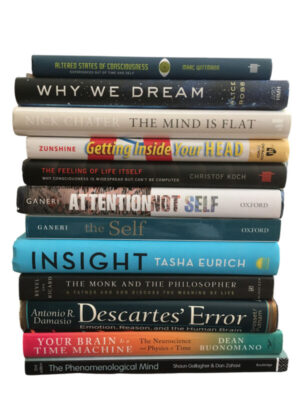
books on the mind, consciousness, cognitive science…
July 2, 2007
Yesterday’s Zippy the Pinhead (7/1/07) explains it all…!
July 1, 2007
 Wire Mothers: Harry Harlow and the Science of Love
The publisher’s website has a page with links to reviews & interviews.
This Wikipedia article gives more information on Harry Harlow.
(If this genre gets more popular maybe a non-oxymoronic term will replace “nonfiction graphic novel”!)
June 29, 2007
I came across ‘Garcia’s Heart’ while browsing & thought of a few other examples of “neurofiction,” so here is the start of a list. I’m sure there are many more…
 by Liam Durcan (neurologist at a war crimes trial)
 by Richard Powers (Capgras syndrome)
 by Steven Hall (“conceptual shark” attack)
 by Dan Lloyd (consciousness theory plus murder mystery)
 by Lawrence Shainberg (brain damage, brain surgery)
12/5/07 – Another to add to the list: Saturday

Comments (19) - cognitive science,consciousness,fiction,mind
June 28, 2007
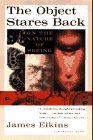
The Object Stares Back: On the Nature of Seeing
Vision, I have argued, is not the simple thing it is imagined to be. It has to do with desire and possessiveness more than mechanical navigation, and it entangles us in a skein of changing relations with objects and people. In particular, vision helps us to know what we are like: we watch versions of ourselves in people and objects, and by attending to them we adjust our sense of what we are. Because we cannot see what we do not understand or use or identify with, we see very little of the world — only the small pieces that are useful and harmless. Each act of vision mingles seeing with not seeing, so that vision can become less a way of gathering information than avoiding it. (p. 201)
(on two kinds of seeing – illuminating, shedding light vs. reflecting)
According to the first model, thought takes place in darkness. Ideas and things and selves must be in a primordial darkness until thought sends out its beams to reveal them. But if I reflect on something, then I exist along with various objects in the world, all bathed in a light that comes from somewhere else. In the first model, blindness is all around; it is the condition of the world, and a thought is like a flashlight that temporarily reveals some local object. In the second there is no place for blindness, except in my own mind. If I fail to reflect, if I decline to try to understand the world, then I become blind, or rather I give way to the blindness that is within me. The second model, where the world is bright and suffused with thought, really has no place for catastrophic, ongoing blindness….
In the first model, where the world is dark and only thought can illuminate it, blindness is more permanent, and I may not be able to recover from it at all. That kind of blindness would include ingrained prejudices, permanent gaps in my thought, failures of imagination, psychotic breaks, fanaticisms and dogmas, and in visual terms, all the things I cannot see or that I refuse to see. Blindness would be all around. Every image would be a light in the darkness, and seeing or thinking would take place against a backdrop of blindness. In this way of setting the problem, blindness is the precondition and constant accompaniment of vision. It cannot be fully seen, but it must always be present wherever there is seeing. (p. 225, in hardcover edition)
author’s home page: http://www.jameselkins.com/
June 27, 2007
Daniel Gilbert, author of ‘Stumbling on Happiness’ is scheduled to appear on the Colbert Report tonight (Comedy Central, 11:30p/10:30c).