October 16, 2008
“Arguing for Embodied Consciousness” at Deric Bownds’ Mindblog excerpts a review from Science of What Science Offers the Humanities: Integrating Body and Culture by Edward Slingerland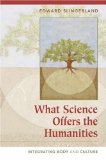 . This book came up earlier in a review article on evolutionary psychology in The Walrus (Sept. 2008).
Google Video has a talk by Slingerland from “Beyond Belief: Enlightenment 2.0” (Dec. 2007). Check out the “related videos” there for Daniel Dennett and other speakers.
Product description for the book:
Product Description
What Science Offers the Humanities examines some of the deep problems facing current approaches to the study of culture. It focuses especially on the excesses of postmodernism, but also acknowledges serious problems with postmodernism’s harshest critics. In short, Edward Slingerland argues that in order for the humanities to progress, its scholars need to take seriously contributions from the natural sciences-and particular research on human cognition-which demonstrate that any separation of the mind and the body is entirely untenable. The author provides suggestions for how humanists might begin to utilize these scientific discoveries without conceding that science has the last word on morality, religion, art, and literature. Calling into question such deeply entrenched dogmas as the “blank slate” theory of nature, strong social constructivism, and the ideal of disembodied reason, What Science Offers the Humanities replaces the human-sciences divide with a more integrated approach to the study of culture.
Comments (2)
- culture
October 15, 2008
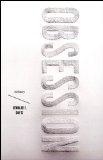
Obsession: A History by Lennard J. Davis (University of Chicago Press, 2008).
Product Description
We live in an age of obsession. Not only are we hopelessly devoted to our work, strangely addicted to our favorite television shows, and desperately impassioned about our cars, we admire obsession in others: we demand that lovers be infatuated with one another in films, we respond to the passion of single-minded musicians, we cheer on driven athletes. To be obsessive is to be American; to be obsessive is to be modern.
But obsession is not only a phenomenon of modern existence: it is a medical category—both a pathology and a goal. Behind this paradox lies a fascinating history, which Lennard Davis tells in Obsession. Beginning with the roots of the disease in demonic possession and its secular successors, Davis traces the evolution of obsessive behavior from a social and religious fact of life into a medical and psychiatric problem. From obsessive aspects of professional specialization to obsessive sex and nymphomania, no variety of obsession eludes Davis’s graceful analysis. Obsession also considers the clinical definition of the condition: Davis investigates the huge increase (estimates suggest up to 600-fold) in diagnosis of obsessive-compulsive disorder over the past thirty years. Surveying the many ways in which doctors today treat OCD, he points out the limitations of and contradictions within the biological definitions of the disease.
Impassioned, witty, and learned, Obsession is for anyone—from compulsive hand washers to professional psychologists—who has been fascinated by, struggled with, or cultivated obsession.
Comments (0)
- new books,psychology
October 13, 2008
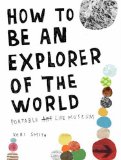
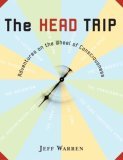
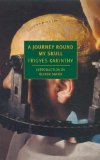
In honor of Columbus Day, learn How to Be an Explorer of the World with Keri Smith, take a Head Trip with Jeff Warren, or follow Frigyes Karinthy on A Journey Round [His] Skull.
Comments (0)
- mind
October 10, 2008
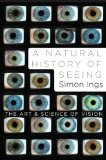
A Natural History of Seeing: The Art and Science of Vision by Simon Ings (W.W. Norton, 2008) was published originally in the UK under the title ‘The Eye: A Natural History‘
Product Description
The science, history, philosophy, and mythology of how and why we see the way we do.
We spend about one-tenth of our waking hours completely blind. Only one percent of what we see is in focus at any one time. There is no direct fossil evidence for the evolution of the eye. In graceful, accessible prose, novelist and science writer Simon Ings sets out to solve these and other mysteries of seeing.
A Natural History of Seeing delves into both the evolution of sight and the evolution of our understanding of sight. It gives us the natural science—the physics of light and the biology of animals and humans alike—while also addressing Leonardo’s theories of perception in painting and Homer’s confused and strangely limited sense of color. Panoramic in every sense, it reaches back to the first seers (and to ancient beliefs that vision is the product of mysterious optic rays) and forward to the promise of modern experiments in making robots that see.
See also: Author’s website and blog.
Comments (0)
- cognitive science,new books
October 9, 2008
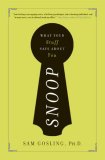 My first book review on Metapsychology Online Reviews appeared this week, a review of Snoop: What Your Stuff Says About You by Sam Gosling. To supplement the review I’m posting here links to some of the sites and books mentioned in Snoop or related to the book.
The website for the book has a links page so I won’t duplicate any of those links.
The Characters of Theophrastus, early Greek personality study.
Sanjay Srinivastava’s website is cited in the Notes “for a good brief introduction to the Big Five” p. 234).
Dan P. McAdams, “What do we know when we know a person?” (link to abstract)
books by Dan P. McAdams

Gait Recognition research at Georgia Institute of Technology
The Rachel Papers by Martin Amis, fiction about personality faking.
A recent VSL: Science item on Facebook narcissism is very much in the spirit of Snoop
Comments (0)
- psychology,self