August 22, 2009
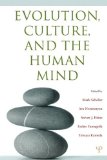
Evolution, Culture, and the Human Mind is forthcoming from Psychology Press, with a prospective release date of Aug. 25. Editors are Mark Schaller, Ara Norenzayan, Steven J. Heine, Toshio Yamagishi, and Tatsuya Kameda.
(link for UK)
Product description from the publisher:
An enormous amount of scientific research compels two fundamental conclusions about the human mind: The mind is the product of evolution; and the mind is shaped by culture. These two perspectives on the human mind are not incompatible, but, until recently, their compatibility has resisted rigorous scholarly inquiry. Evolutionary psychology documents many ways in which genetic adaptations govern the operations of the human mind. But evolutionary inquiries only occasionally grapple seriously with questions about human culture and cross-cultural differences. By contrast, cultural psychology documents many ways in which thought and behavior are shaped by different cultural experiences. But cultural inquires rarely consider evolutionary processes. Even after decades of intensive research, these two perspectives on human psychology have remained largely divorced from each other. But that is now changing — and that is what this book is about.
Evolution, Culture, and the Human Mind is the first scholarly book to integrate evolutionary and cultural perspectives on human psychology. The contributors include world-renowned evolutionary, cultural, social, and cognitive psychologists. These chapters reveal many novel insights linking human evolution to both human cognition and human culture – including the evolutionary origins of cross-cultural differences. The result is a stimulating introduction to an emerging integrative perspective on human nature.
Comments (1)
- cognitive science,culture,mind,new books,psychology
August 21, 2009
Cognition and Perception: How Do Psychology and Neural Science Inform Philosophy? (Bradford Books) by Athanassios Raftopoulos (MIT Press, 2009)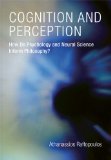
(link for UK)
Product description from the publisher:
In Cognition and Perception, Athanassios Raftopoulos discusses the cognitive penetrability of perception and claims that there is a part of visual processes (which he calls “perception”) that results in representational states with nonconceptual content; that is, a part that retrieves information from visual scenes in conceptually unmediated, “bottom-up,” theory-neutral ways. Raftopoulos applies this insight to problems in philosophy of science, philosophy of mind, and epistemology, and examines how we access the external world through our perception as well as what we can know of that world.
To show that there is a theory-neutral part of existence, Raftopoulos turns to cognitive science and argues that there is substantial scientific evidence. He then claims that perception induces representational states with nonconceptual content and examines the nature of the nonconceptual content. The nonconceptual information retrieved, he argues, does not allow the identification or recognition of an object but only its individuation as a discrete persistent object with certain spatiotemporal properties and other features. Object individuation, however, suffices to determine the referents of perceptual demonstratives. Raftopoulos defends his account in the context of current discussions on the issue of the theory-ladenness of perception (namely the Fodor-Churchland debate), and then discusses the repercussions of his thesis for problems in the philosophy of science. Finally, Raftopoulos claims that there is a minimal form of realism that is defensible. This minimal realism holds that objects, their spatiotemporal properties, and such features as shape, orientation, and motion are real, mind-independent properties in the world.
Table of contents & sample chapters available at MIT Press
Comments (0)
- cognitive science,new books,philosophy of mind
August 15, 2009
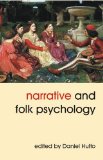
Narrative and Folk Psychology, ed. by Daniel Hutto (Imprint Academic, 2009) is a special issue of the Journal of Consciousness Studies (v.16, no. 6-8, June-August 2009) available in book form.
The journal website has full text of the editor’s introduction, plus abstracts of the articles.
Here is the abstract of the introduction:
Abstract: There has been a long-standing interest in the putative roles that various so-called ‘theory of mind’ abilities might play in enabling us to understand and enjoy narratives. Of late, as our understanding of the complexity and diversity of everyday psychological capacities has become more nuanced and variegated, new possibilities have been articulated: (i) that our capacity for a sophisticated, everyday understanding of actions in terms of reason (our folk psychology) may itself be best characterized as a kind of narrative practice and (ii) that acquiring the capacity for supplying and digesting reasons explanations might (at least normally) depend upon having a special training with narratives. This introductory paper to the volume situates the claims of those who support the narrative approach to folk psychology against the backdrop of some traditional and new thinking about intersubjectivity, social cognition and ‘theory of mind’ abilities. Special emphasis is laid on the different reasons for being interested in these claims about narrative practice and folk psychology in light of various empirical and philosophical agendas.
Editor Daniel D. Hutto is the author of Folk Psychological Narratives: The Sociocultural Basis of Understanding Reasons (Bradford Books) (MIT Press, 2008)
Comments (0)
- new books,psychology
August 11, 2009
I’ve found browsing the “New Releases” section in books at Amazon.com to be the best way to keep up with the new books coming out in various mind-related categories. For example, Clicking through “Books > New Releases > Nonfiction > Philosophy > Consciousness & Thought” gets me a listing of 100 “bestselling new & future releases” to browse through.
Today though I found out that going a different route, such as Books > Browse Subjects > Nonfiction > Philosophy > Consciousness & Thought provides a few different options through the left-hand menu. There’s a way to see books that have been published in the last 30 days, only those “coming soon” or printed books only, excluding Kindle editions and audiobooks.
Some other relevant categories:
Health, Mind & Body > Psychology & Counseling > Neuropsychology
Science > Behavioral Sciences
Nonfiction > Social Sciences > Anthropology

Comments (0)
- book search