September 3, 2009
Get High Now (without drugs) by James Nestor (Chronicle Books, 2009)
(link for UK)

Product description:
Get High Now is an illustrated, mind-blowing magic carpet ride of more than 200 ways to alter human perception and consciousness-without drugs or alcohol. Culled from science, physiology, spiritual practices, and the audio visual arts, these “all natural” highs playfully and safely explore the mind-body connection to entertaining and illuminating effect. Accessible and well-researched, each entry introduces concepts such as lucid dreaming, optical and auditory illusions, controlled breathing, meditation, time compression, and physical and mental exercises, explaining the ways in which they affect our minds and bodies and how to do them. Readers follow the author and his “HighLab” testing team through mind-bending and sometimes hilarious investigations, such as how to lull the mind into hallucinatory states with audio loops; why multiple bee stings lead to euphoric states; what cheeses to eat to induce psychedelic lucid dreams; how to control your breathing to create an out-of-body experience; and many more. Including solo, tandem, and group highs, Get High Now features hundreds of ways to calm or stimulate the senses and open new windows to experiencing the world.
Time Magazine selected the website for this book as one of its 50 Best Websites 2009, calling it “a science site disguised as mind-expansion.”
Comments (0)
- consciousness,new books,psychology
September 1, 2009
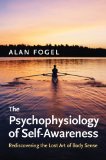
The Psychophysiology of Self-Awareness: Rediscovering the Lost Art of Body Sense (Norton Series on Interpersonal Neurobiology) by Alan Fogel (W.W. Norton, 2009)
(link for UK).
Product description from the publisher:
The practice and science of feeling our movements, sensations, and emotions. Embodied self-awareness is the practice and science of our ability to feel our movements, sensations, and emotions. As infants, before we can speak or conceptualize, we learn to move toward what makes us feel good and away from what makes us feel bad. Our ability to continue to develop and cultivate awareness of such body-based feelings and understanding is essential for learning how to successfully navigate in the physical and social world, as well as for avoiding injury and stress. The book explains the neurological basis of embodied self-awareness, how to enhance self-awareness, and how to regain it after injury or trauma.
See also: Author’s blog, Body Sense, at Psychology Today
Comments (1)
- consciousness,meditation,new books
August 30, 2009
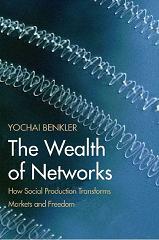
The Wealth of Networks by Yochai Benkler (Yale University Press, 2006) is one of the books cited in Clay Shirky’s Here Comes Everybody (that I made a “webibliography” for).
Through Creative Commons I found the wiki for Wealth of Networks, which offers the full text of the book in pdf, html and other formats.
Here is the product description for this title from Yale University Press:
With the radical changes in information production that the Internet has introduced, we stand at an important moment of transition, says Yochai Benkler in this thought-provoking book. The phenomenon he describes as social production is reshaping markets, while at the same time offering new opportunities to enhance individual freedom, cultural diversity, political discourse, and justice. But these results are by no means inevitable: a systematic campaign to protect the entrenched industrial information economy of the last century threatens the promise of today’s emerging networked information environment.
In this comprehensive social theory of the Internet and the networked information economy, Benkler describes how patterns of information, knowledge, and cultural production are changing—and shows that the way information and knowledge are made available can either limit or enlarge the ways people can create and express themselves. He describes the range of legal and policy choices that confront us and maintains that there is much to be gained—or lost—by the decisions we make today.
See also: List of books available under a Creative Commons license
Comments (0)
- culture
August 29, 2009
New from Oxford University Press: 
Seeing Through Illusions by Richard L. Gregory (“Eye and Brain“)
(link for UK)
Product description from the publisher:
In Seeing Through Illusions, renowned scientist Richard Gregory explores what visual illusions can tell us about how our brains perceive the world. Looking at optical tricks and many other extraordinary phenomena, Gregory explains how scientists use these anomalies to peel back the normal processes of perception, and to reveal how the brain performs the remarkable feat of representing the real world with the kind of richness and accuracy which we experience–and take for granted–every day. And these visual illusions not only tell us about how our brain works, but they also reveal the brain’s evolutionary past. Traces of earlier stages remain buried within our brains like stratified layers, laid down through evolutionary time, and Gregory shows how the study of different kinds of illusions reveals glimpses of these layers. Interweaving science with reflections on art and philosophy, fascinating psychological case-studies, and some amazing visual phenomena, this book addresses questions about our brains that have puzzled scientists and philosophers for centuries.
See also: Author’s website
Comments (0)
- new books