[ View menu ]

Archive

Alison Gopnik (‘The Philosophical Baby’) on Colbert Report Wednesday (10/7/09)

October 6, 2009

10/11 update: Here is the video –

The Colbert Report Mon – Thurs 11:30pm / 10:30c
Alison Gopnik
www.colbertnation.com
Colbert Report Full Episodes Political Humor Michael Moore

According to Shelf Awareness, Alison Gopnik will be on the Colbert Report on Wednesday Oct 7, talking about her recent book The Philosophical Baby: What Children’s Minds Tell Us About Truth, Love, and the Meaning of Life.
The Philosophical Baby

(link for UK)

Product description from the publisher:

For most of us, having a baby is the most profound, intense, and fascinating experience of our lives. Now scientists and philosophers are starting to appreciate babies, too. The last decade has witnessed a revolution in our understanding of infants and young children. Scientists used to believe that babies were irrational, and that their thinking and experience were limited. Recently, they have discovered that babies learn more, create more, care more, and experience more than we could ever have imagined. And there is good reason to believe that babies are actually smarter, more thoughtful, and even more conscious than adults.

This new science holds answers to some of the deepest and oldest questions about what it means to be human. A new baby’s captivated gaze at her mother’s face lays the foundations for love and morality. A toddler’s unstoppable explorations of his playpen hold the key to scientific discovery. A three-year-old’s wild make-believe explains how we can imagine the future, write novels, and invent new technologies. Alison Gopnik – a leading psychologist and philosopher, as well as a mother – explains the groundbreaking new psychological, neuroscientific, and philosophical developments in our understanding of very young children, transforming our understanding of how babies see the world, and in turn promoting a deeper appreciation for the role of parents.
Comments (0) - Uncategorized

new book – ‘The Wayfinders: Why Ancient Wisdom Matters in the Modern World’ by Wade Davis

October 4, 2009

The Wayfinders

The Wayfinders: Why Ancient Wisdom Matters in the Modern World (CBC Massey Lecture) by Wade Davis (House of Anansi Press, 2009)
(link for UK)

Product description from the publisher:

Over the past decade, many of us have been alarmed to learn of the rapidly accelerating extinction of our planet’s diverse flora and fauna. But how many of us know that our human cultural diversity is also going extinct at a shocking rate? Biologists estimate that 18% of mammals and 11% of birds are threatened, while botanists anticipate the loss of 8% of flora. Meanwhile, of the 7,000 languages in the world today, 50% will disappear in our lifetime. Languages are merely the canaries in the coalmine: what of the poetry, songs, knowledge, and ways of seeing encoded in these disappearing voices?

In The Wayfinders, acclaimed anthropologist Wade Davis offers a gripping account of this urgent crisis. He leads us on a fascinating tour through a handful of indigenous cultures and worldviews while reminding us of the encroaching dangers posed by unchecked globalization. An enlightening, awe-inspiring, and cautionary look at vanishing cultures and languages from one of the world’s most celebrated and distinguished anthropologists.

Here is Davis’s 2003 TED talk on endangered cultures:

Link to 2008 TED talk on the “worldwide web of belief and ritual”

More on CBC Massey lectures

Comments (0) - culture,new books

new book on decision-making: ‘Streetlights and Shadows’

October 2, 2009

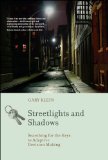
Streetlights and Shadows
One of Amazon’s “Season’s (Almost) Best Kept Secrets” in Science is Streetlights and Shadows: Searching for the Keys to Adaptive Decision Making (Bradford Books), a new book by Gary Klein from MIT Press.
(link for UK)

Product description from the publisher:

In making decisions, when should we go with our gut and when should we try to analyze every option? When should we use our intuition and when should we rely on logic and statistics? Most of us would probably agree that for important decisions, we should follow certain guidelines—gather as much information as possible, compare the options, pin down the goals before getting started. But in practice we make some of our best decisions by adapting to circumstances rather than blindly following procedures. In Streetlights and Shadows, Gary Klein debunks the conventional wisdom about how to make decisions. He takes ten commonly accepted claims about decision making and shows that they are better suited for the laboratory than for life. The standard advice works well when everything is clear, but the tough decisions involve shadowy conditions of complexity and ambiguity. Gathering masses of information, for example, works if the information is accurate and complete—but that doesn’t often happen in the real world. (Think about the careful risk calculations that led to the downfall of the Wall Street investment houses.)

Klein offers more realistic ideas about how to make decisions in real-life settings. He provides many examples—ranging from airline pilots and weather forecasters to sports announcers and Captain Jack Aubrey in Patrick O’Brian’s Master and Commander novels—to make his point. All these decision makers saw things that others didn’t. They used their expertise to pick up cues and to discern patterns and trends. We can make better decisions, Klein tells us, if we are prepared for complexity and ambiguity and if we will stop expecting the data to tell us everything.

See also: Wikipedia on Gary Klein
MIT Press book page

Comments (0) - cognitive science,new books,psychology

Books on philosophy of mind, 2009-2010

September 27, 2009

Supplementing a previous list of philosophy of mind titles, here are more books on philosophy of mind published in 2009, with a look ahead at some coming in 2010, based on a WorldCat search. Philosophy of mind may not be the main subject in every case, but it was at least one of the headings used in cataloging these books.

2009

Language, Reality and Mind: A Defense of Everyday Thought by Charles Crittenden (Basingstoke : Palgrave Macmillan, 2009) (link for UK)

Mental Reality, Second Edition, with a new appendix (Representation and Mind) by Galen Strawson (MIT Press, 2009) [first ed published in 1994] (link for UK)

The Metaphysics of Mind (Cambridge Studies in Philosophy) by Michael Tye (Cambridge Univ Pr, 2009) [now in paperback, originally published in 1989] (link for UK)

The Minds of the Moderns: Rationalism, Empiricism, and Philosophy of Mind by Janice Thomas (Montreal ; Ithaca : McGill-Queen’s University Press, 2009) (link for UK)

The Philosophy of Animal Minds by Robert W Lurz (Cambridge, UK; New York: Cambridge University Press, 2009) (link for UK)

Physical Realization by Sydney Shoemaker (Oxford Univ Pr 2009) [now in paperback, originally published in 2007](link for UK)

Plural Action: Essays in Philosophy and Social Science (Contributions To Phenomenology) by Hans Bernhard Schmid (Dordrecht; Berlin: Springer, 2009) [on “collective intentionality”] (link for UK)

Predicative Minds: The Social Ontogeny of Propositional Thinking (Bradford Books) by Radu J Bogdan (Cambridge, Mass.: MIT Press, 2009) (link for UK)

Topics in Early Modern Philosophy of Mind (Studies in the History of Philosophy of Mind) by Jon Miller ([Dordrecht] : Springer, 2009) (link for UK)

coming in 2010

Process Approaches to Consciousness in Psychology, Neuroscience, and Philosophy of Mind by Michel Weber (State University of New York Press, 2010) [Jan 2010] (not found at amazon.co.uk)

The Disordered Mind: An Introduction to Philosophy of Mind and Mental Illness by George Graham (Abingdon, Oxon ; New York, NY : Routledge, 2009) [Feb 2010] (link for UK)

Physicalism (New Problems of Philosophy) by Daniel Stoljar (London : Routledge, 2009) [Feb 2010] (link for UK)

Philosophy of Mind (Critical Concepts in Philosophy) by Sean Crawford (London : Routledge, 2009) [April 2010] (link for UK)

Key Terms in Philosophy of Mind by Pete Mandik (Continuum, 2010) [May 2010] (link for UK) (some previews at author’s blog)

The Neural Sublime: Cognitive Theories and Romantic Texts by Alan Richardson (Johns Hopkins University Press, 2010) [June 2010] (not found at amazon.co.uk)

Comments (0) - new books,philosophy of mind

new book – ‘Connected: The Surprising Power of Our Social Networks and How They Shape Our Lives’

September 26, 2009

Connected
Connected: The Surprising Power of Our Social Networks and How They Shape Our Lives by Nicholas A. Christakis and James H. Fowler (Little, Brown, 2009).

(link for UK)

Product description from the publisher:

Your colleague’s husband’s sister can make you fat, even if you don’t know her. A happy neighbor has more impact on your happiness than a happy spouse. These startling revelations of how much we truly influence one another are revealed in the studies of Drs. Christakis and Fowler, which have repeatedly made front-page news nationwide.

In CONNECTED, the authors explain why emotions are contagious, how health behaviors spread, why the rich get richer, even how we find and choose our partners. Intriguing and entertaining, CONNECTED overturns the notion of the individual and provides a revolutionary paradigm-that social networks influence our ideas, emotions, health, relationships, behavior, politics, and much more. It will change the way we think about every aspect of our lives.

See also: Website for the book

Comments (0) - culture,new books,psychology