[ View menu ]

Archive

new book – ‘Free Will and Consciousness: How Might They Work?’

June 18, 2010

Free Will and Consciousness

Free Will and Consciousness: How Might They Work? ed. by Roy F. Baumeister, Alfred R. Mele, and Kathleen D. Vohs (Oxford University Press, 2010). Contributors include John Searle and Merlin Donald.

(link for UK)

Product description from the publisher:

This volume is aimed at readers who wish to move beyond debates about the existence of free will and the efficacy of consciousness and closer to appreciating how free will and consciousness might operate. It draws from philosophy and psychology, the two fields that have grappled most fundamentally with these issues. In this wide-ranging volume, the contributors explore such issues as how free will is connected to rational choice, planning, and self-control; roles for consciousness in decision making; the nature and power of conscious deciding; connections among free will, consciousness, and quantum mechanics; why free will and consciousness might have evolved; how consciousness develops in individuals; the experience of free will; effects on behavior of the belief that free will is an illusion; and connections between free will and moral responsibility in lay thinking. Collectively, these state-of-the-art chapters by accomplished psychologists and philosophers provide a glimpse into the future of research on free will and consciousness.

See also: Free will & determinism books at Amazon.com

Free will & determinism books at Amazon.co.uk

Comments (0) - consciousness,new books,reality

new book – ‘The Twenty-Four Hour Mind’

June 17, 2010

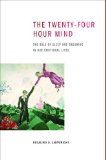
The Twenty-Four Hour Mind

The Twenty-four Hour Mind: The Role of Sleep and Dreaming in Our Emotional Lives by Rosalind Cartwright (Oxford University Press, 2010)

(link for UK)

Product description from the publisher:

In January of 1999, an otherwise nonviolent man under great stress at work brutally murdered his wife in their backyard. He then went back to bed, awakening only when police entered his home. He claimed to have no memory of the event because, while his body was awake at the time, his mind was not. He had been sleepwalking.

In The Twenty-four Hour Mind, sleep scientist Rosalind Cartwright brings together decades of research into the bizarre sleep disorders known as parasomnias to propose a new theory of how the human mind works consistently throughout waking and sleeping hours. Thanks to increasingly sophisticated EEG and brain imaging technologies, we now know that our minds do not simply “turn off” during sleep. Rather, they continue to be active, and research has indicated that one of the primary purposes of sleep is to aid in regulating emotions and processing experiences that occur during preceding waking hours. As such, when sleep is neurologically or genetically impaired or just too short, the processes that good sleep facilitates–those that usually have a positive effect on our mood and performance–can short circuit, with negative results that occasionally reach tragic proportions. Examining the interactions between conscious and unconscious forms of thinking as they proceed throughout the cycles of sleeping, dreaming, and waking, Cartwright demystifies the inner workings of the human mind that trigger sleep problems, how researchers are working to control them, and how they can apply what they learn to further our understanding of the brain. Along the way, she provides a lively account of the history of sleep research and the birth of sleep medicine that will initiate readers into this fascinating field of inquiry and the far-reaching implications it will have on the future of neuroscience. The Twenty-four Hour Mind offers a unique look at a relatively new area of study that will be of interest to those with and without sleep problems, as well as anyone captivated by the mysteries of the brain–and what sleep continues to teach us about the waking mind.

See also: Author’s website

Comments (0) - cognitive science,mind,new books,psychology

evolutionary psychology books, 2008-2010

June 12, 2010

Here is a list of books on evolutionary psychology published 2008-2010 (had some catching up to do), based on a search of WorldCat.

2010
Adaptive Origins: Evolution and Human Development by Peter LaFreniere (Hove: Psychology Press) forthcoming Aug 2010. (amazon.co.uk – Sept. 2010)

The Evolution of Personality and Individual Differences by David M Buss, Patricia H Hawley (New York: Oxford University Press) forthcoming Nov 2010. (amazon.co.uk – Dec. 2010)

Evolutionary Psychology by Viren Swami (Oxford: Wiley-Blackwell) forthcoming July 2010 (amazon.co.uk – June 2010)

Evolutionary Psychology (The International Library of Essays on Evolutionary Thought), ed. by Stefan Paul Linquist; Neil Levy; (Farnham: Ashgate) forthcoming Aug 2010. (amazon.co.uk – July 2010)

Evolutionary Psychology and Information Systems Research: A New Approach to Studying the Effects of Modern Technologies on Human Behavior (Integrated Series in Information Systems) ed. by Ned F Kock (New York; London: Springer) forthcoming July 2010. (amazon.co.uk – Aug 2010)

Getting Darwin Wrong: Why evolutionary psychology won’t work (Societas) by Brendan Wallace (Exeter: Imprint Academic) forthcoming Aug 2010. (amazon.co.uk – Aug 2010)

Human Morality and Sociality: Evolutionary and Comparative Perspectives ed. by Henrik Høgh-Olesen (Basingstoke; New York: Palgrave Macmillan, 2010) (amazon.co.uk)

In the Name of God: The Evolutionary Origins of Religious Ethics and Violence (Blackwell Public Philosophy Series) by John Teehan (Malden, MA: Wiley-Blackwell, 2010). (amazon.co.uk)

Selected: Why Some People Lead, Why Others Follow, and Why It Matters by Anjana Ahuja; Mark Van Vugt (London: Profile, 2010). forthcoming Jan 2011 (amazon.co.uk – Aug 2010)

Social Brain, Distributed Mind (Proceedings of the British Academy) by R I M Dunbar; Clive Gamble; John Gowlett (Oxford: Oxford University Press, 2010). (amazon.co.uk)

The Solitary Self: Darwin and the Selfish Gene (Heretics) by Mary Midgley (Montreal: McGill-Queen’s University Press) forthcoming Sept 2010. (amazon.co.uk – Acumen, Sept 2010)
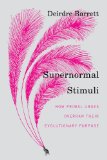
Supernormal Stimuli

Supernormal Stimuli: How Primal Urges Overran Their Evolutionary Purpose by Deirdre Barrett (New York: W.W. Norton & Co., 2010). (amazon.co.uk)

2009
The Art Instinct: Beauty, Pleasure, and Human Evolution by Denis Dutton (Oxford: Oxford University Press, 2009). (amazon.co.uk)

The Biological Evolution of Religious Mind and Behavior (The Frontiers Collection) ed. by Eckart Voland; Wulf Schiefenhövel; (Dordrecht; New York: Springer, 2009). (amazon.co.uk)

Essential Evolutionary Psychology by Simon Hampton (Los Angeles; London: SAGE, 2009, 2010). (amazon.co.uk)

Evolution and Genetics for Psychology by Daniel Nettle (Oxford; New York: Oxford University Press, 2009). (amazon.co.uk)

Evolution, Culture, and the Human Mind ed. by Mark Schaller; et al (Hove: Psychology, 2009). (amazon.co.uk)

The Evolution of Obesity by Michael L Power; Jay Schulkin (Baltimore: Johns Hopkins University Press, 2009). (amazon.co.uk)

Evolutionary Neuroscience ed. by Jon H Kaas (Oxford ; San Diego: Academic Press ; Amsterdam; Boston: Elsevier, 2009). (amazon.co.uk)

The Evolutionary Origin Of Human Behavior: How Play And Evolution Carried Us From Our Reptile Predecessors To The Storytellers We Are by Keith C M Glegg (Bloomington, IN: iUniverse, Inc., 2009).

Foundations in Evolutionary Cognitive Neuroscience ed. by Steven M Platek; Todd K Shackelford (Cambridge, UK ; New York: Cambridge University Press, 2009). (amazon.co.uk)

The Moral Brain: Essays on the Evolutionary and Neuroscientific Aspects of Morality ed. by Jan Verplaetse; et al (Dordrecht; New York: Springer, 2009). (amazon.co.uk)

Philosophy after Darwin: Classic and Contemporary Readings by Michael Ruse (Princeton : Princeton University Press, 2009). (amazon.co.uk)

The Rise of Homo sapiens: The Evolution of Modern Thinking by Frederick L Coolidge; Thomas Grant Wynn (Chichester, U.K. ; Malden, MA: Wiley-Blackwell, 2009). (amazon.co.uk)

The Sapient Mind: Archaeology meets neuroscience ed. by Colin Renfrew; Christopher D Frith; Lambros Malafouris (Oxford: Oxford University Press, 2009). (amazon.co.uk)

2008

Evolution and Human Behavior: Darwinian Perspectives on Human Nature, 2nd Edition (Bradford Books) by John Cartwright (Cambridge, Mass.: MIT Press, 2008). (amazon.co.uk)

Evolutionary Forensic Psychology ed. by Joshua Duntley; Todd K Shackelford (Oxford; New York: Oxford University Press, 2008). (amazon.co.uk)
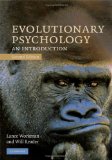
Evolutionary Psychology

Evolutionary Psychology: An Introduction, 2nd ed. by Lance Workman; Will Reader (Cambridge; New York: Cambridge University Press, 2008). (amazon.co.uk)

An Evolutionary Psychology of Leader-Follower Relations by Patrick McNamara; David Trumbull (New York: Nova Science Pub Inc 2008) (amazon.co.uk)

Foundations of Evolutionary Psychology, 2nd ed., ed. by Charles Crawford; Dennis Krebs (New York: Psychology Press, 2008). (amazon.co.uk)

Healing The Unhappy Caveman: Why The Human Mind Was Not Designed For Happiness And What YOU Can Do About It by Chris Wilson (Atlanta: Libertas Press, 2008).

How Sadness Survived: The Evolutionary Basis of Depression by Paul Keedwell (Oxford; New York: Radcliffe Pub., 2008). (amazon.co.uk)

Inhuman Thoughts: Philosophical Explorations of Posthumanity by Asher Seidel (Lanham, MD: Lexington Books, 2008). (amazon.co.uk)

Origins of the Social Mind: Evolutionary and Developmental Views ed. by Shoji Itakura; Kazuo Fujita (Tokyo: Springer, 2008). (amazon.co.uk)

Textbook of Evolutionary Psychiatry: The origins of psychopathology by Martin Brüne (Oxford; New York: Oxford University Press, 2008). (amazon.co.uk)

What is Special About the Human Brain? (Oxford Psychology) by Richard Passingham; (Oxford: Oxford University Press, 2008). (amazon.co.uk)

Comments (1) - psychology

favorite Amazon browse categories

June 11, 2010

I’m working on a list of recent books in evolutionary psychology that will appear here soon. Meanwhile here’s a short list of places I check on Amazon.com when browsing for new books (Amazon.co.uk has a different system that I’ve never “sussed out”):

New Releases in Consciousness & Thought

New Releases in Neuropsychology

New Releases in Behavioral Science

Comments (0) - book search,new books

reminder – Clay Shirky’s ‘Cognitive Surplus’ available today (6/10)

June 10, 2010

I had posted about this book a few weeks ago but now it is published (and might be an occasion for a new “webibliography“). Here is a repeat of the previous post, with a few additions:

Cognitive Surplus

Cognitive Surplus: Creativity and Generosity in a Connected Age by Clay Shirky (Penguin, 2010).

(Kindle ed.)

(link for amazon.co.uk – due out July 1)

Product description from the publisher:

The author of the breakout hit Here Comes Everybody reveals how new technology is changing us from consumers to collaborators, unleashing a torrent of creative production that will transform our world.

For decades, technology encouraged people to squander their time and intellect as passive consumers. Today, tech has finally caught up with human potential. In Cognitive Surplus, Internet guru Clay Shirky forecasts the thrilling changes we will all enjoy as new digital technology puts our untapped resources of talent and goodwill to use at last.

Since we Americans were suburbanized and educated by the postwar boom, we’ve had a surfeit of intellect, energy, and time-what Shirky calls a cognitive surplus. But this abundance had little impact on the common good because television consumed the lion’s share of it-and we consume TV passively, in isolation from one another. Now, for the first time, people are embracing new media that allow us to pool our efforts at vanishingly low cost. The results of this aggregated effort range from mind expanding-reference tools like Wikipedia-to lifesaving-such as Ushahidi.com, which has allowed Kenyans to sidestep government censorship and report on acts of violence in real time.

Shirky argues persuasively that this cognitive surplus-rather than being some strange new departure from normal behavior-actually returns our society to forms of collaboration that were natural to us up through the early twentieth century. He also charts the vast effects that our cognitive surplus-aided by new technologies-will have on twenty-first-century society, and how we can best exploit those effects. Shirky envisions an era of lower creative quality on average but greater innovation, an increase in transparency in all areas of society, and a dramatic rise in productivity that will transform our civilization.

The potential impact of cognitive surplus is enormous. As Shirky points out, Wikipedia was built out of roughly 1 percent of the man-hours that Americans spend watching TV every year. Wikipedia and other current products of cognitive surplus are only the iceberg’s tip. Shirky shows how society and our daily lives will be improved dramatically as we learn to exploit our goodwill and free time like never before.

Here is Clay Shirky’s 2008 talk on “Gin, Television, and Social Surplus” (transcript here):

See also: review at boingboing.net

Comments (0) - culture,new books