[ View menu ]

Archive

on ‘The Language of Pain’ by David Biro

August 13, 2010
The Language of Pain

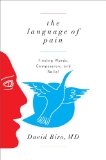
The Language of Pain: Finding Words, Compassion, and Relief by David Biro (W.W. Norton & Co, 2010)

(link for amazon.co.uk)

“…pain, and stories of pain, provide us with an extraordinary opportunity to witness the way language and meaning come into being.” p 139

To counter the isolation and silence that are often experienced by people in pain, physician Biro draws on literary accounts, memoirs and works of art to explore metaphor as a way of developing a language of pain. The three types of metaphor he discusses are agency (an external force causing pain), mirror (feelings projected into external objects) and X-ray (metaphors to picture interior of body).

Product description from the publisher:

David Biro breaks through the wall of silence in this impassioned, hopeful work. Pain regularly accompanies illness, as David Biro knows only too well. Faced with a bone marrow transplant, the young doctor was determined to study his pain but found himself unable to articulate its depths, even to his doctors and wife. He has now discovered a way to break through the silent wall of suffering—physical and psychological—and wants to share it with others. In his new book, the critically acclaimed author expertly weaves together compelling stories and artwork from patients along with insights from some of our greatest thinkers, writers, and artists.

In the tradition of Susan Sontag’s Illness as Metaphor, Biro’s groundbreaking book is sure to transform our understanding of and ability to communicate pain. Language can alleviate the loneliness of pain and improve the chances that other people—family, friends, and doctors—empathize and respond most effectively. 10 illustrations

excerpt from p. 206-7

Pain is difficult to express because it isn’t necessarily connected to objects or referents in the shared, outer world. To overcome this obstacle, a person might imaginatively create a referent through metaphor. The material we have looked at during the course of the book, from the actual words of patients to works of fiction and art, offers three strategies for the creation of such referents. First, an agent in the outside world can be identified as acting against a person and causing pain. Next, the world can be remade to experience pain and empathize with a sufferer. And finally, the body can be opened up, enabling the sufferer to picture the internal source of pain.

Related works:

Biro cites Elaine Scarry’s The Body in Pain: The Making and Unmaking of the World as a prime inspiration for his book.

Perceptions of Pain grew out of artist Deborah Padfield’s work with pain clinic patients. Some images from the book are reproduced in Chapter 9 of Biro’s book.
Comments (0) - language,psychology

Philosophy Bites – book, podcast, contest!

August 11, 2010

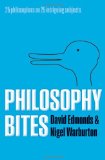
The wonderful Philosophy Bites podcast series has become a book, featuring 25 of the best interviews from over 100 available at philosophybites.com. The book is available now in the UK and will be in the US by the end of August. Apparently a sequel, Philosophy Bites Back, is already in the works. Tweet your answer to ‘What is philosophy?’ in 100 characters or less to enter the competition.

Philosophy Bites

Philosophy Bites by David Edmonds & Nigel Warburton (Oxford University Press, 2010)

(link for amazon.co.uk)

Product description from the publisher:

What does Anthony Grayling think about atheism? Adrian Moore about infinity? For the last three years, some of the world’s leading philosophers have held forth on their favorite topics on the immensely popular website philosophybites.com. The site now features more than one hundred short conversations, has had some 7 million downloads to date, and is listened to all over the globe.

Philosophy Bites brings together the twenty-five best interviews from this hugely successful website. Leading philosophers–including Simon Blackburn, Alain de Botton, Will Kymlicka, Alexander Nehamas, and more than twenty others–discuss a wide range of philosophical issues in a surprisingly lively, informal, and personal way. For instance, Peter Singer, arguably the world’s leading animal rights philosopher, states that for people living in the western world, vegetarianism is the only moral choice, but he allows that this would not be the case for an Inuit who lives by killing fish–causing an animal to suffer must be balanced against the necessity to survive. Julian Savulescu talks about the “yuk factor”–the natural revulsion that keeps us from practicing incest or cannibalism–attacking its use as an argument against gay rights and abortion. Anthony Appiah discusses cosmopolitanism, the idea that emphasizes that people around the world have much in common, and that we have to be able to live with people despite our differences. And Stephen Law shows why it is unreasonable to believe in an all-powerful, all-good deity.

Time, infinity, evil, friendship, animals, wine, sport, tragedy–all of human life is here. And as these bite-sized interviews reveal, often the most brilliant philosophers are eager and able to convey their thoughts, simply and clearly, on the great ideas of philosophy.

See also: philosophy bites website, past interviews

Philosophy Bites & Waterstones twitter competition details

#philbitescomp on twitter

My definition of philosophy…

Comments (0) - new books

Google Custom Search

Try a book search here:

Loading


Disclaimer: This site contains Amazon Affiliate links, mainly to provide book information, but I do receive a small fee (from Amazon, at no extra cost to the buyer) for items purchased after clicking through the links. Plus I get a disproportionately large thrill when I check my account in the morning! Thanks to all who visit my website.

If you would like to buy me a cup of coffee, click below to donate through PayPal…


Comments (6) - Uncategorized

new book – ‘Delusions of Gender: How Our Minds, Society, and Neurosexism Create Difference’ by Cordelia Fine

August 8, 2010

Delusions of Gender

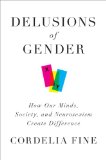
Delusions of Gender: How Our Minds, Society, and Neurosexism Create Difference by Cordelia Fine (W.W. Norton & Co, 2010)

(link for amazon.co.uk – available Sep 2)

Product description from the publisher:

A brilliantly researched and wickedly funny rebuttal of the pseudo-scientific claim that men are from Mars and women are from Venus. It’s the twenty-first century, and although we tried to rear unisex children—boys who play with dolls and girls who like trucks—we failed. Even though the glass ceiling is cracked, most women stay comfortably beneath it. And everywhere we hear about vitally important “hardwired” differences between male and female brains. The neuroscience that we read about in magazines, newspaper articles, books, and sometimes even scientific journals increasingly tells a tale of two brains, and the result is more often than not a validation of the status quo. Women, it seems, are just too intuitive for math; men too focused for housework.

Drawing on the latest research in neuroscience and psychology, Cordelia Fine debunks the myth of hardwired differences between men’s and women’s brains, unraveling the evidence behind such claims as men’s brains aren’t wired for empathy and women’s brains aren’t made to fix cars. She then goes one step further, offering a very different explanation of the dissimilarities between men’s and women’s behavior. Instead of a “male brain” and a “female brain,” Fine gives us a glimpse of plastic, mutable minds that are continuously influenced by cultural assumptions about gender.

Passionately argued and unfailingly astute, Delusions of Gender provides us with a much-needed corrective to the belief that men’s and women’s brains are intrinsically different—a belief that, as Fine shows with insight and humor, all too often works to the detriment of ourselves and our society.

See also: Author’s website, Publishers Weekly starred review, USA Today review

Comments (0) - cognitive science,culture,new books

new book – ‘Michelangelo’s Finger’ by Raymond Tallis

August 7, 2010

Michelangelo's Finger

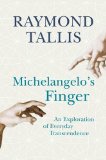
Michelangelo’s Finger: An Exploration of Everyday Transcendence by Raymond Tallis (Yale University Press, 2010)

(link for amazon.co.uk)

Michelangelo's Finger, UK ed

Product description from the publisher:

In this startlingly original and persuasive book, Raymond Tallis shows that it is easy to underestimate the influence of small things in determining what manner of creatures humans are. He argues that the independent movement of the human index finger is one such easily overlooked factor. Indeed, not for nothing is the index finger called the “forefinger.” It is the finger we most naturally deploy when we want to pry objects out of small spaces, but it plays a far more significant role in an action unique to us among primates: pointing.

Tallis argues that it is through pointing that the index finger made a significant contribution to the development of humans and to the creation of a human world separate from the rest of the natural world. Observing the ceiling of the Sistine Chapel and the hugely familiar and awkward encounter between Michelangelo’s God and Man through their index fingers, Tallis identifies the artist’s intuitive awareness of the central role of the index finger in making us unique. Just as the reaching index fingers of God and Man are here made central to the creation of our kind, so Tallis believes that the seemingly simple act of pointing, which is used in a wide variety of ways, is central to our extraordinary evolution.

book podcast, part 1:

Comments (0) - human evolution,new books