[ View menu ]

Archive

recent philosophy book – ‘Three Questions We Never Stop Asking’

August 26, 2010
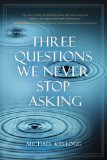
Three Questions We Never Stop Asking

Three Questions We Never Stop Asking by Michael Kellogg (Prometheus Books, 2010)
(link for UK)

Product description from the publisher:

What can I know? What may I hope? What ought I to do? These are three questions that—however much we immerse ourselves in the whirl and concerns of everyday life—we cannot, in the end, escape. They intrude themselves, not just in times of personal crisis, but at odd moments and in varied ways. Even those who are not inclined to the discipline of philosophy or even particularly reflective will feel their force on occasion. Whether we develop satisfactory answers or not, wrestling with such questions is part of what it is to be human.

In this excellent introduction to the essential issues that have preoccupied philosophers throughout the centuries, author Michael Kellogg provides fresh and engaging portraits of the greatest thinkers on each of these questions: Plato and Wittgenstein on the possibility of philosophical knowledge; Kant and Nietzsche on the existence of God; Aristotle and Heidegger on human virtue. The first member of the pair is a builder, the second a destroyer. One explores the promise of a theory, the other the consequences of its ruin.

These juxtaposed pairs are not self-contained, however. All six thinkers are engaged in a dialogue with one another on issues that touch our lives directly and profoundly. As Nietzsche explained, “I live as if the centuries were nothing.” The author has arranged them in an order that unveils an ever-deepening understanding of the moral, spiritual and intellectual space in which our lives unfold.

For anyone wishing to discover, or rediscover, philosophy in its original meaning—”the love of wisdom”—this engaging, clearly written, and accessible volume is an excellent place to start.
Comments (0) - new books

social perception in ‘God Soul Mind Brain: A Neuroscientist’s Reflections on the Spirit World’

August 22, 2010

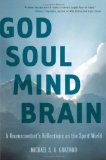
God Soul Mind Brain

Despite the title, God Soul Mind Brain: A Neuroscientist’s Reflections on the Spirit World (link for amazon.co.uk) is not primarily about religion or the spirit world from a neuroscientific perspective. Instead, gods and spirits figure as examples of a more general process of social perception that is the real focus of the work.

In a clear, reader-friendly manner, author Michael Graziano describes social perception as a mechanism for constructing simplified models of mental states and intentions. Because we are social animals we developed this capacity for constructing models of other minds. As with perception of objects, social perception is subject to illusions, such as the illusion that a ventriloquist’s dummy is a separate person.

Simplified models of intentionality consist of “point agents” assigned to spatial locations. Such mind-models are the source of concepts of spirits and souls. In this approach, for example, the God of monotheism represents “the perception of a single unified mind behind every otherwise inexplicable event.”

Graziano argues that consciousness can also be understood as a social perceptual model applied inwardly. The account of consciousness seemed to be the real core of the book, an original approach to the problem with potential applications from AI to multiple personality disorder.

Also included is a discussion of the brain circuitry involved in social perception, primarily the superior temporal polysensory (STP) area and the temporo-parietal junction (TPJ).

Graziano also discusses social imitation and memes as the source of human culture. What is missing is an account of the role of culture in affecting what kinds of entities (gods, spirits, souls, etc.) are modeled by the social perceptual system.

[Thanks to Leapfrog Press for allowing me to view an advance copy via NetGalley].

Product description from the publisher:

Written for the general public, God Soul Mind Brain explores the controversial relationship between science and religion by first dismissing the “science versus religion” debate as outdated and unnecessary. The cutting-edge field of social neuroscience explains how our perceptions of our own consciousness, of other people’s minds, and of spirits and gods depend on machinery in the brain that evolved to make us socially intelligent animals. In clear prose without technical jargon, Graziano discusses his and others’ findings in this 20-year-old field of study, and the implications for human spirituality and religion. By addressing head-on the fundamental issues of human consciousness, religion, and God, and how these elements relate to the science of the brain, Graziano presents an entirely new view of religion and science.

See also: “Why We See Spirits and Souls”, Graziano’s article at “Big Questions Online,” with lots of comments; author’s website

Comments (0) - cognitive science,consciousness,culture,new books

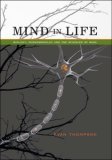
out in paperback – ‘Mind in Life: Biology, Phenomenology, and the Sciences of Mind’ by Evan Thompson

August 20, 2010

Mind in Life

Mind in Life: Biology, Phenomenology, and the Sciences of Mind by Evan Thompson (Belknap Press of Harvard University Press), originally published in 2007, is now available in paperback.

(link for amazon.co.uk)

Product description from the publisher:

How is life related to the mind? The question has long confounded philosophers and scientists, and it is this so-called explanatory gap between biological life and consciousness that Evan Thompson explores in Mind in Life.

Thompson draws upon sources as diverse as molecular biology, evolutionary theory, artificial life, complex systems theory, neuroscience, psychology, Continental Phenomenology, and analytic philosophy to argue that mind and life are more continuous than has previously been accepted, and that current explanations do not adequately address the myriad facets of the biology and phenomenology of mind. Where there is life, Thompson argues, there is mind: life and mind share common principles of self-organization, and the self-organizing features of mind are an enriched version of the self-organizing features of life. Rather than trying to close the explanatory gap, Thompson marshals philosophical and scientific analyses to bring unprecedented insight to the nature of life and consciousness. This synthesis of phenomenology and biology helps make Mind in Life a vital and long-awaited addition to his landmark volume The Embodied Mind: Cognitive Science and Human Experience (coauthored with Eleanor Rosch and Francisco Varela).

Endlessly interesting and accessible, Mind in Life is a groundbreaking addition to the fields of the theory of the mind, life science, and phenomenology.

See also: review at Notre Dame Philosophical Reviews (“should be read by all those interested in exploring new approaches in cognitive science”), author’s website

Comments (0) - consciousness,mind,philosophy of mind

new book – ‘Matter and Mind’ by Mario Bunge

August 15, 2010

An interesting-looking though pricey book from philosopher-physicist Mario Bunge — may be something to check for at your library or through interlibrary loan…

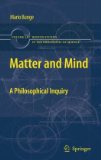
Matter and Mind

Matter and Mind: A Philosophical Inquiry (Boston Studies in the Philosophy of Science) (Springer, 2010)

(link for amazon.co.uk)

This book discusses two of the oldest and hardest problems in both science and philosophy: What is matter?, and What is mind? A reason for tackling both problems in a single book is that two of the most influential views in modern philosophy are that the universe is mental (idealism), and that the everything real is material (materialism). Most of the thinkers who espouse a materialist view of mind have obsolete ideas about matter, whereas those who claim that science supports idealism have not explained how the universe could have existed before humans emerged. Besides, both groups tend to ignore the other levels of existence—chemical, biological, social, and technological. If such levels and the concomitant emergence processes are ignored, the physicalism/spiritualism dilemma remains unsolved, whereas if they are included, the alleged mysteries are shown to be problems that science is treating successfully.

See also: Publisher’s webpage for the book

Comments (0) - consciousness,new books,philosophy of mind

new book – ‘Just Another Ape?’

August 14, 2010

Just Another Ape?

Just Another Ape? by Helene Guldberg (Imprint Academic, 2010)

(link for amazon.co.uk)

Product description from the publisher:

Today, the belief that human beings are special is distinctly out of fashion. Almost every day we are presented with new revelations about how animals are so much more like us than we ever imagined. The argument is at its most powerful when it comes to our closest living relatives – the great apes. This book argues that whatever first impressions might tell us, apes are really not ‘just like us’. Science has provided strong evidence that the boundaries between us and other species are vast. Unless we hold on to the belief in our exceptional abilities we will never be able to envision or build a better future – in which case, we might as well be monkeys.

See also: Author’s website

Comments (1) - mind,new books