[ View menu ]

Archive

tools for bibliophiles – Book Burro and Library Lookup

September 25, 2007

These are a couple of “cool tools” I have installed in my browser:

Book Burro – a Firefox extension that will show prices at the major online bookstores as well as some library availability (through WorldCat). When I’m browsing at Amazon, for example, I can click on the Book Burro panel to see if there’s a lower price elsewhere.

The LibraryLookup bookmarklet sits up on my bookmark toolbar. I can click it anytime I’m at a book page on Amazon to see whether my local library has it (since that library doesn’t show up on WorldCat).

This seems like a good context to say something about the Amazon links on this site. Amazon links are provided mainly for informational purposes; however I do have an “affiliate account,” so I receive a small referral fee for books purchased by clicking through the links. There is no extra charge to the customer for purchasing through this or other affiliate sites. (To anybody who has done that – thanks for the support!)

Comments (2) - book search

The Rapid Blip website

September 24, 2007

The Rapid Blip offers a nice collection of mind-related feeds, annotated bookmarks and books. I found the site because “My Mind on Books” is one of the feeds, along with Mind Hacks, PsyBlog, ScienceBlogs Channel: Brain & Behavior, Neuromarketing, Issues in the Philosophy of Cognitive Science and Mind, the Frontal Cortex and Dangerous Idea.

Powered by ScribeFire.

Comments (2) - mind

life imitates thought experiment – “Stereo Sue” and Mary

September 23, 2007

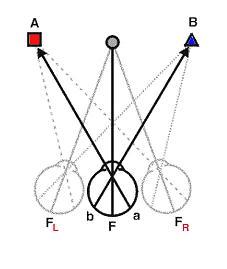
The Best American Science Writing 2007 includes the article “Stereo Sue” by Oliver Sacks, originally published in the New Yorker, June 19, 2006. Sacks relates the case of a woman neurobiologist, born cross-eyed, who had surgery as a child but never developed binocular vision.

I had asked Sue if she could imagine what the world would look like if viewed stereoscopically. Sue said she thought she could–after all, she was a professor of neurobiology, and she had read plenty of papers on visual processing, binocular vision, and stereopsis. She felt this knowledge had given her some special insight into what she was missing–she knew what stereopsis must be like, even if she had never experienced it.

But now, nine years after our initial conversation, she felt compelled to write to me about this question:

You asked me if I could imagine what the world would look like when viewed with two eyes. I told you that I thought I could. . . . But I was wrong.

[After some vision therapy she gained the ability to see in depth]… Her new vision was “absolutely delightful,” Sue wrote. “I had no idea what I had been missing.”
space4-2.JPG
This struck me as being amazingly similar to the famous philosophical thought experiment known as “Mary’s room” or “Mary the super-scientist” proposed by Frank Jackson (with its own Wikipedia entry that I quote from): “we are to imagine a scientist who knows everything there is to know about the science of color, but has never experienced color. The interesting question that Jackson raises is: Once she experiences color, does she learn anything new?”

Jackson’s thought experiment was an argument to support the existence of qualia and against physicalism, so it seems to me that the case of “Stereo Sue” lends support to the existence of “qualia.” Perhaps the case against physicalism is weaker since the thought experiment specified that Mary knew “everything” about the science of color. Sue, a neurobiologist who “had read plenty” on the subject of binocular vision, seems as close as a real-world example could get, however.

[Disclaimer: I’m not a philosopher, but I used to read and write abstracts for lots of philosophy articles.]

I’m not the first person to notice the similarity between “Stereo Sue” and Mary – it was discussed on the Brains forum, but nobody there commented on whether Sue’s experience would have any bearing on the thought experiment of Mary.

Comments (0) - mind,philosophy of mind

writing for thinking with ‘Accidental Genius’

September 22, 2007

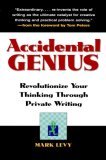
I’ve been dipping into this book recently: Accidental Genius: Revolutionize Your Thinking Through Private Writing by Mark Levy.
21sgaau6pol_aa_sl160_.jpg Levy advocates timed private writing, a concept similar to Julia Cameron’s “morning pages” (see The Artist’s Way). What I like about Levy’s book is that he focuses on thinking much more than the process of writing. The book is billed as a business book so the examples tend to be business-oriented, but the process can be applied to any situation. It’s also a nice, short, easy read at around 130 pages.

For example, one chapter talks about “focus-changers” and gives a list of about 35 questions, such as:

  • What was I thinking here?
  • How else can I say that?
  • How can I make this exciting?
  • How can I add value?
  • Why am I stuck at this particular point?
  • What do I think about that?
  • What does this remind me of? (p 42-43)

A limited preview is available at Google Book Search.

The author’s website has a “lost” chapter.

Comments (1) - mind

books on Consciousness & Thought – 5 most popular & 5 new releases

September 20, 2007

What do Michel Foucault and Thich Nhat Hanh have in common? Maybe not much, but both have bestselling books in Amazon’s “Consciousness & Thought” category (and they both live/d in France!)

Amazon’s lists are usually interesting to browse, though their subject categories can sometimes give you an odd assortment of titles. The category “Consciousness & Thought” is found in Books/Nonfiction/Philosophy.

Right now the top five books in this category are

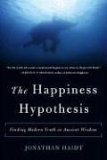
  1. The Happiness Hypothesis: Finding Modern Truth in Ancient Wisdom by Jonathan Haidt
  2. I Am a Strange Loop by Douglas Hofstadter (a personal favorite)
  3. The History of Sexuality: An Introduction by Michel Foucault
  4. The Miracle of Mindfulness by Thich Nhat Hanh
  5. Cultural Amnesia: Necessary Memories from History and the Arts by Clive James

2115210mjtl_aa_sl160_.jpgThis list should change as Amazon updates their bestseller information: Amazon’s most popular books in Consciousness & Thought

The top five new & future releases in Consciousness & Thought are

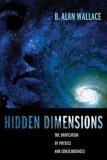
  1. Hidden Dimensions: The Unification of Physics and Consciousness (Columbia Series in Science and Religion) by B. Alan Wallace
  2. The Principles of Uncertainty by Maira Kalman
  3. The Meaning of the Body: Aesthetics of Human Understanding by Mark Johnson
  4. Existentialism Is a Humanism by Jean-Paul Sartre
  5. Did My Neurons Make Me Do It?: Philosophical and Neurobiological Perspectives on Moral Responsibility and Free Will

Link to the complete and ever-changing list:
Amazon’s bestselling new & future releases in Consciousness & Thought21b9fnms7vl_aa_sl160_.jpg

Comments (0) - consciousness,mind,new books