[ View menu ]

Archive

new book – ‘The Cave and the Light: Plato Versus Aristotle and the Struggle for the Soul of Western Civilization” by Arthur Herman

October 22, 2013
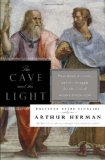
The Cave and the Light

The Cave and the Light: Plato Versus Aristotle, and the Struggle for the Soul of Western Civilization by Arthur Herman (Random House, 2013)

(kindle ed.), (amazon.co.uk)

Book description from the publisher:

Arthur Herman has now written the definitive sequel to his New York Times bestseller, How the Scots Invented the Modern World, and extends the themes of the book—which sold half a million copies worldwide—back to the ancient Greeks and forward to the age of the Internet. The Cave and the Light is a magisterial account of how the two greatest thinkers of the ancient world, Plato and Aristotle, laid the foundations of Western culture—and how their rivalry shaped the essential features of our culture down to the present day.

Plato came from a wealthy, connected Athenian family and lived a comfortable upper-class lifestyle until he met an odd little man named Socrates, who showed him a new world of ideas and ideals. Socrates taught Plato that a man must use reason to attain wisdom, and that the life of a lover of wisdom, a philosopher, was the pinnacle of achievement. Plato dedicated himself to living that ideal and went on to create a school, his famed Academy, to teach others the path to enlightenment through contemplation.

However, the same Academy that spread Plato’s teachings also fostered his greatest rival. Born to a family of Greek physicians, Aristotle had learned early on the value of observation and hands-on experience. Rather than rely on pure contemplation, he insisted that the truest path to knowledge is through empirical discovery and exploration of the world around us. Aristotle, Plato’s most brilliant pupil, thus settled on a philosophy very different from his instructor’s and launched a rivalry with profound effects on Western culture.

The two men disagreed on the fundamental purpose of the philosophy. For Plato, the image of the cave summed up man’s destined path, emerging from the darkness of material existence to the light of a higher and more spiritual truth. Aristotle thought otherwise. Instead of rising above mundane reality, he insisted, the philosopher’s job is to explain how the real world works, and how we can find our place in it. Aristotle set up a school in Athens to rival Plato’s Academy: the Lyceum. The competition that ensued between the two schools, and between Plato and Aristotle, set the world on an intellectual adventure that lasted through the Middle Ages and Renaissance and that still continues today.

From Martin Luther (who named Aristotle the third great enemy of true religion, after the devil and the Pope) to Karl Marx (whose utopian views rival Plato’s), heroes and villains of history have been inspired and incensed by these two master philosophers—but never outside their influence.

Accessible, riveting, and eloquently written, The Cave and the Light provides a stunning new perspective on the Western world, certain to open eyes and stir debate.

Google Books preview:
Comments (0) - culture,new books

out in paperback – ‘The Agile Mind’ by Wilma Koutstaal

October 21, 2013

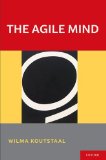
The Agile Mind

The Agile Mind by Wilma Koutstaal (Oxford University Press, USA, 2013)

(amazon.co.uk)

Book description from the publisher:

This text proposes a new integrative framework for understanding and promoting creatively adaptive thinking. The mind is not only cognition, narrowly construed, but is deeply intermeshed with action, perception, and emotion. This means that optimal mental agility is realized at the dynamic intersection of environment, brain, and mind.
Building on empirical research from the behavioral and brain sciences, from developmental and social psychology, and from neuropsychology, psychopathology, and allied disciplines, this book argues that understanding our agile minds requires that we go beyond dichotomous classifications of cognition as intuitive versus deliberate. When we are optimally creatively adaptive, we are able to adroitly move across not only a wide range of levels of cognitive control, but also across multiple levels of detail. Neither abstraction nor specificity, neither controlled nor automatic processes alone are what is needed. Contextually sensitive variation is essential, including rapidly intermixed modes of cognitive control, if we are to realize our fullest capacities for insightful innovation, fluent improvisation, and flexible thinking.
Written for an interdisciplinary audience, empirical findings are enriched with insights from the arts and literature. Mastering the many factors that can help to promote mental agility is important to each of us, both individually and collectively, as shapers and makers of our selves and our societies.

Comments (0) - cognitive science,new books,psychology

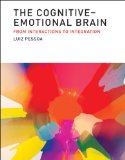
new book – ‘The Cognitive-Emotional Brain: From Interactions to Integration’ by Luiz Pessoa

October 18, 2013

The Cognitive-Emotional Brain

The Cognitive-Emotional Brain: From Interactions to Integration by Luiz Pessoa (MIT Press, 2013)

(amazon.co.uk)

Book description from the publisher:

The idea that a specific brain circuit constitutes the emotional brain (and its corollary, that cognition resides elsewhere) shaped thinking about emotion and the brain for many years. Recent behavioral, neuropsychological, neuroanatomy, and neuroimaging research, however, suggests that emotion interacts with cognition in the brain. In this book, Luiz Pessoa moves beyond the debate over functional specialization, describing the many ways that emotion and cognition interact and are integrated in the brain.

The amygdala is often viewed as the quintessential emotional region of the brain, but Pessoa reviews findings revealing that many of its functions contribute to attention and decision making, critical components of cognitive functions. He counters the idea of a subcortical pathway to the amygdala for affective visual stimuli with an alternate framework, the multiple waves model. Citing research on reward and motivation, Pessoa also proposes the dual competition model, which explains emotional and motivational processing in terms of their influence on competition processes at both perceptual and executive function levels. He considers the broader issue of structure-function mappings, and examines anatomical features of several regions often associated with emotional processing, highlighting their connectivity properties. As new theoretical frameworks of distributed processing evolve, Pessoa concludes, a truly dynamic network view of the brain will emerge, in which “emotion” and “cognition” may be used as labels in the context of certain behaviors, but will not map cleanly into compartmentalized pieces of the brain.

Google Books preview:

See also: Author’s blog

Comments (0) - cognitive science,new books

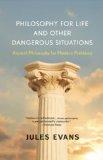
new book – ‘Philosophy for Life and Other Dangerous Situations: Ancient Philosophy for Modern Problems’ by Jules Evans

October 16, 2013

Philosophy for Life

Philosophy for Life and Other Dangerous Situations: Ancient Philosophy for Modern Problems by Jules Evans (New World Library, 2013)

(kindle ed.), (amazon.co.uk)

Book description from the publisher:

When philosophy rescued him from an emotional crisis, Jules Evans became fascinated by how ideas invented over two thousand years ago can help us today. He interviewed soldiers, psychologists, gangsters, astronauts, and anarchists and discovered the ways that people are using philosophy now to build better lives. Ancient philosophy has inspired modern communities — Socratic cafés, Stoic armies, Epicurean communes — and even whole nations in the quest for the good life.

This book is an invitation to a dream school with a rowdy faculty that includes twelve of the greatest philosophers from the ancient world, sharing their lessons on happiness, resilience, and much more. Lively and inspiring, this is philosophy for the street, for the workplace, for the battlefield, for love, for life.

Google Books preview:

See also: Book website

Comments (0) - new books,psychology

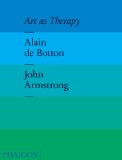
new book – ‘Art as Therapy’ by Alain de Botton and John Armstrong

October 14, 2013

Art as Therapy

Art as Therapy by Alain de Botton and John Armstrong (Phaidon Press, 2013)

(amazon.co.uk)

Book description from the publisher:

What is art’s purpose? In this engaging, lively, and controversial new book, bestselling philosopher Alain de Botton and art historian John Armstrong propose a new way of looking at familiar masterpieces, suggesting that they can be useful, relevant, and – above all else – therapeutic for their viewers. De Botton argues that certain great works offer clues on managing the tensions and confusions of everyday life. Chapters on Love, Nature, Money, and Politics outline how art can help with these common difficulties – for example, Vermeer’s Girl Reading a Letter helps us focus on what we want to be loved for; Serra’s Fernando Pessoa reminds us of the importance of dignity in suffering; and Manet’s Bunch of Asparagus teaches us how to preserve and value our long-term partners. Art as Therapy offers an unconventional perspective, demonstrating how art can guide us, console us, and help us better understand ourselves.

See also: Book website

Comments (0) - culture,new books,psychology