$30 off all Kindle Fire tablets at Amazon! – code MAYDAY30
January 10, 2014
$30 off all Kindle Fire tablets at Amazon! – code MAYDAY30 http://t.co/iBfmsEbl6w via @amazon
— Debbie A Foster (@mymindonbooks) January 10, 2014
books on the mind, consciousness, cognitive science…
January 10, 2014
$30 off all Kindle Fire tablets at Amazon! – code MAYDAY30 http://t.co/iBfmsEbl6w via @amazon
— Debbie A Foster (@mymindonbooks) January 10, 2014
January 9, 2014
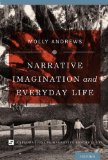
Narrative Imagination and Everyday Life (Explorations in Narrative Psychology) by Molly Andrews (Oxford University Press, USA, 2014)
Book description from the publisher:
It has been widely acknowledged that in the past few decades, there has been a ‘narrative turn’ – an interest in the storied nature of human life. However, very little work has discussed the role of imagination. Narrative Imagination and Everyday Life looks at how stories and imagination come together in our daily lives, influencing not only our thoughts about what we see and do, but also our contemplation of what is possible and what our limitations are. Without imagination, we are forever doomed to the here and now. But our imaginations are always influenced by our own particular experiences, which we recount to ourselves and others through stories – both told and untold.
Combining scholarly research with personal experience, Andrews examines how story and imagination come together in different areas of life such as education, politics, and aging. She focuses on the importance of the narrative imagination when listening to the experiences of others who have very different experiences of the world, asking if it is ever possible to understand the suffering of others. She asks what kind of stories influence our thinking about who we are becoming in our aging selves. In the chapter on teaching, she looks at the dynamics of the teacher-student relationship and the stultifying effect of some educational practices and policies on the imagination. The discussion on education and global citizenship leads directly into the chapter on political narratives, where Andrews uses the example of Barack Obama as one of the most strategic storytellers of our time.
Narrative and imagination are integrally tied to one another; this is immediately clear to anyone who stops to think about stories real and imagined, about the past or in a promised, or feared, future. In asking why and how this is so, Andrews directs us to ruminate on what it means to be human.
Google Books preview:
See also: Author’s webpage
January 8, 2014
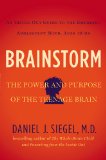
Brainstorm: The Power and Purpose of the Teenage Brain by Daniel J. Siegel (Tarcher, 2014)
Book description from the publisher:
Between the ages of 12 and 24, the brain changes in important, and oftentimes maddening, ways. It’s no wonder that many parents approach their child’s adolescence with fear and trepidation. According to renowned neuropsychiatrist Daniel Siegel, however, if parents and teens can work together to form a deeper understanding of the brain science behind all the tumult, they will be able to turn conflict into connection and form a deeper understanding of one another.
In Brainstorm, Siegel illuminates how brain development impacts teenagers’ behavior and relationships. Drawing on important new research in the field of interpersonal neurobiology, he explores exciting ways in which understanding how the teenage brain functions can help parents make what is in fact an incredibly positive period of growth, change, and experimentation in their children’s lives less lonely and distressing on both sides of the generational divide.
Google Books preview:
See also: Author’s website
January 7, 2014
out in paperback – 'The Power of Habit: Why We Do What We Do in Life & Business' by C Duhigg (@cduhigg) http://t.co/G7nQQVIZJS via @amazon
— Debbie A Foster (@mymindonbooks) January 7, 2014
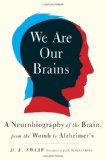
We Are Our Brains: A Neurobiography of the Brain, from the Womb to Alzheimer’s by D.F. Swaab (Spiegel & Grau, 2014)
(kindle ed.), (amazon.co.uk), (UK kindle ed.)
Book description from the publisher:
A vivid account of what makes us human.
Based [on] groundbreaking new research, We Are Our Brains is a sweeping biography of the human brain, from infancy to adulthood to old age. Renowned neuroscientist D. F. Swaab takes us on a guided tour of the intricate inner workings that determine our potential, our limitations, and our desires, with each chapter serving as an eye-opening window on a different stage of brain development: the gender differences that develop in the embryonic brain, what goes on in the heads of adolescents, how parenthood permanently changes the brain.
Moving beyond pure biological understanding, Swaab presents a controversial and multilayered ethical argument surrounding the brain. Far from possessing true free will, Swaab argues, we have very little control over our everyday decisions, or who we will become, because our brains predetermine everything about us, long before we are born, from our moral character to our religious leanings to whom we fall in love with. And he challenges many of our prevailing assumptions about what makes us human, decoding the intricate “moral networks” that allow us to experience emotion, revealing maternal instinct to be the result of hormonal changes in the pregnant brain, and exploring the way that religious “imprinting” shapes the brain during childhood. Rife with memorable case studies, We Are Our Brains is already a bestselling international phenomenon. It aims to demystify the chemical and genetic workings of our most mysterious organ, in the process helping us to see who we are through an entirely new lens.
Did you know?
• The father’s brain is affected in pregnancy as well as the mother’s.
• The withdrawal symptoms we experience at the end of a love affair mirror chemical addiction.
• Growing up bilingual reduces the likelihood of Alzheimer’s.
• Parental religion is imprinted on our brains during early development, much as our native language is.
Google Books preview:
See also: Book excerpt “This is Your Brain on Religion” at Salon.com