June 23, 2013
Future Bright: A Transforming Vision of Human Intelligence by Michael E. Martinez (Oxford University Press, USA, 2013)
(kindle ed.), (amazon.co.uk)
Book description from the publisher:
Ever since Alfred Binet invented the first IQ test more than a century ago, we have thought of intelligence as fixed from birth and unalterable-as genetically programmed and immutable as eye color. If our IQ was 115 at the age of eighteen, it would be 115 at age thirty-two and at age seventy-two. But as Michael Martinez reveals in Future Bright, human intelligence is not at all a static quality. Drawing on cutting-edge research, Martinez shows that not only can we improve our IQ scores–with the right approach, we can improve intelligence itself.
Future Bright introduces the radical view that intelligence can be learned. Ranging from the search for Einstein’s brain to the curious case of a railroad worker whose frontal lobe was pierced by a tamping iron, Martinez looks at some of the most fascinating stories in the history of cognitive science, revealing how researchers have sought insight into intelligence by understanding more about the brain. We see how the physical structures of the brain relate to how we think, discover how memories are made, and examine the several kinds of intelligence. Martinez then explores the astonishing evidence from recent cognitive science that intelligence can be learned. Equally important, he concludes with ten strategies for enhancing our intelligence, beginning with the all-important idea of making improved intelligence a conscious goal, and including such ideas as reading books, learning to be an expert, finding where our talents lie and, not least, eating well and exercising, both of which improve brain function significantly.
Genetics is only one of the factors that shape our intelligence. Future Bright highlights the many ways that the environment and education can increase our brain power, promoting the growth of a more intelligent society–one that will lead us into a brighter future indeed.
Google Books preview:
Comments (0)
- cognitive science,new books
Emotion and Imagination by Adam Morton (Polity, 2013) (“Look Inside” available at Amazon.com)
(amazon.co.uk)
Book description from the publisher:
Recent years have seen an enormous amount of philosophical research into the emotions and the imagination, but as yet little work has been done to connect the two. In his engaging and highly original new book, Adam Morton shows that all emotions require some form of imagination and goes on to fully explore the link between these two important concepts both within philosophy and in everyday life.
We may take it for granted that complex emotions, such as hope and resentment, require a rich thinking and an engagement with the imagination, but Morton shows how more basic and responsive emotions such as fear and anger also require us to take account of possibilities and opportunities beyond the immediate situation. Interweaving a powerful tapestry of subtle argument with vivid detail, the book highlights that many emotions, more than we tend to suppose, require us to imagine a situation from a particular point of view and that this in itself can be the source of further emotional feeling. Morton goes on to demonstrate the important role that emotions play in our moral lives, throwing light on emotions such as self-respect, disapproval, and remorse, and the price we pay for having them. He explores the intricate nature of moral emotions and the challenges we face when integrating our thinking on morality and the emotions.
This compelling and thought-provoking new book challenges many assumptions about the nature of emotion and imagination and will appeal to anyone seeking a deeper understanding of the role that these concepts play in our lives. The book also has far reaching implications that will spark debate amongst scholars and students for some time to come.
See also: Author’s website
Comments (0)
- new books
June 21, 2013
The Mind within the Brain: How We Make Decisions and How Those Decisions Go Wrong by A. David Redish (Oxford University Press, USA, 2013)
(kindle ed.), (amazon.co.uk)
Book description from the publisher:
In The Mind within the Brain, David Redish brings together cutting edge research in psychology, robotics, economics, neuroscience, and the new fields of neuroeconomics and computational psychiatry, to offer a unified theory of human decision-making. Most importantly, Redish shows how vulnerabilities, or “failure-modes,” in the decision-making system can lead to serious dysfunctions, such as irrational behavior, addictions, problem gambling, and PTSD.
Told with verve and humor in an easily readable style, Redish makes these difficult concepts understandable. Ranging widely from the surprising roles of emotion, habit, and narrative in decision-making, to the larger philosophical questions of how mind and brain are related, what makes us human, the nature of morality, free will, and the conundrum of robotics and consciousness, The Mind within the Brain offers fresh insight into one of the most complex aspects of human behavior.
Google Books preview:
See also: Author’s website
Comments (0)
- cognitive science,new books
June 16, 2013
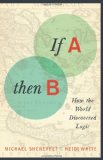
If A, Then B: How the World Discovered Logic by Michael Shenefelt and Heidi White (Columbia University Press, 2013)
(kindle ed.), (amazon.co.uk)
Book description from the publisher:
While logical principles seem timeless, placeless, and eternal, their discovery is a story of personal accidents, political tragedies, and broad social change. If A, Then B begins with logic’s emergence twenty-three centuries ago and tracks its expansion as a discipline ever since. It explores where our sense of logic comes from and what it really is a sense of. It also explains what drove human beings to start studying logic in the first place.
Logic is more than the work of logicians alone. Its discoveries have survived only because logicians have also been able to find a willing audience, and audiences are a consequence of social forces affecting large numbers of people, quite apart from individual will. This study therefore treats politics, economics, technology, and geography as fundamental factors in generating an audience for logic — grounding the discipline’s abstract principles in a compelling material narrative. The authors explain the turbulent times of the enigmatic Aristotle, the ancient Stoic Chrysippus, the medieval theologian Peter Abelard, and the modern thinkers René Descartes, David Hume, Jeremy Bentham, George Boole, Augustus De Morgan, John Stuart Mill, Gottlob Frege, Bertrand Russell, and Alan Turing. Examining a variety of mysteries, such as why so many branches of logic (syllogistic, Stoic, inductive, and symbolic) have arisen only in particular places and periods, If A, Then B is the first book to situate the history of logic within the movements of a larger social world.
See also: Book website
Comments (0)
- culture,new books
June 14, 2013
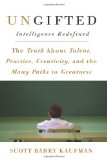
Ungifted: Intelligence Redefined by Scott Barry Kaufman (Basic Books, 2013)
(kindle ed.), (amazon.co.uk)
Book description from the publisher:
Child prodigies. Gifted and Talented Programs. Perfect 2400s on the SAT. Sometimes it feels like the world is conspiring to make the rest of us feel inadequate. Those children tapped as possessing special abilities will go on to achieve great things, while the rest of us have little chance of realizing our dreams. Right?
In Ungifted, cognitive psychologist Scott Barry Kaufman—who was relegated to special education as a child—sets out to show that the way we interpret traditional metrics of intelligence is misguided. Kaufman explores the latest research in genetics and neuroscience, as well as evolutionary, developmental, social, positive, and cognitive psychology, to challenge the conventional wisdom about the childhood predictors of adult success. He reveals that there are many paths to greatness, and argues for a more holistic approach to achievement that takes into account each young person’s personal goals, individual psychology, and developmental trajectory. In so doing, he increases our appreciation for the intelligence and diverse strengths of prodigies, savants, and late bloomers, as well as those with dyslexia, autism, schizophrenia, and ADHD.
Combining original research, anecdotes, and a singular compassion, Ungifted proves that anyone—even those without readily observable gifts at any single moment in time—can become great.
See also: Author’s website
Comments (0)
- cognitive science,new books,psychology