May 20, 2008
Um. . .: Slips, Stumbles, and Verbal Blunders, and What They Mean by Michael Erard (Pantheon, 2007).
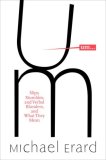
This book takes a detailed look at verbal blunders of all sorts, as well as attitudes towards them and approaches to cataloging and studying them. The author finds that “…verbal blundering is integral to language, not something that intrudes upon it.” (p. 55)
Pause fillers like “uh” and “um,” restarted sentences, and repeated words are the most common speech disturbances, but they were rarely noticed or commented on until voice recording technologies put everyday speech under heightened scrutiny. Slips of the tongue are the rarest kind of error but perhaps for that reason the most noticeable.
Among the topics treated in the book are “the aesthetic of umlessness” (p. 113), Toastmasters, bloopers, and the verbal blunders of President George W. Bush.
The book includes a section of recommended reading and a “field guide” to blunder terms. The website www.umthebook.com has the full bibliography and endnotes, plus a rich array of supplementary material.
Comments (1)
- Uncategorized
May 18, 2008
This was the featured book for today at Powell’s Daily Dose (selected reader review):
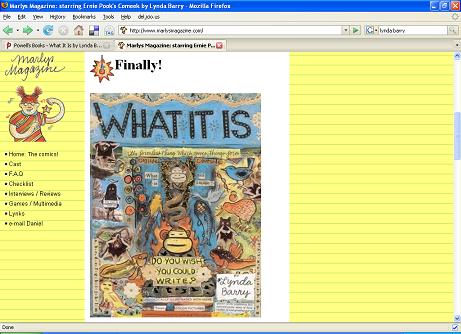
from the product description:
How do objects summon memories? What do real images feel like? For decades, these types of questions have permeated the pages of Lynda Barry’s compositions, with words attracting pictures and conjuring places through a pen that first and foremost keeps on moving. What It Is demonstrates a tried-and-true creative method that is playful, powerful, and accessible to anyone with an inquisitive wish to write or to remember. Composed of completely new material, each page of Barry’s first Drawn & Quarterly book is a full-color collage that is not only a gentle guide to this process but an invigorating example of exactly what it is: “The ordinary is extraordinary.”
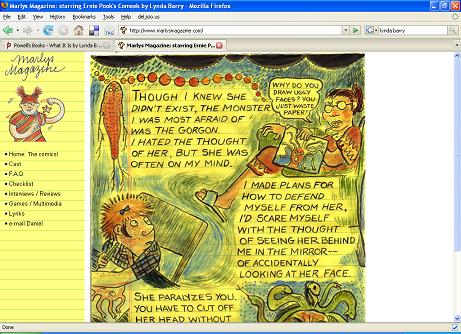
Marlys Magazine website also has some sample pages:
Comments (0)
- new books
May 16, 2008
I’ve noticed a number of new books coming out on the subject of memory; here’s a short list: 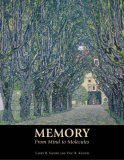
The Woman Who Can’t Forget: The Extraordinary Story of Living with the Most Remarkable Memory Known to Science–A Memoir by Jill Price with Bart Davis (Free Press, 2008)
Can’t Remember What I Forgot: The Good News from the Front Lines of Memory Research by Sue Halpern (Harmony, 2008) author’s blog
Memory: From Mind to Molecules by Larry Squire and Eric Kandel (Roberts and Co, 2nd ed., coming in July 2008)
The Metaphysics of Memory (Philosophical Studies Series) by Sven Bernecker (Springer, 2008)
……………..
And this:
A bibliography and resource list on the interdisciplinary study of memory, updated in Nov. 2007, by John Sutton, Philosophy Dept., Macquarie University
Comments (0)
- mind,new books
May 14, 2008
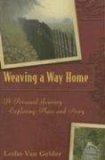 Weaving a Way Home: A Personal Journey Exploring Place and Story by Leslie Van Gelder (University of Michigan Press, 2008).
I received this book through the LibraryThing Early Reviewers program, though in this case it wasn’t really early, since the book came out in March. The subtitle well expresses what the book is about — the author’s personal, often poetic, reflections on place and story. “Place” was emphasized much more than “story”; perhaps the theme could be described as “how people relate to places through story.”
Van Gelder first looks at the notion of “wilderness” in relation to similar concepts of “wildlands” and “the wild.” Then the idea of “home” is examined and finally the attraction of “ruins.” The last part of the book works out a contrast between “anthropomorphizing” and “anthropocentric” cultures.
Here is an excerpt on the difference between being from a place and being of a place (p. 58-59):
The ambiguity of the question “Where are you from?” stems from the English language itself because the very expression means that you are not “from” where you are now. … Modern day English does not allow the preposition with which the French take comfort: of. Lancelot du Lac was Lancelot of the Lake, and when asked in France where I am of, I do not answer in terms of location so much as ancestry and emotion. Of asks me “Where are my people and where am I home?” because when I leave that place I have only left it physically and am still possessed by it. Of is a statement of relation, from a point of departure.
I also liked this quote (p. 45):
Edmund Carpenter writes in ‘Eskimo Realities‘ of the Inuit approach to language not as a form of labeling the known but as calling forth from formless into form. “Words do not label things already there,” he writes, “Words are like the knife of the carver: they free the idea, the thing, from the general formlessness of the outside. As a man speaks, not only his language is in a state of birth, but also the very thing about which he is talking.”
Van Gelder and her husband, Kevin Sharpe, study Paleolithic cave art in France. Here is a link to a paper on Children and Paleolithic ‘Art’
Comments (0)
- culture
May 13, 2008
I was thinking of linking to books by the authors mentioned by David Brooks in his New York Times column “The Neural Buddhists,” but then I found out that Neuroanthropology has already done it —in “David Brooks Bonus.”
Comments (0)
- cognitive science,mind