[ View menu ]

Archive

Susan Blackmore at TED.com

June 4, 2008


Susan Blackmore’s recent TED Talk on memes and “temes” (techno-memes) is up at TED and, if all goes well, embedded above.
Blackmore wrote one of the best books on the concept of memetics — The Meme Machine — and is also known to consciousness investigators as author of Consciousness: An Introduction, Conversations on Consciousness: What the Best Minds Think about the Brain, Free Will, and What It Means to Be Human, and more.

update 6/5 -Blackmore has a bibliography on memetics at her website.

Comments (2) - culture

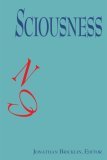
currently reading: ‘Sciousness’

June 3, 2008

Sciousness by Jonathan Bricklin explores nondual aspects of William James’s thought, especially his notion of “sciousness.”

More of a review coming soon, but here is an excerpt from Bricklin’s essay (p. 71):

The reverberation of striving for and against, of welcoming and opposing, that generates the sense of self, defines a range within which all emotions arise. Every emotion is found somewhere between them. To focus, however, as James does, exclusively on the movement between the polar opposites of welcoming and opposing is to lose sight of a more fundamental movement between a neutral state of consciousness and all others — that is, the movement between sciousness and con-sciousness. To describe the feeling of self without reference to sciousness is like describing sound without silence — the silence that forms the contour of any sound that is heard. Just as there can be no sense of sound without a sense of silence, there can be no sense of self without a non-self background to give it definition. “The palpitating inward life” of welcoming and opposing cannot itself give rise to self-feeling any more than the change from soft to loud gives rise to sound. As sound is defined by its contrast to silence, so, too, the “reverberation” (second beat) of “I” is defined by its contrast to a first beat non-“I.”

Comments (3) - consciousness,self

Cognitive science books 2008

June 1, 2008

Following is a list of cognitive science books new/forthcoming in 2008, to be added to the list in the sidebar. This selection is based on a search of WorldCat, so they are titles that have been chosen by libraries. [6/13 – just updated a few titles that have since been released]

Applied Attention Theory by Christopher D Wickens and Jason S McCarley (Boca Raton: CRC Press, 2008)

Applying Cognitive Science to Education: Thinking and Learning in Scientific and Other Complex Domains (Bradford Books) by F Reif (Cambridge, Mass.; London: MIT, 2008) forthcoming

Better Than Conscious?: Decision Making, the Human Mind, and Implications for Institutions ed. by Christoph Engel and Wolf Singer (Cambridge, Mass.: MIT Press, 2008)

Beyond Happiness: Deepening the Dialogue Between Buddhism, Psychotherapy and the Mind Sciences by Gay Watson (London: Karnac Books, 2008)

The Bounds of Cognition by Frederick Adams and Kenneth Aizawa (Malden, Mass.; Oxford : Blackwell Pub., 2008)

The Cambridge Handbook of Computational Psychology (Cambridge Handbook Of…)ed. by Ron Sun (Cambridge; New York: Cambridge University Press, 2008)

Cognitive Economics by Bernard Walliser (Berlin: Springer, 2008)

Cognitive Science (SAGE Benchmarks in Psychology Series) ed. by Koen Lamberts (Los Angeles; London: SAGE, 2008). 6 vols.

Cognitive Science Compendium ed. by Miao-Kun Sun (New York: Nova Science Publishers, 2008) forthcoming

Cognitive Sciences Research Progress ed. by Miao-Kun Sun (New York: Nova Science Publishers, Inc., 2008) forthcoming

Creative Model Construction in Scientists and Students: The Role of Imagery, Analogy, and Mental Simulation by John J Clement (Dordrecht; London: Springer, 2008) forthcoming

History of Cognitive Neuroscience by M.R. Bennett and P.M.S. Hacker (Malden, Mass.: Wiley-Blackwell, 2008) forthcoming

Human Reasoning and Cognitive Science (Bradford Books) by Keith Stenning and Michiel van Lambalgen (Cambridge, Mass.: MIT Press, 2008) forthcoming

I-Language: An Introduction to Linguistics as Cognitive Science by Daniela Isac and Charles Reiss (Oxford : Oxford University Press, 2008) (textbook)

The Innate Mind: Vol. 3, Foundations and the Future (Evolution and Cognition)ed. by Peter Carruthers; Stephen Laurence; Stephen P Stich (New York; Oxford: Oxford University Press, 2008)

Midbrain Mutiny: The Picoeconomics and Neuroeconomics of Disordered Gambling: Economic Theory and Cognitive Science (Bradford Books) by Don Ross; et al (Cambridge, Mass.: MIT Press, 2008)

Mind and Cognition: An Anthology, 3rd ed. (Blackwell Philosophy Anthologies) ed. by William G Lycan and Jesse J Prinz (Malden, Mass.; Oxford: Blackwell Pub. Ltd, 2008)

Mind, Brain and the Elusive Soul: Human Systems of Cognitive Science and Religion by Mark Graves (Aldershot, England ; Burlington, Vermont: Ashgate, 2008)

Models of Brain and Mind: Physical, Computational and Psychological Approaches (Progress in Brain Research, Vol. 168) ed. by Rahul Banerjee; B K Chakrabarti (Amsterdam; London: Elsevier, 2008)

Neuroeconomics: A Guide to the New Science of Making Choices by Peter E Politser (Oxford; New York: Oxford University Press, 2008)

Novel Approaches in Cognitive Informatics and Natural Intelligence ed. by Yingxu Wang (Hershey, Pa. : Information Science Reference, 2009) forthcoming

The Probabilistic Mind: Prospects for Bayesian Cognitive Science by Nick Chater and M Oaksford (Oxford; New York: Oxford University Press, 2008)

Strange Concepts and the Stories They Make Possible: Cognition, Culture, Narrative by Lisa Zunshine (Baltimore : Johns Hopkins University Press, 2008) forthcoming

Truly Understood by Christopher Peacocke (Oxford: Oxford University Press, 2008)

Comments (3) - cognitive science,new books

new book: ‘The Probabilistic Mind: Prospects for Bayesian Cognitive Science’

May 31, 2008

The new book The Probabilistic Mind: Prospects for Bayesian Cognitive Science by Nick Chater and Mike Oaksford (Oxford, 2008) [Search Inside the Book available at Amazon] appears to be unrelated to the New Scientist article on Bayesian statistics and brain functions discussed today at Mind Hacks.


From the product description for The Probabilistic Mind:

The rational analysis method, first proposed by John R. Anderson, has been enormously influential in helping us understand high-level cognitive processes.

The Probabilistic Mind is a follow-up to the influential and highly cited ‘Rational Models of Cognition’ (OUP, 1998). It brings together developments in understanding how, and how far, high-level cognitive processes can be understood in rational terms, and particularly using probabilistic Bayesian methods. It synthesizes and evaluates the progress in the past decade, taking into account developments in Bayesian statistics, statistical analysis of the cognitive ‘environment’ and a variety of theoretical and experimental lines of research. The scope of the book is broad, covering important recent work in reasoning, decision making, categorization, and memory. Including chapters from many of the leading figures in this field,
The Probabilistic Mind will be valuable for psychologists and philosophers interested in cognition.

Comments (0) - cognitive science,new books

on ‘Authenticity: Clearing the Junk: A Buddhist Perspective’

May 28, 2008

Once again I was gifted with a book through the wonderful Early Reviewers Program at LibraryThing. This time it is Authenticity: Clearing the Junk: A Buddhist Perspective by Venerable Yifa (Lantern, 2007). Speaking unpretentiously, like a wise sister, Yifa looks at junk in many manifestations: junk food, stuff, communication, relationships, emotions and thoughts.

This slim volume does not have practical tips for dealing with clutter, nor does it advocate asceticism for all, but takes more of a typically Buddhist approach that involves changing attitudes, working from the inside out. One aspect of the Buddhist approach is to evaluate how behaviors affect the mind, seeking to promote those that are conducive to mental equanimity. Another is to look at whole systems, focusing on the interdependence of all things.

It was surprising to come across a reference to Heidegger in the midst of this Buddhist book, but I appreciated the concept. Yifa refers to “…a kind of junk conversation where we’re being what the German philosopher Martin Heidegger (1889-1976) called das Man. Das Man is the everyday and impersonal public face of who we are. It’s the type of individual who doesn’t mean what he says, and who doesn’t bother whether he’s authentic or truthful. He gets by on white lies, exaggerations, small talk, and sarcasm. In the process, the individual forgets who he is and replaces his authentic self with a kind of shallow and flexible persona that adapts to all things and believes in nothing.” p. 58. (More on ‘Das Man’ at Wikipedia)

Another nice quote from the book is an anonymous Chinese piece called “The Temperature of Speech” (p. 62):

If something is urgent, say it slowly.

If something is important, say it clearly.

If something is unimportant, say it humorously.

If something is uncertain, say it discreetly.

If something did not happen, do not mention it at all.

If you cannot do something, do not claim it for yourself.

If what you say could harm others, keep silent.

When something annoys you, don’t take it personally.

If something makes you happy, don’t make too much of it.

When talking about your own affairs, pay attention to how you talk.

When talking about someone else’s affairs, be judicious.

When your heart is broken, not everyone needs to know.

Of things that remain to be done, talk of them when they are finished.

Of things that happen in the future, don’t talk of them in the present.

If I have not satisfied you, tell me.

These principles are well exemplified in Yifa’s writing itself.

Sample content (Table of Contents, Introduction and Chapter One) available through the publisher

Yifa interview on YouTube

Comments (2) - meditation