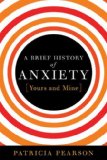
A Brief History of Anxiety…Yours and Mine by Patricia Pearson (Bloomsbury USA, 2008) is partly a memoir of the author’s experience of “generalized anxiety disorder” and partly an examination of anxiety as a social and psychological phenomenon, flavored with lots of wry humor, as evidenced by the opening sentence:
Given my druthers, I would prefer not to be afraid of the following: phone bills, ovarian cancer, black bears, climate change, walking on golf courses at night, being blundered into by winged insects; unseemly heights, running out of gas, having the mole on my back that I can feel, but not see, secretly morph into a malignant melanoma.
One of the books Pearson often refers to is Landscapes of fear by Yi-Fu Tuan (Pantheon Book, 1979)
Picking up the “mind alphabet” series again… I’d gotten stuck on “H” months ago but having seen “humor” cropping up as a theme in some recent items, it seems like a good excuse to resume.
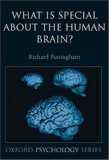
It is plausible that evolution could have created the human skeleton, but it is hard to believe that it created the human mind. Yet, in six or seven million years evolution came up with Homo sapiens, a creature unlike anything the world had ever known. The mental gap between man and ape is immense, and yet evolution bridged that gap in so short a space of time. Since the brain is the organ of the mind, it is natural to assume that during the evolution of our hominid ancestors there were changes in the brain that can account for this gap. This book is a search for those changes.
It is not enough to understand the universe, the world, or the animal kingdom: we need to understand ourselves. Humans are unlike any other animal in dominating the earth and adapting to any environment. This book searches for specializations in the human brain that make this possible. As well as considering the anatomical differences, it examines the contribution of different areas of the brain – reviewing studies in which functional brain imaging has been used to study the brain mechanisms that are involved in perception, manual skill, language, planning, reasoning, and social cognition. It considers a range of skills unique to us – for example our ability to learn a language and pass on cultural traditions in this way, and become aware of our own thoughts through inner speech
Written in a lively style by a distinguished scientist who has made his own major contribution to our understanding of the mind, the book is a far-reaching and exciting quest to understand those things that make humans unique.
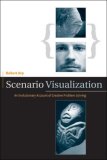
In order to solve problems, humans are able to synthesize apparently unrelated concepts, take advantage of serendipitous opportunities, hypothesize, invent, and engage in other similarly abstract and creative activities, primarily through the use of their visual systems. In Scenario Visualization, Robert Arp offers an evolutionary account of the unique human ability to solve nonroutine vision-related problems. He argues that by the close of the Pleistocene epoch, humans evolved a conscious creative problem-solving capacity, which he terms scenario visualization, that enabled them to outlive other hominid species and populate the planet. Arp shows that the evidence for scenario visualization—by which images are selected, integrated, and then transformed and projected into visual scenarios—can be found in the kinds of complex tools our hominid ancestors invented in order to survive in the ever-changing environments of the Pleistocene world.
Arp also argues that this conscious capacity shares an analogous affinity with neurobiological processes of selectivity and integration in the visual system, and that similar processes can be found in the activities of organisms in general. The evolution of these processes, he writes, helps account for the modern-day conscious ability of humans to use visual information to solve nonroutine problems creatively in their environments.
Arp’s account of scenario visualization and its emergence in evolutionary history suggests an answer to two basic questions asked by philosophers and biologists concerning human nature: why we are unique; and how we got that way.
I’m inserting a personal note here to say that my full-time position has just ended; I’d been working for a nonprofit where the library and my position were both phased out as the result of a reorganization. Right now I’m in that limbo stage between the job ending and unemployment insurance starting, but I’m sure it’ll work out. For “My Mind on Books” readers this change should mean more frequent posting, site enhancements if I can learn how to do them (such as adding a contact form), plus I’ll be able to get more reading and reviewing done. (Or maybe I’ll make it through Dark Shadows: Collection 26 at Netflix!)
I’ll be looking for new opportunities in the San Francisco Bay Area or via telecommuting. (Here’s my LinkedIn profile.)