[ View menu ]

Archive

reviews elsewhere

July 16, 2008

Penelope Maddy’s Second Philosophy is discussed at Brains

New reviews up at Metapsychology Online Reviews include reviews of The Mind in Nature by C.B. Martin, Why Think? Evolution of the Rational Mind by Ronald de Sousa, and Dialectics of the Self: Transcending Charles Taylor by Ian Fraser.

At Notre Dame Philosophical Reviews recent reviews include Sticks and Stones: The Philosophy of Insults by Jerome Neu and Things and Places: How the Mind Connects with the World by Zenon W. Pylyshyn.

“George W. and J. Peterman, Philosophically Speaking” examines the self as illusion at PopMatters

Comments (0) - new books

Helen Fisher on “the brain in love” at TED

July 15, 2008


See also: Helen Fisher’s profile at TED.com

books by Helen Fisher at Amazon

Comments (0) - cognitive science

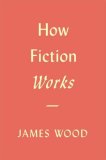
coming soon: ‘How Fiction Works’ by James Wood

July 14, 2008

How Fiction Works by James Wood (Farrar, Straus and Giroux) is an Amazon pick for “Best of the Month” for July 2008 and due to be released on the 22nd (though already available in the UK).

Product description from the publisher:

What makes a story a story? What is style? What’s the connection between realism and real life? These are some of the questions James Wood answers in How Fiction Works, the first book-length essay by the preeminent critic of his generation. Ranging widely—from Homer to David Foster Wallace, from What Maisie Knew to Make Way for Ducklings—Wood takes the reader through the basic elements of the art, step by step. The result is nothing less than a philosophy of the novel—plainspoken, funny, blunt—in the traditions of E. M. Forster’s Aspects of the Novel and Strunk and White’s The Elements of Style. It sums up two decades of insight with wit and concision. It will change the way you read.


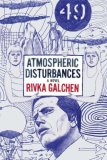
Here is Wood’s review of Atmospheric Disturbances at the New Yorker (Atmospheric Disturbances is the “neurofictional” book I’m reading right now).

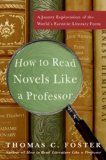
For those (like me) who might need a little more help, or just enjoy reading about reading, another recent title is How to Read Novels Like a Professor: A Jaunty Exploration of the World’s Favorite Literary Form by Thomas C. Foster (Harper, 2008).

Comments (0) - fiction,new books,reading

‘Science of Fear’ and ‘The Unthinkable’

July 12, 2008

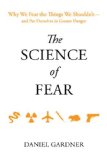
The Science of Fear: Why We Fear the Things We Shouldn’t–and Put Ourselves in Greater Danger by Canadian journalist Daniel Gardner is coming soon, with a release date of July 17. In Canada, the UK and Australia it has been published with the title ‘Risk: The Science and Politics of Fear.’

From the publisher’s description:

From terror attacks to the war on terror, real estate bubbles to the price of oil, sexual predators to poisoned food from China, our list of fears is ever-growing. And yet, we are the safest and healthiest humans in history. Irrational fear seems to be taking over, often with tragic results. For example, in the months after 9/11, when people decided to drive instead of fly—believing they were avoiding risk—road deaths rose by more than 1,500.

In this fascinating, lucid, and thoroughly entertaining examination of how humans process risk, journalist Dan Gardner had the exclusive cooperation of Paul Slovic, the world renowned risk-science pioneer, as he reveals how our hunter gatherer brains struggle to make sense of a world utterly unlike the one that made them. Filled with illuminating real world examples, interviews with experts, and fast-paced, lean storytelling, The Science of Fear shows why it is truer than ever that the worst thing we have to fear is fear itself.

See also: “Terrorism is hard,” review of Gardner’s book at Ottawa Citizen (July 12, 2008)
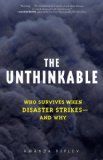
The Unthinkable: Who Survives When Disaster Strikes – and Why (Crown, 2008)

From the publisher’s description:

Amanda Ripley, an award-winning journalist for Time magazine who has covered some of the most devastating disasters of our age, set out to discover what lies beyond fear and speculation. In this magnificent work of investigative journalism, Ripley retraces the human response to some of history’s epic disasters, from the explosion of the Mont Blanc munitions ship in 1917–one of the biggest explosions before the invention of the atomic bomb–to a plane crash in England in 1985 that mystified investigators for years, to the journeys of the 15,000 people who found their way out of the World Trade Center on September 11, 2001. Then, to understand the science behind the stories, Ripley turns to leading brain scientists, trauma psychologists, and other disaster experts, formal and informal, from a Holocaust survivor who studies heroism to a master gunfighter who learned to overcome the effects of extreme fear.

Finally, Ripley steps into the dark corners of her own imagination, having her brain examined by military researchers and experiencing through realistic simulations what it might be like to survive a plane crash into the ocean or to escape a raging fire.

Ripley comes back with precious wisdom about the surprising humanity of crowds, the elegance of the brain’s fear circuits, and the stunning inadequacy of many of our evolutionary responses. Most unexpectedly, she discovers the brain’s ability to do much, much better, with just a little help.

The Unthinkable escorts us into the bleakest regions of our nightmares, flicks on a flashlight, and takes a steady look around. Then it leads us home, smarter and stronger than we were before.

See also:Author’s website
Comments (3) - new books,psychology

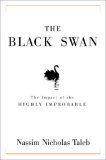
‘The Black Swan’ and the antilibrary

… a private library is not an ego-boosting appendage, but a research tool. Read books are far less valuable than unread ones. The library should contain as much of what you do not know as your financial means, mortgage rates, and the currently tight real-estate market allow you to put there. You will accumulate more knowledge and more books as you grow older, and the growing number of unread books on the shelves will look at you menacingly. Indeed, the more you know, the larger the rows of unread books. Let us call this collection of unread books an antilibrary. (Nassim Nicholas Taleb, ‘The Black Swan: The Impact of the Highly Improbable,’ p. 1)

Indeed The Black Swan itself is part of my “antilibrary,” among the unread books that do seem menacing at times (or promising at others, or like sirens calling me away from whatever book I’m actually reading), but when I saw this quote at the interesting Total Library Project at SpaceCollective at least I had the book to refer to…

Comments (0) - reading