November 20, 2008
I mentioned Gladwell’s new book Outliers: The Story of Success awhile ago, but it seems worth mentioning again, now that the book has been released and there are lots of related links. The Amazon page has a short video from Gladwell introducing his book.
At Gladwell.com there is a Q&A about the book and some excerpts; also an announcement on Gladwell’s blog.
See also:
Comments (0)
- culture,new books,psychology
November 11, 2008
Usually this blog focuses on keeping up with all the new books coming out but recently I came across The Authoritative Guide to Self-Help Books by John W. Santrock, Ann M. Minnett, and Barbara D. Campbell (Guilford Press, 1994), which provided an opportunity to look back at some classic self-help titles.
The book is based on a US survey of 500 mental health professionals who rated over 1000 books in 32 categories. Most of the book reviews the titles by category, rating them from “strongly recommended” to “strongly not recommended.” At the end there is a list of “the twenty-five best self-help books,” those highest rated overall (linked to most current edition at Amazon):
1. The Courage to Heal by Ellen Bass and Laura Davis
2. Feeling Good by David Burns
3. Infants and Mothers by T. Berry Brazelton
4. What Every Baby Knows by T. Berry Brazelton
5. Dr. Spock’s Baby and Child Care by Benjamin Spock [8th ed. coauthor is Robert Needlman]
6. How to Survive the Loss of a Love by Melba Colgrove, Harold Bloomfield, and Peter McWilliams
7. To Listen to a Child by T. Berry Brazelton
8. The Boys and Girls Book About Divorce by Richard Gardner
9. The Dance of Anger by Harriet Lerner
10. The Feeling Good Handbook by David Burns
11. Toddlers and Parents by T. Berry Brazelton
12. Your Perfect Right by Robert Alberti and Michael Emmons
13. Between Parent and Teenager by Haim Ginott
14. The First Three Years of Life by Burton White
15. What Color Is Your Parachute? by Richard Bolles
16. Between Parent and Child by Haim Ginott
17. The Relaxation Response by Herbert Benson
18. The New Aerobics by Kenneth Cooper
19. Learned Optimism by Martin Seligman
20. Man’s Search for Meaning by Victor Frankl
21. Children: The Challenge by Rudolph Dreikurs
22. You Just Don’t Understand by Deborah Tannen
23. The Dance of Intimacy by Harriet Lerner
24. Beyond the Relaxation Response by Herbert Benson
25. The Battered Woman by Lenore Walker
More recently, Authoritative Guide to Self-Help Resources in Mental Health, Revised Edition came out in 2003 with some overlap in authors, but going beyond self-help books to include autobiographies, films, online resources and support groups. It will be interesting to see if this edition has a comparable list of top books or top resources.
Comments (2)
- psychology
November 9, 2008
Beyond “information overload” … The Reality Overload: The Modern World’s Assault on the Imaginal Realm by French Surrealist Annie Le Brun (Inner Traditions, 2008)
Product Description
…
What underlies the many problems of the modern world–from accelerating rates of extinction and desertification to the increased alienation of the individual–is a reality overload, an increasingly invasive mechanization and homogenization of modern life that glorifies consumption and conformity. This overload has been created from the constant force-feeding of too much information, a phenomenon that dispossesses us of our deepest connections to time, our physical world, and each other.
Annie Le Brun explains that the degradation of the environment mirrors the devastation going on in our minds revealing a link between genetically modified foods and the transformation and decay of our language and communication. There is a direct relationship between the rupture of the great biological balances that govern the planet and the equally devastating rupture in our imaginal realm. The imaginal realm is the home of our dreams and the perceptions that feed our thoughts, individuality, and creativity. Without its influence we are forced to live a drab, alienated lifestyle based on consumption alone. If, as Shakespeare claims, “we are such stuff as dreams are made on,” this theft of our imagination by the reality overload threatens the very foundations of our existence.
More information, including table of contents and an excerpt, is available at the publisher’s website.
See also: review at Leonardo Reviews
Comments (0)
- culture,new books
November 8, 2008
“Self awareness and Obama,” a recent blog post at The Frontal Cortex, mentions the notion of “self-overhearing” (aka metacognition), citing Philip Tetlock of UC Berkeley. I looked for more information about self-overhearing, which comes from Tetlock’s Expert Political Judgment: How Good Is It? How Can We Know? 
Paul Monk in “Foxes, Hedgehogs, and Algorithms” discusses Tetlock’s book and traces “self-overhearing” back to Harold Bloom’s Shakespeare: The Invention of the Human.
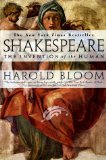
Monk provides this quote from Tetlock as a further guide to what he means by ‘self-overhearing’ (which may not be the same idea as Bloom intended):
“Good judgment, then, is a precarious balancing act…Executing this balancing act requires cognitive skills of a high order: the capacity to monitor our own thought processes and to strike a reflective equilibrium faithful to our conceptions of the norms of intellectual fair play. We need to cultivate the art of self-overhearing, to learn how to eavesdrop on the mental conversations we have with ourselves as we struggle to strike the right balance between preserving our existing worldview and rethinking core assumptions. This is no easy art to master. If we listen carefully to ourselves, we will often not like what we hear. And we will often be tempted to laugh off the exercise as introspective navel-gazing, as an infinite regress of homunculi spying on each other…all the way down.”
Comments (0)
- consciousness,self
November 6, 2008
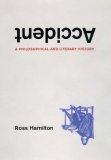
I recently read Accident: A Philosophical and Literary History by Ross Hamilton (University of Chicago Press, 2007), which surprisingly turned out to have a lot to do with changing concepts of the self in Western culture, from Aristotle to postmodernism. I had some difficulty following the argument in this densely woven academic text, so it was something of a relief to find my response echoed by Terry Eagleton’s review:
“But there are times when the subject threatens to disappear under this imposing weight of learning, only to re-emerge just when one thought it had sunk without trace. Hamilton does not keep a sharp enough eye on the storyline. There is a grand narrative struggling to get out of this study, which is the mysterious tale of the disappearing substance.”
Here is a quote from Hamilton’s conclusion that sort of sums up and perhaps gives a flavor of the book:
“we can point to shifts in the value assigned to aspects of accident that demarcate a series of important attitudinal domains: The reign of substance as the enduring quality with respect to accident lasted into the eighteenth century. During the late eighteenth and early nineteenth centuries, a shift occurred from seeking qualitative resemblances to the exploration of differences. Toward the end of the nineteenth century, a second shift replaced the retrospective sense of self with anticipatory self-structuring and gave primacy to inwardly determined self-definition. A third shift, one that began in the twentieth century and is accelerating rapidly, sacrificed the claim of a substantive self. According to critics like Foucault or Virilio, this movement threatens to extinguish the self completely.” (p. 301)
After the jump there are some notes from my reading… More on ‘Accident’ and the self
Comments (0)
- culture,self