[ View menu ]

Archive

new book – ‘Cro-Magnon: How the Ice Age Gave Birth to the First Modern Humans’

March 4, 2010
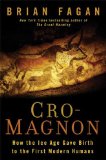
Cro-Magnon

Cro-Magnon: How the Ice Age Gave Birth to the First Modern Humans by Brian Fagan (Bloomsbury, 2010)

(link for UK)

Product description from the publisher:

Cro-Magnons were the first fully modern Europeans—not only the creators of the stunning cave paintings at Lascaux and elsewhere, but the most adaptable and technologically inventive people that had yet lived on earth. The prolonged encounter between the Cro-Magnons and the archaic Neanderthals and between 45,000 and 30,000 years ago was one of the defining moments of history. The Neanderthals survived for some 15,000 years in the face of the newcomers, but were finally pushed aside by the Cro-Magnons’ vastly superior intellectual abilities and cutting-edge technologies, which allowed them to thrive in the intensely challenging climate of the Ice Age.
What do we know about this remarkable takeover? Who were the first modern Europeans and what were they like? How did they manage to thrive in such an extreme environment? And what legacy did they leave behind them after the cold millennia? The age of the Cro-Magnons lasted some 30,000 years—longer than all of recorded history. Cro-Magnon is the story of a little known, yet seminal, chapter of human experience.

See also: Author’s website
Comments (0) - culture,human evolution,new books

new book – ‘Reality Hunger: A Manifesto’

February 23, 2010

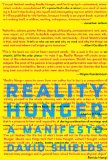
Reality Hunger

Reality Hunger: A Manifesto by David Shields (Knopf, 2010)

(link for UK)

An open call for new literary and other art forms to match the complexities of the twenty-first century.

Reality TV dominates broadband. YouTube and Facebook dominate the web. In Reality Hunger: A Manifesto, his landmark new book, David Shields (author of the New York Times best seller The Thing About Life Is That One Day You’ll Be Dead) argues that our culture is obsessed with “reality” precisely because we experience hardly any.

Most artistic movements are attempts to figure out a way to smuggle more of what the artist thinks is reality into the work of art. So, too, every artistic movement or moment needs a credo, from Horace’s Ars Poetica to Lars von Trier’s “Vow of Chastity.” Shields has written the ars poetica for a burgeoning group of interrelated but unconnected artists in a variety of forms and media who, living in an unbearably manufactured and artificial world, are striving to stay open to the possibility of randomness, accident, serendipity, spontaneity; actively courting reader/listener/viewer participation, artistic risk, emotional urgency; breaking larger and larger chunks of “reality” into their work; and, above all, seeking to erase any distinction between fiction and nonfiction.

The questions Reality Hunger explores—the bending of form and genre, the lure and blur of the real—play out constantly all around us. Think of the now endless controversy surrounding the provenance and authenticity of the “real”: A Million Little Pieces, the Obama “Hope” poster, the sequel to The Catcher in the Rye, Robert Capa’s “The Falling Soldier” photograph, the boy who wasn’t in the balloon. Reality Hunger is a rigorous and radical attempt to reframe how we think about “truthiness,” literary license, quotation, appropriation.

Drawing on myriad sources, Shields takes an audacious stance on issues that are being fought over now and will be fought over far into the future. People will either love or hate this book. Its converts will see it as a rallying cry; its detractors will view it as an occasion for defending the status quo. It is certain to be one of the most controversial and talked-about books of the year.

There’s already lots of response to this book, so here is a link to the latest Google news search results.

See also: Author’s website

Comments (0) - culture,fiction,new books,reality

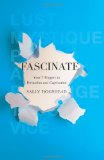
‘Fascinate’

February 21, 2010

fascinate

With 21 all 5-star customer reviews on Amazon.com, this must be a book that exemplifies its subject matter: Fascinate: Your 7 Triggers to Persuasion and Captivation by Sally Hogshead (HarperBusiness, 2010)

(link for UK)

Product description from the publisher:

What triggers fascination, and how do companies, people, and ideas put those triggers to use?

Why are you captivated by some people but not by others? Why do you recall some brands yet forget the rest? In a distracted, overcrowded world, how do certain leaders, friends, and family members convince you to change your behavior? Fascination: the most powerful way to influence decision making. It’s more persuasive than marketing, advertising, or any other form of communication. And it all starts with seven universal triggers: lust, mystique, alarm, prestige, power, vice, and trust.

Fascination plays a role in every type of decision making, from the brands you choose to the songs you remember, from the person you marry to the employees you hire. And by activating the right triggers, you can make anything become fascinating.

To explore and explain fascination’s irresistible influence, Sally Hogshead looks beyond marketing, delving into behavioral and social studies, historical precedents, neurobiology and evolutionary anthropology, as well as conducting in-depth interviews and a national study of a thousand consumers, to emerge with deeply rooted patterns for why, and how, we become captivated.

Hogshead reveals why the Salem witch trials began with the same fixations as those in Sex and the City. How Olympic athletes are subject to obsessions similar to those of fetishists. How a 1636 frenzy over Dutch tulip bulbs perfectly mirrors the 2006 real estate bubble. And why a billion-dollar “Just Say No” program actually increased drug use among teens, by activating the same “forbidden fruit” syndrome as a Victoria’s Secret catalog.

Whether you realize it or not, you’re already using the seven triggers. The question is, are you using the right triggers, in the right way, to get your desired result? This book will show you.

See also: Author’s website

Comments (0) - psychology

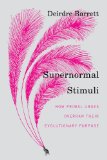
new book – ‘Supernormal Stimuli: How Primal Urges Overran Their Evolutionary Purpose’

February 19, 2010

Supernormal Stimuli

Supernormal Stimuli: How Primal Urges Overran Their Evolutionary Purpose by Deirdre Barrett (W.W. Norton, 2010)

(link for UK)

Product description from the publisher:

A Harvard psychologist explains how our once-helpful instincts get hijacked in our garish modern world. Our instincts—for food, sex, or territorial protection— evolved for life on the savannahs 10,000 years ago, not in today’s world of densely populated cities, technological innovations, and pollution. We now have access to a glut of larger-than-life objects, from candy to pornography to atomic weapons—that gratify these gut instincts with often-dangerous results. Animal biologists coined the term “supernormal stimuli” to describe imitations that appeal to primitive instincts and exert a stronger pull than real things, such as soccer balls that geese prefer over eggs. Evolutionary psychologist Deirdre Barrett applies this concept to the alarming disconnect between human instinct and our created environment, demonstrating how supernormal stimuli are a major cause of today’s most pressing problems, including obesity and war. However, Barrett does more than show how unfettered instincts fuel dangerous excesses. She also reminds us that by exercising self-control we can rein them in, potentially saving ourselves and civilization.

Comments (0) - culture,new books,psychology

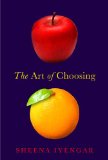
new book – ‘The Art of Choosing’ by Sheena Iyengar

Art of Choosing

The Art of Choosing by Sheena Iyengar (Twelve, 2010)

link for UK

Product description from the publisher:

Every day we make choices. Coke or Pepsi? Save or spend? Stay or go?

Whether mundane or life-altering, these choices define us and shape our lives. Sheena Iyengar asks the difficult questions about how and why we choose: Is the desire for choice innate or bound by culture? Why do we sometimes choose against our best interests? How much control do we really have over what we choose? Sheena Iyengar’s award-winning research reveals that the answers are surprising and profound. In our world of shifting political and cultural forces, technological revolution, and interconnected commerce, our decisions have far-reaching consequences. Use THE ART OF CHOOSING as your companion and guide for the many challenges ahead.

Comments (0) - new books,psychology