[ View menu ]

Archive

new book – ‘Bounce: Mozart, Federer, Picasso, Beckham, and the Science of Success’

April 24, 2010
Bounce

Bounce: Mozart, Federer, Picasso, Beckham, and the Science of Success by Matthew Syed (Harper, 2010).

(link for UK – Bounce: How Champions Are Made)

Product description from the publisher:

Why have all the sprinters who have run the 100 meters in under ten seconds been black?

What’s one thing Mozart, Venus Williams, and Michelangelo have in common?

Is it good to praise a child’s intelligence?

Why are baseball players so superstitious?

Few things in life are more satisfying than beating a rival. We love to win and hate to lose, whether it’s on the playing field or at the ballot box, in the office or in the classroom. In this bold new look at human behavior, award-winning journalist and Olympian Matthew Syed explores the truth about our competitive nature—why we win, why we don’t, and how we really play the game of life. Bounce reveals how competition—the most vivid, primal, and dramatic of human pursuits—provides vital insight into many of the most controversial issues of our time, from biology and economics, to psychology and culture, to genetics and race, to sports and politics.

Backed by cutting-edge scientific research and case studies, Syed shatters long-held myths about meritocracy, talent, performance, and the mind. He explains why some people thrive under pressure and others choke, and weighs the value of innate ability against that of practice, hard work, and will. From sex to math, from the motivation of children to the culture of big business, Bounce shows how competition provides a master key with which to unlock the mysteries of the world.
Comments (0) - culture,new books,psychology

new book – ‘Evolution of Childhood’ by Melvin Konner

April 22, 2010

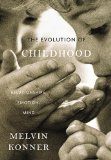
The Evolution of Childhood

The Evolution of Childhood: Relationships, Emotion, Mind by Melvin Konner (Belknap Press of Harvard University Press, 2010)

(link for UK)

Product description from the publisher:

This book is an intellectual tour de force: a comprehensive Darwinian interpretation of human development. Looking at the entire range of human evolutionary history, Melvin Konner tells the compelling and complex story of how cross-cultural and universal characteristics of our growth from infancy to adolescence became rooted in genetically inherited characteristics of the human brain.

All study of our evolution starts with one simple truth: human beings take an extraordinarily long time to grow up. What does this extended period of dependency have to do with human brain growth and social interactions? And why is play a sign of cognitive complexity, and a spur for cultural evolution? As Konner explores these questions, and topics ranging from bipedal walking to incest taboos, he firmly lays the foundations of psychology in biology.

As his book eloquently explains, human learning and the greatest human intellectual accomplishments are rooted in our inherited capacity for attachments to each other. In our love of those we learn from, we find our way as individuals and as a species. Never before has this intersection of the biology and psychology of childhood been so brilliantly described.

“Nothing in biology makes sense except in the light of evolution,” wrote Dobzhansky. In this remarkable book, Melvin Konner shows that nothing in childhood makes sense except in the light of evolution.

See also: review at The Atlantic

Author’s website

Comments (0) - culture,mind,new books

eagerly awaiting – forthcoming titles from Hofstadter & Chalmers

April 17, 2010

Douglas Hofstadter (‘Godel, Escher, Bach,’ ‘I Am a Strange Loop’) and David Chalmers (‘The Conscious Mind’) have new books coming out later this year, something to look forward to, or preorder as a gift to your future self…

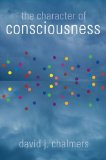
The Character of Consciousness (Philosophy of Mind) by David Chalmers (Oxford University Press, 2010) has a US publication date of Aug 12 according to Amazon, or July according to the publisher. The publication date is also listed as Aug 2010 at Amazon.co.uk.

Product description from the publisher:

What is consciousness? How does the subjective character of consciousness fit into an objective world? How can there be a science of consciousness? In this sequel to his groundbreaking and controversial The Conscious Mind, David Chalmers develops a unified framework that addresses these questions and many others. Starting with a statement of the “hard problem” of consciousness, Chalmers builds a positive framework for the science of consciousness and a nonreductive vision of the metaphysics of consciousness. He replies to many critics of The Conscious Mind, and then develops a positive theory in new directions. The book includes original accounts of how we think and know about consciousness, of the unity of consciousness, and of how consciousness relates to the external world. Along the way, Chalmers develops many provocative ideas: the “consciousness meter”, the Garden of Eden as a model of perceptual experience, and The Matrix as a guide to the deepest philosophical problems about consciousness and the external world. This book will be required reading for anyone interested in the problems of mind, brain, consciousness, and reality.

Hofstadter’s new book with co-author Emmanuel Sander, Surfaces and Essences, also referred to as The Essence of Thought, is due out June 2 according to Amazon, but publisher Basic Books indicates a publication date of Sept 27. May 6 is the pub date shown at Amazon.co.uk.

Product description from the publisher:

Is there one central mechanism upon which all human thinking rests? Cognitive scientists Douglas Hofstadter and Emmanuel Sander argue that there is. At this core is our incessant proclivity to take what we perceive, to abstract it, and to find resemblances to prior experiences—in other words, our ability to make analogies.

In The Essence of Thought, Hofstadter and Sander show how analogy-making pervades our thought at all levels—indeed, that we make analogies not once a day or once an hour, but many times per second. Thus, analogy is the mechanism that, silently and hidden, chooses our words and phrases for us when we speak, frames how we understand the most banal everyday situation, guides us in unfamiliar situations, and gives rise to great acts of imagination.

We categorize because of analogies that range from simple to subtle, and thus our categories, throughout our lives, expand and grow ever more fluid. Through examples galore and lively prose peppered, needless to say, with analogies large and small, Hofstadter and Sander offer us a new way of thinking about thinking.

Comments (1) - cognitive science,consciousness,mind,new books

coming soon – ‘The Secret Life of the Grown-Up Brain’

April 13, 2010

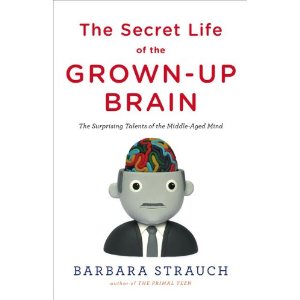
The Secret Life of the Grown-Up Brain

Due out on April 15 — The Secret Life of the Grown-up Brain: The Surprising Talents of the Middle-Aged Mind by Barbara Strauch (Viking, 2010)

(link for UK)

Product description from the publisher:

A leading science writer examines how the brain’s capacity reaches its peak in middle age

For many years, scientists thought that the human brain simply decayed over time and its dying cells led to memory slips, fuzzy logic, negative thinking, and even depression. But new research from neuroscien­tists and psychologists suggests that, in fact, the brain reorganizes, improves in important functions, and even helps us adopt a more optimistic outlook in middle age. Growth of white matter and brain connectors allow us to recognize patterns faster, make better judgments, and find unique solutions to problems. Scientists call these traits cognitive expertise and they reach their highest levels in middle age.

In her impeccably researched book, science writer Barbara Strauch explores the latest findings that demonstrate, through the use of technology such as brain scans, that the middle-aged brain is more flexible and more capable than previously thought. For the first time, long-term studies show that our view of middle age has been misleading and incomplete. By detailing exactly the normal, healthy brain functions over time, Strauch also explains how its optimal processes can be maintained. Part scientific survey, part how-to guide, The Secret Life of the Grown-Up Brain is a fascinating glimpse at our surprisingly talented middle-aged minds.

added 4/14/10 – author interview & excerpt at NPR

Comments (0) - cognitive science,new books

new book – ‘Brain, Mind, and the Structure of Reality’

April 11, 2010

Brain, Mind, and the Structure of Reality

Brain, Mind, and the Structure of Reality by Paul L. Nunez (Oxford University Press, 2010)

(link for UK)

Product description from the publisher:

Does the brain create the mind, or is some external entity involved? In addressing this “hard problem” of consciousness, we face a central human challenge: what do we really know and how do we know it? Tentative answers in this book follow from a synthesis of profound ideas, borrowed from philosophy, religion, politics, economics, neuroscience, physics, mathematics, and cosmology, the knowledge structures supporting our meager grasps of reality. This search for new links in the web of human knowledge extends in many directions: the “shadows” of our thought processes revealed by brain imagining, brains treated as complex adaptive systems that reveal fractal-like behavior in the brain’s nested hierarchy, resonant interactions facilitating functional connections in brain tissue, probability and entropy as measures of human ignorance, fundamental limits on human knowledge, and the central role played by information in both brains and physical systems. In Brain, Mind, and the Structure of Reality, Paul Nunez discusses the possibility of deep connections between relativity, quantum mechanics, thermodynamics, and consciousness: all entities involved with fundamental information barriers. Dr Nunez elaborates on possible new links in this nested web of human knowledge that may tell us something new about the nature and origins of consciousness. In the end, does the brain create the mind? Or is the Mind already out there? You decide.

Comments (0) - cognitive science,consciousness,mind,new books