[ View menu ]

Archive

new book – ‘World Wide Mind: The Coming Integration of Humanity, Machines, and the Internet’

February 20, 2011
World Wide Mind

World Wide Mind: The Coming Integration of Humanity, Machines, and the Internet by Michael Chorost (Free Press, 2011)

(Kindle edition) (amazon.co.uk)

Product description from the publisher:

What if digital communication felt as real as being touched?

This question led Michael Chorost to explore profound new ideas triggered by lab research around the world, and the result is the book you now hold. Marvelous and momentous, World Wide Mind takes mind-to-mind communication out of the realm of science fiction and reveals how we are on the verge of a radical new understanding of human interaction.

Chorost himself has computers in his head that enable him to hear: two cochlear implants. Drawing on that experience, he proposes that our Paleolithic bodies and our Pentium chips could be physically merged, and he explores the technologies that could do it.

He visits engineers building wearable computers that allow people to be online every waking moment, and scientists working on implanted chips that would let paralysis victims communicate. Entirely new neural interfaces are being developed that let computers read and alter neural activity in unprecedented detail.

But we all know how addictive the Internet is. Chorost explains the addiction: he details the biochemistry of what makes you hunger to touch your iPhone and check your email. He proposes how we could design a mind-to-mind technology that would let us reconnect with our bodies and enhance our relationships. With such technologies, we could achieve a collective consciousness – a World Wide Mind. And it would be humankind’s next evolutionary step.

With daring and sensitivity, Chorost writes about how he learned how to enhance his relationships by attending workshops teaching the power of touch. He learned how to bring technology and communication together to find true love, and his story shows how we can master technology to make ourselves more human rather than less.

World Wide Mind offers a new understanding of how we communicate, what we need to connect fully with one another, and how our addiction to email and texting can be countered with technologies that put us – literally – in each other’s minds.

See also: Book excerpt in The New York Times
Comments (1) - culture,mind,new books,psychology

new book – ‘Self, No Self?: Perspectives from Analytical, Phenomenological, and Indian Traditions’

February 17, 2011

Self, No Self?

Self, No Self?: Perspectives from Analytical, Phenomenological, and Indian Traditions, ed. by Mark Siderits, Evan Thompson and Dan Zahavi (Oxford University Press, USA, 2011)

(amazon.co.uk)

Product description from the publisher:

The nature and reality of self is a subject of increasing prominence among Western philosophers of mind and cognitive scientists. It has also been central to Indian and Tibetan philosophical traditions for over two thousand years. It is time to bring the rich resources of these traditions into the contemporary debate about the nature of self. This volume is the first of its kind. Leading philosophical scholars of the Indian and Tibetan traditions join with leading Western philosophers of mind and phenomenologists to explore issues about consciousness and selfhood from these multiple perspectives. Self, No Self? is not a collection of historical or comparative essays. It takes problem-solving and conceptual and phenomenological analysis as central to philosophy. The essays mobilize the argumentative resources of diverse philosophical traditions to address issues about the self in the context of contemporary philosophy and cognitive science. Self, No Self? will be essential reading for philosophers and cognitive scientists interested in the nature of the self and consciousness, and will offer a valuable way into the subject for students.

See also: Mark Siderits at Mind & Reality Symposium, Siderits at PhilPapers, Evan Thompson at PhilPapers, Dan Zahavi at PhilPapers

Comments (2) - new books,self

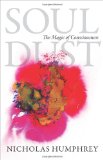
new book – ‘Soul Dust: The Magic of Consciousness’ by Nicholas Humphrey

February 11, 2011

Soul Dust: The Magic of Consciousness by Nicholas Humphrey (Princeton University Press, 2011)

(amazon.co.uk)

Product description from the publisher:

How is consciousness possible? What biological purpose does it serve? And why do we value it so highly? In Soul Dust, the psychologist Nicholas Humphrey, a leading figure in consciousness research, proposes a startling new theory. Consciousness, he argues, is nothing less than a magical-mystery show that we stage for ourselves inside our own heads. This self-made show lights up the world for us and makes us feel special and transcendent. Thus consciousness paves the way for spirituality, and allows us, as human beings, to reap the rewards, and anxieties, of living in what Humphrey calls the “soul niche.”
Tightly argued, intellectually gripping, and a joy to read, Soul Dust provides answers to the deepest questions. It shows how the problem of consciousness merges with questions that obsess us all–how life should be lived and the fear of death. Resting firmly on neuroscience and evolutionary theory, and drawing a wealth of insights from philosophy and literature, Soul Dust is an uncompromising yet life-affirming work–one that never loses sight of the majesty and wonder of consciousness.

See also: Book on Facebook

Comments (1) - consciousness,new books

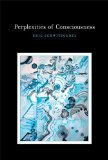
new book – ‘Perplexities of Consciousness’ by Eric Schwitzgebel

February 5, 2011

Perplexities of Consciousness

Perplexities of Consciousness (Life and Mind: Philosophical Issues in Biology and Psychology) by Eric Schwitzgebel (MIT Press, 2011)
(amazon.co.uk)

Do you dream in color? If you answer Yes, how can you be sure? Before you recount your vivid memory of a dream featuring all the colors of the rainbow, consider that in the 1950s, researchers found that most people reported dreaming in black and white. In the 1960s—when most movies were in color and more people had color television sets—the vast majority of reported dreams contained color. The most likely explanation for this, according to philosopher Eric Schwitzgebel, is not that exposure to black-and-white media made people misremember their dreams. It is that we simply don’t know whether or not we dream in color. In Perplexities of Consciousness, Schwitzgebel examines various aspects of inner life—dreams, mental imagery, emotions, and other subjective phenomena—and argues that we know very little about our stream of conscious experience. In fact, he contends, we are prone to gross error about our ongoing emotional, visual, and cognitive experiences.

Western philosophical tradition is nearly unanimous on the accuracy of our knowledge or current conscious experience. Schwitzgebel is skeptical. Drawing broadly from historical and recent philosophy and psychology to examine such topics as visual perspective, human echolocation (about which he is doubtful), and the unreliability of introspection even about emotional states (do we really enjoy Christmas? a family dinner?), he finds us singularly inept in our judgments about conscious experience.

See also: Author’s homepage

Amazon.com’s Hot New Releases in Consciousness & Thought

Comments (1) - consciousness,new books

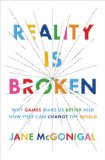
new book – ‘Reality Is Broken: Why Games Make Us Better and How They Can Change the World’

January 22, 2011

Reality Is Broken

Reality Is Broken: Why Games Make Us Better and How They Can Change the World by Jane McGonigal (Penguin, 2011)

(kindle edition)

(amazon.co.uk)

Visionary game designer Jane McGonigal reveals how we can harness the power of games to solve real-world problems and boost global happiness.

More than 174 million Americans are gamers, and the average young person in the United States will spend ten thousand hours gaming by the age of twenty-one. According to world-renowned game designer Jane McGonigal, the reason for this mass exodus to virtual worlds is that videogames are increasingly fulfilling genuine human needs. In this groundbreaking exploration of the power and future of gaming, McGonigal reveals how we can use the lessons of game design to fix what is wrong with the real world.

Drawing on positive psychology, cognitive science, and sociology, Reality Is Broken uncovers how game designers have hit on core truths about what makes us happy and utilized these discoveries to astonishing effect in virtual environments. Videogames consistently provide the exhilarating rewards, stimulating challenges, and epic victories that are so often lacking in the real world. But why, McGonigal asks, should we use the power of games for escapist entertainment alone? Her research suggests that gamers are expert problem solvers and collaborators because they regularly cooperate with other players to overcome daunting virtual challenges, and she helped pioneer a fast-growing genre of games that aims to turn gameplay to socially positive ends.

In Reality Is Broken, she reveals how these new alternate reality games are already improving the quality of our daily lives, fighting social problems such as depression and obesity, and addressing vital twenty-first-century challenges-and she forecasts the thrilling possibilities that lie ahead. She introduces us to games like World Without Oil, a simulation designed to brainstorm-and therefore avert- the challenges of a worldwide oil shortage, and Evoke, a game commissioned by the World Bank Institute that sends players on missions to address issues from poverty to climate change.

McGonigal persuasively argues that those who continue to dismiss games will be at a major disadvantage in the coming years. Gamers, on the other hand, will be able to leverage the collaborative and motivational power of games in their own lives, communities, and businesses. Written for gamers and nongamers alike, Reality Is Broken shows us that the future will belong to those who can understand, design, and play games.

See also: Author’s website

Comments (2) - culture,new books,reality