[ View menu ]

Archive

new book – ‘The Social Animal: The Hidden Sources of Love, Character, and Achievement’ by David Brooks

March 8, 2011
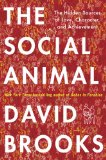
The Social Animal

The Social Animal: The Hidden Sources of Love, Character, and Achievement by David Brooks (Random House, 2011)

(Kindle edition), (amazon.co.uk)

Product description from the publisher:

With unequaled insight and brio, David Brooks, the New York Times columnist and bestselling author of Bobos in Paradise, has long explored and explained the way we live. Now, with the intellectual curiosity and emotional wisdom that make his columns among the most read in the nation, Brooks turns to the building blocks of human flourishing in a multilayered, profoundly illuminating work grounded in everyday life.

This is the story of how success happens. It is told through the lives of one composite American couple, Harold and Erica—how they grow, push forward, are pulled back, fail, and succeed. Distilling a vast array of information into these two vividly realized characters, Brooks illustrates a fundamental new understanding of human nature. A scientific revolution has occurred—we have learned more about the human brain in the last thirty years than we had in the previous three thousand. The unconscious mind, it turns out, is most of the mind—not a dark, vestigial place but a creative and enchanted one, where most of the brain’s work gets done. This is the realm of emotions, intuitions, biases, longings, genetic predispositions, personality traits, and social norms: the realm where character is formed and where our most important life decisions are made. The natural habitat of The Social Animal.

Drawing on a wealth of current research from numerous disciplines, Brooks takes Harold and Erica from infancy to school; from the “odyssey years” that have come to define young adulthood to the high walls of poverty; from the nature of attachment, love, and commitment, to the nature of effective leadership. He reveals the deeply social aspect of our very minds and exposes the bias in modern culture that overemphasizes rationalism, individualism, and IQ. Along the way, he demolishes conventional definitions of success while looking toward a culture based on trust and humility.

The Social Animal is a moving and nuanced intellectual adventure, a story of achievement and a defense of progress. Impossible to put down, it is an essential book for our time, one that will have broad social impact and will change the way we see ourselves and the world.

See also: Author on Charlie Rose (53:30), book website
Comments (1) - cognitive science,culture,new books

new book – ‘Moonwalking with Einstein: The Art and Science of Remembering Everything’ by Joshua Foer

March 3, 2011

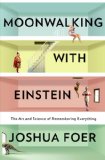
Moonwalking with Einstein

Moonwalking with Einstein: The Art and Science of Remembering Everything by Joshua Foer (Penguin, 2011)

(Kindle edition), (amazon.co.uk)

Product description from the publisher:

Foer’s unlikely journey from chronically forgetful science journalist to U.S. Memory Champion frames a revelatory exploration of the vast, hidden impact of memory on every aspect of our lives.

On average, people squander forty days annually compensating for things they’ve forgotten. Joshua Foer used to be one of those people. But after a year of memory training, he found himself in the finals of the U.S. Memory Championship. Even more important, Foer found a vital truth we too often forget: In every way that matters, we are the sum of our memories.

Moonwalking with Einstein draws on cutting-edge research, a surprising cultural history of memory, and venerable tricks of the mentalist’s trade to transform our understanding of human remembering. Under the tutelage of top “mental athletes,” he learns ancient techniques once employed by Cicero to memorize his speeches and by Medieval scholars to memorize entire books. Using methods that have been largely forgotten, Foer discovers that we can all dramatically improve our memories.

Immersing himself obsessively in a quirky subculture of competitive memorizers, Foer learns to apply techniques that call on imagination as much as determination-showing that memorization can be anything but rote. From the PAO system, which converts numbers into lurid images, to the memory palace, in which memories are stored in the rooms of imaginary structures, Foer’s experience shows that the World Memory Championships are less a test of memory than of perseverance and creativity.

Foer takes his inquiry well beyond the arena of mental athletes-across the country and deep into his own mind. In San Diego, he meets an affable old man with one of the most severe case of amnesia on record, where he learns that memory is at once more elusive and more reliable than we might think. In Salt Lake City, he swaps secrets with a savant who claims to have memorized more than nine thousand books. At a high school in the South Bronx, he finds a history teacher using twenty- five-hundred-year-old memory techniques to give his students an edge in the state Regents exam.

At a time when electronic devices have all but rendered our individual memories obsolete, Foer’s bid to resurrect the forgotten art of remembering becomes an urgent quest. Moonwalking with Einstein brings Joshua Foer to the apex of the U.S. Memory Championship and readers to a profound appreciation of a gift we all possess but that too often slips our minds.

Comments (0) - cognitive science,new books,psychology

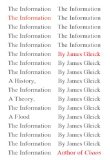
new book – ‘The Information: A History, A Theory, A Flood’ by James Gleick

March 2, 2011

The Information

The Information: A History, a Theory, a Flood by James Gleick (Pantheon, 2011) is an Amazon Best Book of the Month for March 2011

(Kindle edition), (amazon.co.uk)

Product description from the publisher:

James Gleick, the author of the best sellers Chaos and Genius, now brings us a work just as astonishing and masterly: a revelatory chronicle and meditation that shows how information has become the modern era’s defining quality—the blood, the fuel, the vital principle of our world.

The story of information begins in a time profoundly unlike our own, when every thought and utterance vanishes as soon as it is born. From the invention of scripts and alphabets to the long-misunderstood talking drums of Africa, Gleick tells the story of information technologies that changed the very nature of human consciousness. He provides portraits of the key figures contributing to the inexorable development of our modern understanding of information: Charles Babbage, the idiosyncratic inventor of the first great mechanical computer; Ada Byron, the brilliant and doomed daughter of the poet, who became the first true programmer; pivotal figures like Samuel Morse and Alan Turing; and Claude Shannon, the creator of information theory itself.

And then the information age arrives. Citizens of this world become experts willy-nilly: aficionados of bits and bytes. And we sometimes feel we are drowning, swept by a deluge of signs and signals, news and images, blogs and tweets. The Information is the story of how we got here and where we are heading.

See also: Author’s website

Comments (0) - culture,new books

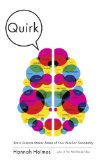
new book – ‘Quirk: Brain Science Makes Sense of Your Peculiar Personality’

February 26, 2011

Quirk

Quirk: Brain Science Makes Sense of Your Peculiar Personality by Hannah Holmes (Random House, 2011)

(Kindle ed.), (amazon.co.uk)

Product description from the publisher:

Who are you? It’s the most fundamental of human questions. Are you the type of person who tilts at windmills, or the one who prefers to view them from the comfort of an air-conditioned motorcoach? Our personalities are endlessly fascinating—not just to ourselves but also to our spouses, our parents, our children, our co-workers, our neighbors. As a highly social species, humans have to navigate among an astonishing variety of personalities. But how did all these different permutations come about? And what purpose do they serve?

With her trademark wit and sly humor, Hannah Holmes takes readers into the amazing world of personality and modern brain science. Using the Five Factor Model, which slices temperaments into the major factors (Extraversion, Neuroticism, Agreeableness, Conscientiousness, and Openness) and minor facets (such as impulsive, artistic, or cautious), Holmes demonstrates how our genes and brains dictate which factors and facets each of us displays. Are you a Nervous Nelly? Your amygdala is probably calling the shots. Hyperactive Hal? It’s all about the dopamine.

Each facet took root deep in the evolution of life on Earth, with Nature allowing enough personal variation to see a species through good times and bad. Just as there are introverted and extroverted people, there are introverted and extroverted mice, and even starfish. In fact, the personality genes we share with mice make them invaluable models for the study of disorders like depression, schizophrenia, and anxiety. Thus it is deep and ancient biases that guide your dealings with a very modern world. Your personality helps to determine the political party you support, the car you drive, the way you eat M&Ms, and the likelihood that you’ll cheat on your spouse.

Drawing on data from top research laboratories, the lives of her eccentric friends, the conflicts that plague her own household, and even the habits of her two pet mice, Hannah Holmes summarizes the factors that shape you. And what she proves is that it does take all kinds. Even the most irksome and trying personality you’ve ever encountered contributes to the diversity of our species. And diversity is the key to our survival.

See also: Author’s website

Comments (0) - cognitive science,new books,self

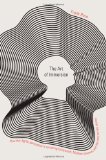
new book – ‘The Art of Immersion: How the Digital Generation Is Remaking Hollywood, Madison Avenue, and the Way We Tell Stories’

February 21, 2011

Art of Immersion

The Art of Immersion: How the Digital Generation Is Remaking Hollywood, Madison Avenue, and the Way We Tell Stories by Wired contributing editor Frank Rose (W.W. Norton, 2011)

(Kindle edition), (amazon.co.uk)

Product description from the publisher:

A field guide to the visionaries—and the fans—who are reinventing the art of storytelling.
Not long ago we were spectators, passive consumers of mass media. Now, on YouTube and blogs and Facebook and Twitter, we are media. And while we watch more television than ever before, how we watch it is changing in ways we have barely slowed down to register. No longer content in our traditional role as couch potatoes, we approach television shows, movies, even advertising as invitations to participate—as experiences to immerse ourselves in at will. Wired contributing editor Frank Rose introduces us to the people who are reshaping media for a two-way world—people like Will Wright (The Sims), James Cameron (Avatar), Damon Lindelof (Lost), and dozens of others whose ideas are changing how we play, how we chill, and even how we think. The Art of Immersion is an eye-opening look at the shifting shape of entertainment today.

See also: Book website
Google Books preview:

Comments (0) - culture,new books