[ View menu ]

Archive

new book – ‘The Evident Connexion: Hume on Personal Identity’ by Galen Strawson

July 6, 2011

The Evident Connexion

The Evident Connexion: Hume on Personal Identity by Galen Strawson (Oxford University Press, USA, 2011)

(amazon.co.uk)

Product description from the publisher:

The Evident Connexion presents a new reading of Hume’s ‘bundle theory’ of the self or mind, and his later rejection of it. Galen Strawson argues that the bundle theory does not claim that there are no subjects of experience, as many have supposed, or that the mind is just a series of experiences. Hume holds only that the ‘essence of the mind [is] unknown’. His claim is simply that we have no empirically respectable reason to believe in the existence of a persisting subject, or a mind that is more than a series of experiences (each with its own subject).
Why does Hume later reject the bundle theory? Many think he became dissatisfied with his account of how we come to believe in a persisting self, but Strawson suggests that the problem is more serious. The keystone of Hume’s philosophy is that our experiences are governed by a ‘uniting principle’ or ‘bond of union’. But a philosophy that takes a bundle of ontologically distinct experiences to be the only legitimate conception of the mind cannot make explanatory use of those notions in the way Hume does. As Hume says in the Appendix to the Treatise of Human Nature: having ‘loosen’d all our particular perceptions’ in the bundle theory, he is unable to ‘explain the principle of connexion, which binds them together’. This lucid book is the first to be wholly dedicated to Hume’s theory of personal identity, and presents a bold new interpretation which bears directly on current debates among scholars of Hume’s philosophy.

Strawson also has forthcoming in Oct Locke on Personal Identity (Princeton Monographs in Philosophy), (amazon.co.uk)

See also: Author’s website [updated link 7/19/13]
Comments (0) - new books,philosophy of mind,self

new book – ‘Investigating Pristine Inner Experience’ by Russell T. Hurlburt

July 1, 2011

Investigating Pristine Inner Experience

Investigating Pristine Inner Experience: Moments of Truth by Russell T. Hurlburt (Cambridge University Press, 2011)

(amazon.co.uk – 31 July)

Product description from the publisher:

You live your entire waking life immersed in your inner experiences (thoughts, feelings, sensations, etc.) – private phenomena created by you, just for you, your own way. Despite their intimacy and ubiquity, you probably don’t know the characteristics of your own inner phenomena; neither does psychology or consciousness science. Investigating Pristine Inner Experience explores how to apprehend inner experience in high fidelity. This book will transform your view of your own inner experience, awaken you to experiential differences between people, and thereby reframe your thinking about psychology and consciousness science, which banned the study of inner experience for most of a century and yet continued to recognize its fundamental importance. The author, a pioneer in using beepers to explore inner experience, draws on his 35 years of studies to provide fascinating and provocative views of everyday inner experience and experience in bulimia, adolescence, the elderly, schizophrenia, Tourette’s syndrome, virtuosity, and so on.

See also: Author’s website

Hurlburt’s previous book with Eric Schwitzgebel: Describing Inner Experience?: Proponent Meets Skeptic (Life and Mind: Philosophical Issues in Biology and Psychology) (MIT Press, 2007)

Comments (0) - consciousness,new books

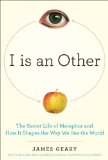
recent book – ‘I Is an Other: The Secret Life of Metaphor and How It Shapes the Way We See the World’

June 27, 2011

I Is an Other

Somehow I missed this book when it came out last February: I Is an Other: The Secret Life of Metaphor and How It Shapes the Way We See the World by James Geary (Harper, 2011)

(kindle ed.), (amazon.co.uk)

Product description from the publisher:

From President Obama’s political rhetoric to the housing bubble bust, James Geary proves in this fascinating and entertaining book that every aspect of our experience is molded by metaphor.

“It is the East, and Juliet is the sun!” This is one of Shakespeare’s most famous lines and one of the most well-known metaphors in literature. But metaphor is much more than a mere literary device employed by love-struck poets when they refer to their girlfriends as interstellar masses of incandescent gas. It is also intensely yet inconspicuously present in everything from ordinary conversation and commercial messaging to news reports and political speeches. Metaphor is at work in all fields of human endeavor, including economics, business, science, and psychology.

In I Is an Other, James Geary takes readers from Aristotle’s investigation of metaphor right up to the latest neuroscientific insights into how metaphor works in the brain. Along the way, he demonstrates how metaphor affects financial decision making, how metaphor lurks behind effective advertisements, how metaphor inspires learning and discovery, and how metaphor can be used as a tool to achieve emotional insight and psychological change. Geary also explores how a life without metaphor, as experienced by some people with autism spectrum disorders, significantly changes the way a person interacts with the world. As Geary demonstrates, metaphor has leaped off the page and landed with a mighty splash right in the middle of our stream of consciousness.

Witty, persuasive, and original, I Is an Other showcases how a simple way with words, which in the past was considered a tool only for poets, is really a driving force in our society. This book will open your eyes to the secret life of metaphor and its role in swinging elections, moving markets, and powerfully influencing daily life.

Preview of Kindle edition:

See also: Author’s website, TED talk:

Comments (0) - cognitive science,culture,language

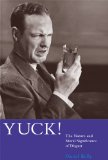
new book – ‘Yuck!: The Nature and Moral Significance of Disgust’

June 17, 2011

Yuck

Yuck!: The Nature and Moral Significance of Disgust by Daniel Kelly (MIT Press, 2011)

(amazon.co.uk – 22 July)

Product description from the publisher:

People can be disgusted by the concrete and by the abstract–by an object they find physically repellent or by an ideology or value system they find morally abhorrent. Different things will disgust different people, depending on individual sensibilities or cultural backgrounds. In Yuck!, Daniel Kelly investigates the character and evolution of disgust, with an emphasis on understanding the role this emotion has come to play in our social and moral lives. Disgust has recently been riding a swell of scholarly attention, especially from those in the cognitive sciences and those in the humanities in the midst of the “affective turn.” Kelly surveys the empirical literature and experimental results relevant to disgust and proposes a cognitive model that can accommodate what we now know about it. He offers a new account of the evolution of disgust that builds on the model and argues that expressions of disgust are part of a sophisticated but largely automatic signaling system that humans use to transmit information about what to avoid in the local environment. Drawing on gene culture coevolutionary theory, Kelly argues that disgust was co-opted to play certain roles in our moral psychology. He shows that many of the puzzling features of moral repugnance tinged with disgust are by-products of the imperfect fit between a cognitive system that evolved to protect against poisons and parasites and the social and moral issues on which it has been brought to bear. Kelly’s account of this emotion provides a powerful argument against invoking disgust in the service of moral justification.

See also: Author interview on “Life Matters,” ABC Radio National (Australia)

more books on “disgust” at amazon.com

Comments (0) - cognitive science,philosophy of mind,psychology

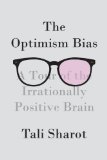
coming soon – ‘The Optimism Bias: A Tour of the Irrationally Positive Brain’

June 12, 2011

Optimism Bias

Expected release date is next Tuesday, June 14, for The Optimism Bias: A Tour of the Irrationally Positive Brain by Tali Sharot (Pantheon, 2011)

(kindle ed.), (amazon.co.uk)

Product description from the publisher:

From one of the most innovative neuroscientists at work today, an investigation into the bias toward optimism that exists on a neural level in our brains and plays a major part in determining how we live our lives.

Psychologists have long been aware that most people maintain an often irrationally positive outlook on life. In fact, optimism may be crucial to our existence. Tali Sharot’s experiments, research, and findings in cognitive science have contributed to an increased understanding of the biological basis of optimism. In this fascinating exploration, she takes an in-depth, clarifying look at how the brain generates hope and what happens when it fails; how the brains of optimists and pessimists differ; why we are terrible at predicting what will make us happy; how emotions strengthen our ability to recollect; how anticipation and dread affect us; and how our optimistic illusions affect our financial, professional, and emotional decisions.

With its cutting-edge science and its wide-ranging and accessible narrative, The Optimism Bias provides us with startling new insight into the workings of the brain.

See also: Author’s website, Time Magazine article

Comments (1) - cognitive science,new books,psychology