[ View menu ]

Archive

new book – ‘Lip Service: Smiles in Life, Death, Trust, Lies, Work, Memory, Sex, and Politics’

August 3, 2011

Lip Service

Lip Service: Smiles in Life, Death, Trust, Lies, Work, Memory, Sex, and Politics by Marianne LaFrance (W.W. Norton & Co., 2011)

(kindle ed.), (amazon.co.uk)

Product description from the publisher:

An expert in nonverbal communication tackles the science of smiles and their extraordinary social impact.
When someone smiles, the effects are often positive: a glum mood lifts; an apology is accepted; a deal is struck; a flirtation begins. But not all smiles are equally benign: a rival grins to get under your skin; a bully’s smirk unsettles his mark. Who flashes more fake smiles, popular kids or unpopular kids? Is it good or bad when a bereaved person smiles? Much more than cheerful expressions, smiles are social acts with powerful consequences. Drawing on her research conducted at Yale University and Boston College as well as the latest studies in psychology, medicine, anthropology, biology, and computer science, Marianne LaFrance explores the compelling science behind the smile, revealing that this familiar expression is not as simple as it first may seem. Her groundbreaking work shows how the smile says much more than we realize—or care to admit. To read this book is to learn just how much the smile influences our lives and our relationships. 38 black-and-white illustrations

See also: Author’s website

Comments (0) - new books,psychology

new book – ‘Cultural Evolution: How Darwinian Theory Can Explain Human Culture and Synthesize the Social Sciences’

August 2, 2011

Cultural Evolution

Cultural Evolution: How Darwinian Theory Can Explain Human Culture and Synthesize the Social Sciences by Alex Mesoudi (University of Chicago Press)

(amazon.co.uk – 1 Sep)

Product description from the publisher:

Charles Darwin changed the course of scientific thinking by showing how evolution accounts for the stunning diversity and biological complexity of life on earth. Recently, there has also been increased interest in the social sciences in how Darwinian theory can explain human culture.

Covering a wide range of topics, including fads, public policy, the spread of religion, and herd behavior in markets, Alex Mesoudi shows that human culture is itself an evolutionary process that exhibits the key Darwinian mechanisms of variation, competition, and inheritance. This cross-disciplinary volume focuses on the ways cultural phenomena can be studied scientifically—from theoretical modeling to lab experiments, archaeological fieldwork to ethnographic studies—and shows how apparently disparate methods can complement one another to the mutual benefit of the various social science disciplines. Along the way, the book reveals how new insights arise from looking at culture from an evolutionary angle. Cultural Evolution provides a thought-provoking argument that Darwinian evolutionary theory can both unify different branches of inquiry and enhance understanding of human behavior.

See also: Author’s website, Google Books preview

Comments (0) - culture,new books

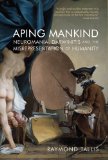
new book – ‘Aping Mankind: Neuromania, Darwinitis and the Misrepresentation of Humanity’ by Raymond Tallis

August 1, 2011

Aping Mankind

Aping Mankind: Neuromania, Darwinitis and the Misrepresentation of Humanity by Raymond Tallis (Acumen)

(amazon.co.uk – 3 Jun)

Product description from the publisher:

Biologism — the belief that human beings are essentially animals and can be understood in biological terms — is gaining increasing acceptance in contemporary thought. This trend is seemingly legitimised by genuine, often spectacular, advances in biological science: in human genetics, evolutionary theory and neuroscience. Our propensities, we are told, can be accounted for by “a gene for” this or that; everyday behaviour can be explained in Darwinian terms; and human consciousness is identified with the activity of the evolved brain. Ultimately, so the story goes, all that we do, think and feel is subordinated to the imperative of ensuring that we behave in such a way as to, individually or collectively, maximise the chances of replicating our genetic material. In Aping Mankind, Raymond Tallis argues that the rise of this way of thinking is a matter of profound concern. He demonstrates that by denying human uniqueness, and minimising the differences between humans and their nearest animal kin, biologism misrepresents what we are, offering a grotesquely simplified and even degrading account of humanity, which has dire consequences: by seeing ourselves as animals we may find reasons for treating each other like them. In a devastating critique Tallis exposes the exaggerated claims made for the ability of neuroscience and evolutionary theory to explain human consciousness, behaviour, culture and society and shows that human beings are infinitely more interesting and complex than they appear in the mirror of biologism.

See also: Author’s website, Conscious Entities review

Comments (0) - cognitive science,culture

out in paperback – ‘The Phenomenal Self’ and ‘Doing Without Concepts’

July 30, 2011

Two Oxford University Press books are now out in paperback:
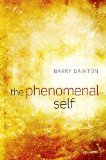
The Phenomenal Self

The Phenomenal Self by Barry Dainton, originally published in 2008.

(amazon.co.uk)

Product description from the publisher:

Barry Dainton presents a fascinating new account of the self, the key to which is experiential or phenomenal continuity.

Provided our mental life continues we can easily imagine ourselves surviving the most dramatic physical alterations, or even moving from one body to another. It was this fact that led John Locke to conclude that a credible account of our persistence conditions – an account which reflects how we actually conceive of ourselves – should be framed in terms of mental rather than material continuity. But mental continuity comes in different forms. Most of Locke’s contemporary followers agree that our continued existence is secured by psychological continuity, which they take to be made up of memories, beliefs, intentions, personality traits, and the like. Dainton argues that a better and more believable account can be framed in terms of the sort of continuity we find in our streams of consciousness from moment to moment. Why? Simply because provided this continuity is not lost – provided our streams of consciousness flow on – we can easily imagine ourselves surviving the most dramatic psychological alterations. Phenomenal continuity seems to provide a more reliable guide to our persistence than any form of continuity. The Phenomenal Self is a full-scale defence and elaboration of this premise.

The first task is arriving at an adequate understanding of phenomenal unity and continuity. This achieved, Dainton turns to the most pressing problem facing any experience-based approach: losses of consciousness. How can we survive them? He shows how the problem can be solved in a satisfactory manner by construing ourselves as systems of experiential capacities. He then moves on to explore a range of further issues. How simple can a self be? How are we related to our bodies? Is our persistence an all-or-nothing affair? Do our minds consist of parts which could enjoy an independent existence? Is it metaphysically intelligible to construe ourselves as systems of capacities? The book concludes with a novel treatment of fission and fusion.
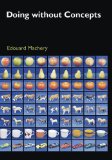
Doing Without Concepts

Doing without Concepts by Edouard Machery, originally published in 2009.

(amazon.co.uk – paperback ed. Sep 2011)

Over recent years, the psychology of concepts has been rejuvenated by new work on prototypes, inventive ideas on causal cognition, the development of neo-empiricist theories of concepts, and the inputs of the budding neuropsychology of concepts. But our empirical knowledge about concepts has yet to be organized in a coherent framework.

In Doing without Concepts, Edouard Machery argues that the dominant psychological theories of concepts fail to provide such a framework and that drastic conceptual changes are required to make sense of the research on concepts in psychology and neuropsychology. Machery shows that the class of concepts divides into several distinct kinds that have little in common with one another and that for this very reason, it is a mistake to attempt to encompass all known phenomena within a single theory of concepts. In brief, concepts are not a natural kind. Machery concludes that the theoretical notion of concept should be eliminated from the theoretical apparatus of contemporary psychology and should be replaced with theoretical notions that are more appropriate for fulfilling psychologists’ goals. The notion of concept has encouraged psychologists to believe that a single theory of concepts could be developed, leading to useless theoretical controversies between the dominant paradigms of concepts. Keeping this notion would slow down, and maybe prevent, the development of a more adequate classification and would overshadow the theoretical and empirical issues that are raised by this more adequate classification. Anyone interested in cognitive science’s emerging view of the mind will find Machery’s provocative ideas of interest.
Comments (0) - cognitive science,self

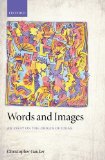
new book – ‘Words and Images: An Essay on the Origin of Ideas’

July 29, 2011

Words and Images

Words and Images: An Essay on the Origin of Ideas by Christopher Gauker (Oxford University Press, USA, 2011)

(amazon.co.uk)

Product description from the publisher:

At least since Locke, philosophers and psychologists have usually held that concepts arise out of sensory perceptions, thoughts are built from concepts, and language enables speakers to convey their thoughts to hearers. Christopher Gauker holds that this tradition is mistaken about both concepts and language. The mind cannot abstract the building blocks of thoughts from perceptual representations. More generally, we have no account of the origin of concepts that grants them the requisite independence from language. Gauker’s alternative is to show that much of cognition consists in thinking by means of mental imagery, without the help of concepts, and that language is a tool by which interlocutors coordinate their actions in pursuit of shared goals. Imagistic cognition supports the acquisition and use of this tool, and when the use of this tool is internalized, it becomes the very medium of conceptual thought.

See also: Author’s website, philosophy.tv – Christopher Gauker and Kathrin Glüer on the contents of perception

Comments (0) - language,new books,philosophy of mind