[ View menu ]

Archive

new book – ‘Babel’s Dawn: A Natural History of the Origins of Speech’

August 17, 2011

Babel's Dawn

Babel’s Dawn: A Natural History of the Origins of Speech by Edmund Blair Bolles (Counterpoint, 2011)

(amazon.co.uk)

Product description from the publisher:

Babel’s Dawn is a saga covering six million years. Like a walk through a natural history museum, Bolles demonstrates how members of the human lineage came to speak. Beginning with a scene of the last common ancestor ignoring a bird as it flies by, he guides us through generations, illuminating how it became possible for two Homo sapiens to not only acknowledge the songbird, but to also discuss the meaning of its song.

Tracing the rise of voluntary vocalizations as well as the first word, phrases, and sentences, Bolles works against the common belief that the reason apes cannot speak is they are not smart enough. In this groundbreaking work, Bolles purposes that we now have substantial evidence that this age-old idea can no longer stand. With concrete portrayals of living individuals interwoven with evidence, data, and theory, Babel’s Dawn is a powerful account of a great scientific revolution

See also: Author’s blog

Author’s video “Evidence of Early Speech”:

Comments (0) - language,new books

two new books from Edge.org – Leading Scientists Explore ‘The Mind’ and ‘Culture’

August 16, 2011

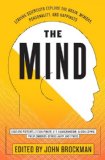
The Mind

The Mind: Leading Scientists Explore the Brain, Memory, Personality, and Happiness, ed. by John Brockman (Harper Perennial)

(kindle ed.), (amazon.co.uk)

Product description from the publisher:

Who am “I”?
How is happiness achieved?
What is the key to memory?
How do babies become adults?
Is personality determined?
What function do emotions serve?
Are we hardwired to be moral?

The mind is a riddle that has vexed philosophers, psychologists, biologists, and artists for thousands of years. In this invaluable volume, John Brockman, editor and publisher of Edge, gathers the world’s most influential scientists and thinkers to present their deepest thoughts and cutting-edge theories in short, accessible essays about the essential aspects of human consciousness and the complex workings of the brain.

Contributors and topics include

Steven Pinker on how the human brain works • Martin Seligman on happiness and what it means to live a good life • Philip Zimbardo on the impact of environment on personality • V. S. Ramachandran on the question of self—who “you” are • Simon Baron-Cohen on the innate differences between boys and girls • George Lakoff on the role of the body and brain on different types of reasoning • Alison Gopnik on why human children are the best learning machines in the universe • Jonathan Haidt on the connection between emotions, morality, and religious belief
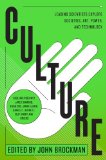
Culture

Culture: Leading Scientists Explore Societies, Art, Power, and Technology ed. by John Brockman (Harper Perennial),

(kindle ed.), (amazon.co.uk)

Product description from the publisher:

Why do civilizations rise and fall?
What are the origins and purpose of art?
How does technology shape society?
Did culture direct human evolution?
Is the Internet an agent of democracy or dictatorships?

An immensely powerful but little-understood force that impacts society, art, politics, and even human biological development, culture is the very stage on which human experience plays out. But what is it, exactly? What are its rules and origins? In this fascinating volume, John Brockman, editor and publisher of Edge, presents short, accessible explorations of culture’s essential aspects, by today’s most influential scientists and thinkers.

Contributors and topics include

Jared Diamond on why societies collapse and how we can make better decisions to protect our own future • Denis Dutton on the origins of art Daniel C. Dennett on the evolution of cultures • Jaron Lanier on the ominous impact of the Internet • Nicholas Christakis on the structure and rules of social networks, both “real” and online • Clay Shirky and Evgeny Morozov on the new political reality of the digital era • Brian Eno on what cultures value Stewart Brand on the responsibilities of human power • Douglas Rushkoff on the next Renaissance • W. Daniel Hillis on the Net as a global “knowledge web”

See also: Edge.org website

Comments (0) - culture,mind,new books

new book – ‘Evolution: The Human Story,’ illustrated volume from DK Publishing

August 12, 2011

Evolution: The Human Story

Evolution: The Human Story by Alice Roberts (DK Publishing, 2011)

(amazon.co.uk – 1 Sep)

Product description from the publisher:

How did we develop from simple animals inhabiting small pockets of forest in Africa to the dominant species on Earth? Traveling back almost eight million years to our earliest primate relatives, Evolution: The Human Story charts the development of our species from tree-dwelling primates to modern humans.

Investigating each of our ancestors in detail and in context, from the anatomy of their bones to the environment they lived in, Evolution: The Human Story profiles every human relative and ancestor discovered to date, and illustrates them in lifelike form.

Amazingly realistic CGI and model reconstructions by the renowned Dutch paleoartists, the Kennis brothers, bring us face-to-face and eye-to-eye with some of our distant ancestors, portraying them as never before.

Drawing on cutting-edge research and the latest theories to reveal new and surprising elements, shining a light on previously inaccessible and unimagined detail, Evolution: The Human Story takes on a depth and fascination that is hard to resist.

Preview from Google books:

Comments (0) - human evolution,new books

new book – ‘The Penguin and the Leviathan: How Cooperation Triumphs over Self-Interest’

August 9, 2011

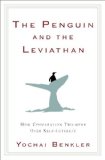
The Penguin and the Leviathan

The Penguin and the Leviathan: How Cooperation Triumphs over Self-Interest by Yochai Benkler (Crown Business)

(kindle ed.), (amazon.co.uk – 9 Aug)

Product description from the publisher:

What do Wikipedia, Zip Car’s business model, Barack Obama’s presidential campaign, and a small group of lobster fishermen have in common? They all show the power and promise of human cooperation in transforming our businesses, our government, and our society at large. Because today, when the costs of collaborating are lower than ever before, there are no limits to what we can achieve by working together.

For centuries, we as a society have operated according to a very unflattering view of human nature:  that, humans are universally and inherently selfish creatures. As a result, our most deeply entrenched social structures – our top-down business models, our punitive legal systems, our market-based approaches to everything from education reform to environmental regulation – have been built on the premise that humans are driven only by self interest, programmed to respond only to the invisible hand of the free markets or the iron fist of a controlling government.

In the last decade, however, this fallacy has finally begun to unravel, as hundreds of studies conducted across dozens of cultures have found that most people will act far more cooperatively than previously believed.  Here, Harvard University Professor Yochai Benkler draws on cutting-edge findings from neuroscience, economics, sociology, evolutionary biology, political science, and a wealth of real world examples to debunk this long-held myth and reveal how we can harness the power of human cooperation to improve business processes, design smarter technology, reform our economic systems, maximize volunteer contributions to science, reduce crime, improve the efficacy of civic movements, and more.

For example, he describes how:

• By building on countless voluntary contributions, open-source software communities have developed some of the most important infrastructure on which the World Wide Web runs
• Experiments with pay-as-you-wish pricing in the music industry reveal that fans will voluntarily pay far more for their favorite music than economic models would ever predict
• Many self-regulating communities, from the lobster fishermen of Maine to farmers in Spain, live within self-regulating system for sharing and allocating communal resources
• Despite recent setbacks, Toyota’s collaborative shop-floor, supply chain, and management structure contributed to its meteoric rise above its American counterparts for over a quarter century.
• Police precincts across the nation have managed to reduce crime in tough neighborhoods through collaborative, trust-based, community partnerships.

A must-read for anyone who wants to understand the dynamics of cooperation in 21st century life, The Penguin and the Leviathan not only challenges so many of the ways in which we live and work, it forces us to rethink our entire view of human nature.

See also: Author’s website, Santa Fe Institute video “The Penguin and the Leviathan: The Science and Practice of Cooperation” (10/13/2010)

Comments (0) - culture,new books

new book – ‘Re-Emergence: Locating Conscious Properties in a Material World’

August 8, 2011

Re-Emergence

Re-Emergence: Locating Conscious Properties in a Material World by Gerald Vision (MIT Press, 2011)

(amazon.co.uk – 30 Sep)

Product description from the publisher:

The presence of sentience in a basically material reality is among the mysteries of existence. Many philosophers of mind argue that conscious states and properties are nothing beyond the matter that brings them about. Finding these arguments less than satisfactory, Gerald Vision offers a nonphysicalist theory of mind. Revisiting and defending a key doctrine of the once widely accepted school of philosophy known as emergentism, Vision proposes that conscious states are emergents, although they depend for their existence on their material bases. Although many previous emergentist theories have been decisively undermined, Vision argues that emergent options are still viable on some issues. In Re-Emergence he explores the question of conscious properties arising from brute, unthinking matter, making the case that there is no equally plausible non-emergent alternative. Vision defends emergentism even while conceding that conscious properties and states are realized by or strongly supervene on the physical. He argues, however, that conscious properties cannot be reduced to, identified with, or given the right kind of materialist explanation in terms of the physical reality on which they depend. Rather than use emergentism simply to assail the current physicalist orthodoxy, Vision views emergentism as a contribution to understanding conscious aspects. After describing and defending his version of emergentism, Vision reviews several varieties of physicalism and near-physicalism, finding that his emergent theory does a better job of coming to grips with these phenomena.

See also: Works by Gerald Vision at PhilPapers

Comments (0) - consciousness,new books,philosophy of mind