[ View menu ]

Archive

new book – ‘Macro Cultural Psychology: A Political Philosophy of Mind’

September 3, 2011
Macro Cultural Psychology

Macro Cultural Psychology: A Political Philosophy of Mind by Carl Ratner (Oxford University Press, USA, 2011)

(amazon.co.uk)

Book description from the publisher:

This book articulates a bold, new, systematic theory of psychology, culture, and their interrelation. It explains how macro cultural factors — social institutions, cultural artifacts, and cultural concepts — are the cornerstones of society and how they form the origins and characteristics of psychological phenomena. This theory is used to explain the diversity of psychological phenomena such as emotions, self, intelligence, sexuality, memory, reasoning, perception, developmental processes, and mental illness. Ratner draws upon Lev Vygotsky’s sociocultural psychology, Bronfenbrenner’s ecological psychology, as well as work in sociology, anthropology, history, and geography, to explore the political implications and assumptions of psychological theories regarding social policy and reform.

The theory outlined here addresses current theoretical and political issues such as agency, realism, objectivity, subjectivism, structuralism, postmodernism, and multiculturalism. In this sense, the book articulates a systematic political philosophy of mind to examine numerous approaches to psychology, including indigenous psychology, cross-cultural psychology, activity theory, discourse analysis, mainstream psychology, and evolutionary psychology.

Comments (0) - culture,mind,new books,philosophy of mind,psychology
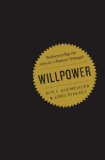
new book – ‘Willpower: Rediscovering the Greatest Human Strength’

September 1, 2011

Willpower

Willpower: Rediscovering the Greatest Human Strength by Roy F. Baumeister and John Tierney (Penguin, 2011)

(kindle ed.), (amazon.co.uk)

Book description from the publisher:

One of the world’s most esteemed and influential psychologists, Roy F. Baumeister, teams with New York Times science writer John Tierney to reveal the secrets of self-control and how to master it.

In Willpower, the pioneering researcher Roy F. Baumeister collaborates with renowned New York Times science writer John Tierney to revolutionize our understanding of the most coveted human virtue: self-control.

In what became one of the most cited papers in social science literature, Baumeister discovered that willpower actually operates like a muscle: it can be strengthened with practice and fatigued by overuse. Willpower is fueled by glucose, and it can be bolstered simply by replenishing the brain’s store of fuel. That’s why eating and sleeping- and especially failing to do either of those-have such dramatic effects on self-control (and why dieters have such a hard time resisting temptation).

Baumeister’s latest research shows that we typically spend four hours every day resisting temptation. No wonder people around the world rank a lack of self-control as their biggest weakness. Willpower looks to the lives of entrepreneurs, parents, entertainers, and artists-including David Blaine, Eric Clapton, and others-who have flourished by improving their self-control.?

The lessons from their stories and psychologists’ experiments can help anyone. You learn not only how to build willpower but also how to conserve it for crucial moments by setting the right goals and using the best new techniques for monitoring your progress. Once you master these techniques and establish the right habits, willpower gets easier: you’ll need less conscious mental energy to avoid temptation. That’s neither magic nor empty self-help sloganeering, but rather a solid path to a better life.

Combining the best of modern social science with practical wisdom, Baumeister and Tierney here share the definitive compendium of modern lessons in willpower. As our society has moved away from the virtues of thrift and self-denial, it often feels helpless because we face more temptations than ever. But we also have more knowledge and better tools for taking control of our lives. However we define happiness–a close-knit family, a satisfying career, financial security–we won’t reach it without mastering self-control.

See also: “Do you suffer from decision fatigue” – 8/17/11 New York Times Magazine article adapted from the book, “How to Learn Self-Control,” article on the book at BookBeast

Google Books preview:

Comments (0) - new books,psychology

new book – ‘The Secret Life of Pronouns: What Our Words Say About Us’

August 30, 2011

The Secret Life of Pronouns

The Secret Life of Pronouns: What Our Words Say About Us by James W. Pennebaker (Bloomsbury Press, 2011)

(kindle ed.), (amazon.co.uk)

Book description from the publisher:

We spend our lives communicating. In the last fifty years, we’ve zoomed through radically different forms of communication, from typewriters to tablet computers, text messages to tweets. We generate more and more words with each passing day. Hiding in that deluge of language are amazing insights into who we are, how we think, and what we feel.

In The Secret Life of Pronouns, social psychologist and language expert James W. Pennebaker uses his groundbreaking research in computational linguistics-in essence, counting the frequency of words we use-to show that our language carries secrets about our feelings, our self-concept, and our social intelligence. Our most forgettable words, such as pronouns and prepositions, can be the most revealing: their patterns are as distinctive as fingerprints.

Using innovative analytic techniques, Pennebaker X-rays everything from Craigslist advertisements to the Federalist Papers-or your own writing, in quizzes you can take yourself-to yield unexpected insights. Who would have predicted that the high school student who uses too many verbs in her college admissions essay is likely to make lower grades in college? Or that a world leader’s use of pronouns could reliably presage whether he led his country into war? You’ll learn why it’s bad when politicians use “we” instead of “I,” what Lady Gaga and William Butler Yeats have in common, and how Ebenezer Scrooge’s syntax hints at his self-deception and repressed emotion. Barack Obama, Sylvia Plath, and King Lear are among the figures who make cameo appearances in this sprightly, surprising tour of what our words are saying-whether we mean them to or not.

See also:

Book website

This book has gotten lots of reviews — Google News search for reviews

Comments (0) - language,new books,psychology

free on kindle – ‘Making Sense of People: Decoding the Mysteries of Personality’

August 29, 2011

Making Sense of People

Making Sense of People: Decoding the Mysteries of Personality (FT Press Science) by Samuel Barondes only recently came out in hardcover, but is now being offered as a free Kindle ebook. Be sure to check the price before purchasing, as it could change at any time.

Product description from the publisher:

Leading neuroscientist Samuel Barondes shares scientific frameworks and tools for improving your intuitions about people, and sizing them up more consciously, systematically, and successfully. He shows how to use the latest research about personality and character to get along better, choose great friends, decide whom to trust, and avoid narcissists and sociopaths.

Comments (0) - new books,psychology

Aside – “when I read”

August 28, 2011

“When I read a novel I am not only surrendering; I am allowing my mind to be occupied by a colonizer of uncertain intent.” Extra Lives by Tom Bissell, p. 39

Comments (0) - aside