Throughout its long history, and not just as the key aesthetic category for the Romantic Movement, the sublime has created the necessary link between aesthetic and moral judgment, offering the prospect of transcending the limits of measurement, even imagination. The best of science makes genuine claims to the sublime. For in science, as in art, every day brings the entirely new, the extreme, and the unrepresentable. How does one depict negative mass, for example, or the folding of a protein that is contagious? Can one capture emergent phenomena as they emerge? Science is continually faced with describing that which is beyond.
This book, through contributions from nine prominent scholars, tackles that challenge. The explorations within Beyond the Finite range from the images taken by the Hubble Telescope to David Bohm’s quantum romanticism, from Kant and Burke to a “downward spiraling infinity” of the 21st century sublime, all lucid yet transcendent. Squarely positioned at the interface between science and art, this volume’s chapters capture a remarkable variety of perspectives, with neuroscience, chemistry, astronomy, physics, film, painting and music discussed in relation to the sublime experience, topics surely to peak the interest of academics and students studying the sublime in various disciplines.
Americans are fixated on the idea of choice. Our political theory is based on the consent of the governed. Our legal system is built upon the argument that people freely make choices and bear responsibility for them. And what slogan could better express the heart of our consumer culture than “Have it your way”?
In this provocative book, Kent Greenfield poses unsettling questions about the choices we make. What if they are more constrained and limited than we like to think? If we have less free will than we realize, what are the implications for us as individuals and for our society? To uncover the answers, Greenfield taps into scholarship on topics ranging from brain science to economics, political theory to sociology. His discoveries—told through an entertaining array of news events, personal anecdotes, crime stories, and legal decisions—confirm that many factors, conscious and unconscious, limit our free will. Worse, by failing to perceive them we leave ourselves open to manipulation. But Greenfield offers useful suggestions to help us become better decision makers as individuals, and to ensure that in our laws and public policy we acknowledge the complexity of choice.
As it was in Anna Karenina, Madame Bovary, and Othello, so it is in life. Most forms of private vice and public evil are kindled and sustained by lies. Acts of adultery and other personal betrayals, financial fraud, government corruption—even murder and genocide—generally require an additional moral defect: a willingness to lie.
In Lying, bestselling author and neuroscientist Sam Harris argues that we can radically simplify our lives and improve society by merely telling the truth in situations where others often lie. He focuses on “white” lies—those lies we tell for the purpose of sparing people discomfort—for these are the lies that most often tempt us. And they tend to be the only lies that good people tell while imagining that they are being good in the process.
David Henderson and Terence Horgan set out a broad new approach to epistemology, which they see as a mixed discipline, having both a priori and empirical elements. They defend the roles of a priori reflection and conceptual analysis in philosophy, but their revisionary account of these philosophical methods allows them a subtle but essential empirical dimension. They espouse a dual-perspective position which they call iceberg epistemology, respecting the important differences between epistemic processes that are consciously accessible and those that are not. Reflecting on epistemic justification, they introduce the notion of transglobal reliability as the mark of the cognitive processes that are suitable for humans. Which cognitive processes these are depends on contingent facts about human cognitive capacities, and these cannot be known a priori.
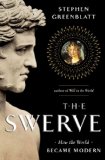
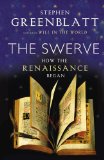
A riveting tale of the great cultural “swerve” known as the Renaissance.
One of the world’s most celebrated scholars, Stephen Greenblatt has crafted both an innovative work of history and a thrilling story of discovery, in which one manuscript, plucked from a thousand years of neglect, changed the course of human thought and made possible the world as we know it.
Nearly six hundred years ago, a short, genial, cannily alert man in his late thirties took a very old manuscript off a library shelf, saw with excitement what he had discovered, and ordered that it be copied. That book was the last surviving manuscript of an ancient Roman philosophical epic, On the Nature of Things, by Lucretius—a beautiful poem of the most dangerous ideas: that the universe functioned without the aid of gods, that religious fear was damaging to human life, and that matter was made up of very small particles in eternal motion, colliding and swerving in new directions.
The copying and translation of this ancient book-the greatest discovery of the greatest book-hunter of his age-fueled the Renaissance, inspiring artists such as Botticelli and thinkers such as Giordano Bruno; shaped the thought of Galileo and Freud, Darwin and Einstein; and had a revolutionary influence on writers such as Montaigne and Shakespeare and even Thomas Jefferson. 16 pages full-color illustrations