[ View menu ]

Archive

new book – ‘Tool Use and Causal Cognition’

November 14, 2011
Tool Use and Causal Cognition

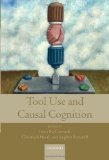
Tool Use and Causal Cognition (Consciousness and Self-Consciousness) ed. by Teresa McCormack, Christoph Hoerl and Stephen Butterfill (Oxford University Press, USA, 2011)

(amazon.co.uk)

Product description from the publisher:

What cognitive abilities underpin the use of tools, and how are tools and their properties represented or understood by tool-users? Does the study of tool use provide us with a unique or distinctive source of information about the causal cognition of tool-users?

Tool use is a topic of major interest to all those interested in animal cognition, because it implies that the animal has knowledge of the relationship between objects and their effects. There are countless examples of animals developing tools to achieve some goal-chimps sharpening sticks to use as spears, bonobos using sticks to fish for termites, and New Caledonian crows developing complex tools to extracts insects from logs. Studies of tool use have been used to examine an exceptionally wide range of aspects of cognition, such as planning, problem-solving and insight, naive physics, social relationship between action and perception.
A key debate in recent research on animal cognition concerns the level of cognitive sophistication that is implied by animal tool use, and developmental psychologists have been addressing related questions regarding the processes through which children acquire the ability to use tools. In neuropsychology, patterns of impairments in tool use due to brain damage, and studies of neural changes associated with tool use, have also led to debates about the different types of cognitive abilities that might underpin tool use, and about how tool use may change the way space or the body is represented.

Tool Use and Causal Cognition provides a new interdisciplinary perspective on these issues with contributions from leading psychologists studying tool use and philosophers providing new analyses of the nature of causal understanding.
A ground-breaking volume which covers several disciplines, this volume will be of interest to psychologists, including animal researchers and developmental psychologists as well as philosophers, and neuroscientists.

Google Books preview:

See also: Bibliography of tool use resources from the University of Warwick
Comments (0) - cognitive science,new books

coming in 2012

November 13, 2011

Here are some of the books coming up in 2012 (to be added to the “Calendar of upcoming releases”):

2012

Jan

1/2/12 – The Primate Mind: Built to Connect with Other Minds ed by Frans de Waal and Pier Francesco Ferrari (Harvard University Press), (amazon.co.uk – 30 Dec 2011)

1/27/12 – Plato’s Camera: How the Physical Brain Captures a Landscape of Abstract Universals by Paul M. Churchland (MIT Press), (amazon.co.uk – 27 Jan)

Feb

2/27/12 – Wired for Culture: Origins of the Human Social Mind by Mark Pagel (W.W. Norton), (kindle ed.), (amazon.co.uk – 15 Apr)

2/28/12 – The Awakened Ones: Phenomenology of Visionary Experience by Gananath Obeyesekere (Columbia University Press), (amazon.co,.uk – 1 Feb)

Mar

3/1/12 – The Emotional Life of Your Brain: How Its Unique Patterns Affect the Way You Think, Feel, and Live–and How You Can Change Them by Richard J. Davidson and Sharon Begley (Hudson Street Press), (kindle ed.), (amazon.co.uk – 1 Mar)

3/20/12 Imagine: How Creativity Works by Jonah Lehrer (Houghton Mifflin Harcourt), (kindle ed.), (amazon.co.uk – 20 Mar)

Apr

4/2/12 – The Archaeology of Mind: Neuroevolutionary Origins of Human Emotions (Norton Series on Interpersonal Neurobiology) by Jaak Panksepp and Lucy Biven (W.W. Norton), (amazon.co.uk – 29 May)

4/3/12 – Surfaces and Essences by Douglas Hofstadter and Emmanuel Sander (Basic Books)

4/10/12 – The Storytelling Animal: How Stories Make Us Human by Jonathan Gottschall (Houghton Mifflin Harcourt), (kindle ed.), (amazon.co.uk)

July
7/1/12 – The Self Illusion: How the Social Brain Creates Identity by Bruce Hood (Oxford University Press, USA), (amazon.co.uk – 19 Apr)

Comments (0) - new books

new book – ‘Shiny Objects: Why We Spend Money We Don’t Have in Search of Happiness We Can’t Buy’

November 12, 2011

Shiny Objects

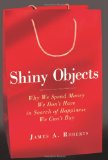
Shiny Objects: Why We Spend Money We Don’t Have in Search of Happiness We Can’t Buy by James A. Roberts (HarperOne, 2011)

(kindle ed.), (amazon.co.uk)

Product description from the publisher:

Americans toss out 140 million cell phones every year. We discard 2 million plastic bottles every five minutes. And our total credit-card debt as of July 2011 is $793 billion.

Plus, credit cards can make you fat.

The American Dream was founded on the belief that anyone dedicated to thrift and hard work could create opportunities and achieve a better life. Now that dream has been reduced to a hyperquantified desire for fancier clothes, sleeker cars, and larger homes. We’ve lost our way, but James Roberts argues that it’s not too late to find it again. In Shiny Objects, he offers us an opportunity to examine our day-to-day habits, and once again strive for lives of quality over quantity.

Mining his years of research into the psychology of consumer behavior, Roberts gets to the heart of the often-surprising ways we make our purchasing decisions. What he and other researchers in his field have found is that no matter what our income level, Americans believe that we need more to live a good life. But as our standard of living has climbed over the past forty years, our self-reported “happiness levels” have flatlined.

Roberts isn’t merely concerned with the GDP or big-ticket purchases—damaging spending habits play out countless times a day, in ways big and small: he demonstrates that even the amount we spend at our favorite fast-food joint increases anywhere from 60 to 100 percent when we use a credit card instead of cash. Every time we watch TV or turn on a radio we’re exposed to marketing messages (experts estimate up to 3,000 of them daily). Consumption is king, and its toll is not just a financial one: relationships are suffering, too, as materialism encroaches on the time and value we give the people around us.

By shedding much-needed light on the science of spending, Roberts empowers readers to make smart changes, improve self-control, and curtail spending. The American Dream is still ours for the taking, and Shiny Objects is ultimately a hopeful statement about the power we each hold to redefine the pursuit of happiness.


Browse Inside this book

Get this for your site

See also: a related new title – Consumption Matters: A Psychological Perspective by Cathrine Jansson-Boyd (Palgrave Macmillan, Nov 8, 2011), (amazon.co.uk)

Comments (0) - culture,happiness,new books,psychology

new book – ‘Art, Self and Knowledge’

November 10, 2011

Art, Self and Knowledge

Art, Self and Knowledge by Keith Lehrer (Oxford University Press, USA, 2011)

(amazon.co.uk – Jan 2012)

Product description from the publisher:

Art can provide us with a sensory experience that provokes us to reconfigure how we think about our world and ourselves. Theories of art have often sought to find some feature of art that isolates it from the rest of experience. Keith Lehrer argues, in opposition, that art is connected, not isolated, from how we think and feel, represent and react. When art directs our attention to sensory exemplars in aesthetic experience of which we become conscious in a special way, it also shows us our autonomy as we represent ourselves and our world, ourselves in our world, and our world in ourselves. This form of representation, exemplar representation, uses the exemplar as a term of representation and exhibits the nature of the content it represents in terms of itself. It shows us both what our world is like and how we represent the world thereby revealing the nature of intentionality to us. Issues of general interest in philosophy such as knowledge, autonomy, rationality and self-trust enter the book along with more specifically aesthetic issues of formalism, expressionism, representation, artistic creativity and beauty. The author goes on to demonstrate how the connection between art and broader issues of feminism, globalization, collective wisdom, and death show us the connection between art, life, politics and the self.
Drawing from Hume, Reid, Goodman, Danto, Brand, Ismael and Lopes, Lehrer argues here that the artwork is a mentalized physical object engaging us philosophically with the content of exemplar experience. The exemplar representation of experience provoked by art ties art and science, mind and body, self and world, together in a dynamic loop, reconfiguring them all as it reconfigures art itself.

Google Books preview:

See also: Website for the book

Comments (0) - culture,new books,self

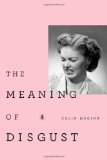
new book – ‘The Meaning of Disgust’ by Colin McGinn

November 6, 2011

The Meaning of Disgust

The Meaning of Disgust by Colin McGinn (Oxford University Press, 2011)

(kindle ed.), (amazon.co.uk)

Book description from the publisher:

Disgust has a strong claim to be a distinctively human emotion. But what is it to be disgusting? What unifies the class of disgusting things? Colin McGinn sets out to analyze the content of disgust, arguing that life and death are implicit in its meaning. Disgust is a kind of philosophical emotion, reflecting the human attitude to the biological world. Yet it is an emotion we strive to repress. It may have initially arisen as a method of curbing voracious human desire, which itself results from our powerful imagination. Because we feel disgust towards ourselves as a species, we are placed in a fraught emotional predicament: we admire ourselves for our achievements, but we also experience revulsion at our necessary organic nature. We are subject to an affective split. Death involves the disgusting, in the shape of the rotting corpse, and our complex attitudes towards death feed into our feelings of disgust. We are beings with a “disgust consciousness”, unlike animals and gods-and we cannot shake our self-ambivalence. Existentialism and psychoanalysis sought a general theory of human emotion; this book seeks to replace them with a theory in which our primary mode of feeling centers around disgust. The Meaning of Disgust is an original study of a fascinating but neglected subject, which attempts to tell the disturbing truth about the human condition.

See also: “Disgust and Death” lecture at the Center for Advanced Study, University of Illinois, 4/9/10 (links to Real Player video and mp3)

Google books preview:

Comments (0) - mind,new books