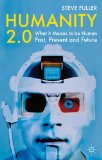
Social thinkers in all fields are faced with one unavoidable question: what does it mean to be ‘human’ in the 21st century? As definitions between what is ‘animal’ and what is ‘human’ break down, and as emerging technologies such as artificial intelligence and nano- and bio- technologies develop, accepted notions of humanity are rapidly evolving.
Humanity 2.0 is an ambitious and groundbreaking book, offering a sweeping overview of key historical, philosophical and theological moments that have shaped our understandings of humanity. Tackling head on the twin taboos that have always hovered over the scientific study of humanity – race and religion – Steve Fuller argues that far from disappearing, they are being reinvented.
Fuller argues that these new developments will force us to decide which features of our current way of life – not least our bodies – are truly needed to remain human, and concludes with a consideration of these changes for ethical and social values more broadly.
“If science may crudely be said to be the drive to know the world objectively and art is pre-eminently an arena of subjective self-expression, religion typically addresses both sides of the subject-object relationship by connecting what is inside each of us to something outside.”
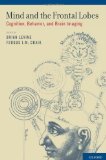
In the past 25 years, the frontal lobes have dominated human neuroscience research. Functional neuroimaging studies have revealed their importance to brain networks involved in nearly every aspect of mental and cognitive functioning. Studies of patients with focal brain lesions have expanded on early case study evidence of behavioral, emotional, and cognitive changes associated with frontal lobe brain damage. The role of frontal lobe function and dysfunction in human development (in both children and older adults), psychiatric disorders, the dementias, and other brain diseases has also received rapidly increasing attention. In this useful text, 14 leading frontal lobe researchers review and synthesize the current state of knowledge on frontal lobe function, including structural and functional brain imaging, brain network analysis, aging and dementia, traumatic brain injury, rehabilitation, attention, memory, and consciousness. The book therefore provides a state-of-the-art account of research in this exciting area, and also highlights a number of new findings by some of the world’s top researchers.
The Early Modern Subject explores the understanding of self-consciousness and personal identity–two fundamental features of human subjectivity–as it developed in early modern philosophy. Udo Thiel presents a critical evaluation of these features as they were conceived in the seventeenth and eighteenth centuries. He explains the arguments of thinkers such as Descartes, Locke, Leibniz, Wolff, and Hume, as well as their early critics, followers, and other philosophical contemporaries, and situates them within their historical contexts. Interest in the issues of self-consciousness and personal identity is in many ways characteristic and even central to early modern thought, but Thiel argues here that this is an interest that continues to this day, in a form still strongly influenced by the conceptual frameworks of early modern thought. In this book he attempts to broaden the scope of the treatment of these issues considerably, covering more than a hundred years of philosophical debate in France, Britain, and Germany while remaining attentive to the details of the arguments under scrutiny and discussing alternative interpretations in many cases.
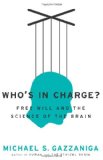
The father of cognitive neuroscience and author of Human offers a provocative argument against the common belief that our lives are wholly determined by physical processes and we are therefore not responsible for our actions
A powerful orthodoxy in the study of the brain has taken hold in recent years: Since physical laws govern the physical world and our own brains are part of that world, physical laws therefore govern our behavior and even our conscious selves. Free will is meaningless, goes the mantra; we live in a “determined” world.
Not so, argues the renowned neuroscientist Michael S. Gazzaniga in this thoughtful, provocative book based on his Gifford Lectures——one of the foremost lecture series in the world dealing with religion, science, and philosophy. Who’s in Charge? proposes that the mind, which is somehow generated by the physical processes of the brain, “constrains” the brain just as cars are constrained by the traffic they create. Writing with what Steven Pinker has called “his trademark wit and lack of pretension,” Gazzaniga shows how determinism immeasurably weakens our views of human responsibility; it allows a murderer to argue, in effect, “It wasn’t me who did it——it was my brain.” Gazzaniga convincingly argues that even given the latest insights into the physical mechanisms of the mind, there is an undeniable human reality: We are responsible agents who should be held accountable for our actions, because responsibility is found in how people interact, not in brains.
An extraordinary book that ranges across neuroscience, psychology, ethics, and the law with a light touch but profound implications, Who’s in Charge? is a lasting contribution from one of the leading thinkers of our time.
See also: Gifford Lecture – “Free Yet Determined and Constrained”