[ View menu ]

Archive

new book – ‘Rationality + Consciousness = Free Will’

December 11, 2011

Rationality + Consciousness = Free Will

Rationality + Consciousness = Free Will by David Hodgson (Oxford University Press, 2012)

(amazon.co.uk)

Product description from the publisher:

In recent years, philosophical discussions of free will have focused largely on whether or not free will is compatible with determinism. In this challenging book, David Hodgson takes a fresh approach to the question of free will, contending that close consideration of human rationality and human consciousness shows that together they give us free will, in a robust and indeterministic sense. In particular, they give us the capacity to respond appositely to feature-rich gestalts of conscious experiences, in ways that are not wholly determined by laws of nature or computational rules. The author contends that this approach is consistent with what science tells us about the world; and he considers its implications for our responsibility for our own conduct, for the role of retribution in criminal punishment, and for the place of human beings in the wider scheme of things.

See also: Author’s website (with links to articles)

Google Books preview:

Comments (0) - consciousness,philosophy of mind

new book – ‘The Mind’s Own Physician: A Scientific Dialogue with the Dalai Lama on the Healing Power of Meditation’

December 10, 2011

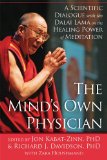
The Mind's Own Physician

The Mind’s Own Physician: A Scientific Dialogue with the Dalai Lama on the Healing Power of Meditation ed. by Jon Kabat-Zinn and Richard Davidson (New Harbinger)

(kindle ed.), (amazon.co.uk)

Product description from the publisher:

By inviting the Dalai Lama and leading researchers in medicine, psychology, and neuroscience to join in conversation, the Mind & Life Institute set the stage for a fascinating exploration of the healing potential of the human mind. The Mind’s Own Physician presents in its entirety the thirteenth Mind and Life dialogue, a discussion addressing a range of vital questions concerning the science and clinical applications of meditation: How do meditative practices influence pain and human suffering? What role does the brain play in emotional well-being and health? To what extent can our minds actually influence physical disease? Are there important synergies here for transforming health care, and for understanding our own evolutionary limitations as a species?

Edited by world-renowned researchers Jon Kabat-Zinn and Richard J. Davidson, this book presents this remarkably dynamic interchange along with intriguing research findings that shed light on the nature of the mind, its capacity to refine itself through training, and its role in physical and emotional health.

See also: Mind & Life Institute website

Comments (0) - consciousness,meditation,mind

$1.99 kindle ebook – ‘The Best Things in Life : A Guide to What Really Matters’ by Thomas Hurka

December 9, 2011

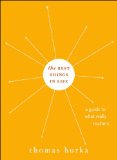
The Best Things in Life

A kindle ebook deal, currently at $1.99 (price subject to change, so check before you click): The Best Things in Life: A Guide to What Really Matters by Thomas Hurka (Oxford University Press, 2010)

Product description from the publisher:

For centuries, philosophers, theologians, moralists, and ordinary people have asked: How should we live? What makes for a good life?
In The Best Things in Life, distinguished philosopher Thomas Hurka takes a fresh look at these perennial questions as they arise for us now in the 21st century. Should we value family over career? How do we balance self-interest and serving others? What activities bring us the most joy? While religion, literature, popular psychology, and everyday wisdom all grapple with these questions, philosophy more than anything else uses the tools of reason to make important distinctions, cut away irrelevancies, and distill these issues down to their essentials. Hurka argues that if we are to live a good life, one thing we need to know is which activities and experiences will most likely lead us to happiness and which will keep us from it, while also reminding us that happiness isn’t the only thing that makes life good. Hurka explores many topics: four types of good feeling (and the limits of good feeling); how we can improve our baseline level of happiness (making more money, it turns out, isn’t the answer); which kinds of knowledge are most worth having; the importance of achieving worthwhile goals; the value of love and friendship; and much more. Unlike many philosophers, he stresses that there isn’t just one good in life but many: pleasure, as Epicurus argued, is indeed one, but knowledge, as Socrates contended, is another, as is achievement. And while the great philosophers can help us understand what matters most in life, Hurka shows that we must ultimately decide for ourselves.
This delightfully accessible book offers timely guidance on answering the most important question any of us will ever ask: How do we live a good life?

Comments (0) - happiness

new book – ‘Verbal Minds: Language and the Architecture of Cognition’

December 8, 2011

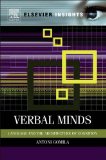
Verbal Minds

Verbal Minds: Language and the Architecture of Cognition (Elsevier Insights) by Toni Gomila (Elsevier, 2011)

(amazon.co.uk – 5 Dec 2011)

Product description from the publisher:

Ten years ago, the hegemonic idea was that language was a kind of independent module within the mind, a sort of “print-out” of whatever cognitive activity was taking place, but without any influence whatsoever in that activity. While this view is still held, evidence amassed in the last 10 years suggests another view of their inter-relationships, even though exactly which one is not clear yet, in part because of the lack of a unified view, and in part because of the inertia of the previous position, in part because all this evidence must be considered together. An increasing number of researchers are paying attention to the issues involved as the human language specificity may provide a clue to understand what makes humans “smart,” to account for the singularities of human cognition.

This book provides a comprehensive review of the multiple developments that have taken place in the last 10 years on the question of the relationships between language and thought and integrates them into a coherent framework. It will be relevant for anyone working in the sciences of languages.

Comments (0) - cognitive science,language

new book – ‘Evolution and the Emergent Self: The Rise of Complexity and Behavioral Versatility in Nature’

December 7, 2011

Evolution and the Emergent Self

Evolution and the Emergent Self: The Rise of Complexity and Behavioral Versatility in Nature by Raymond L. Neubauer (Columbia University Press, 2011)

(kindle ed.), (amazon.co.uk)

Product description from the publisher:

Evolution and the Emergent Self is an eloquent and evocative new synthesis that explores how the human species emerged from the cosmic dust. Lucidly presenting ideas about the rise of complexity in our genetic, neuronal, ecological, and ultimately cosmological settings, the author takes readers on a provocative tour of modern science’s quest to understand our place in nature and in our universe. Readers fascinated with “Big History” and drawn to examine big ideas will be challenged and enthralled by Raymond L. Neubauer’s ambitious narrative.

How did humans emerge from the cosmos and the pre-biotic Earth, and what mechanisms of biological, chemical, and physical sciences drove this increasingly complex process? Neubauer presents a view of nature that describes the rising complexity of life in terms of increasing information content, first in genes and then in brains. The evolution of the nervous system expanded the capacity of organisms to store information, making learning possible. In key chapters, the author portrays four species with high brain:body ratios—chimpanzees, elephants, ravens, and dolphins—showing how each species shares with humans the capacity for complex communication, elaborate social relationships, flexible behavior, tool use, and powers of abstraction. A large brain can have a hierarchical arrangement of circuits that facilitates higher levels of abstraction.

Neubauer describes this constellation of qualities as an emergent self, arguing that self-awareness is nascent in several species besides humans and that potential human characteristics are embedded in the evolutionary process and have emerged repeatedly in a variety of lineages on our planet. He ultimately demonstrates that human culture is not a unique offshoot of a language-specialized primate, but an analogue of fundamental mechanisms that organisms have used since the beginning of life on Earth to gather and process information in order to buffer themselves from fluctuations in the environment.

Neubauer also views these developments in a cosmic setting, detailing open thermodynamic systems that grow more complex as the energy flowing through them increases. Similar processes of increasing complexity can be found in the “self-organizing” structures of both living and nonliving forms. Recent evidence from astronomy indicates that planet formation may be nearly as frequent as star formation. Since life makes use of the elements commonly seeded into space by burning and expiring stars, it is reasonable to speculate that the evolution of life and intelligence that happened on our planet may be found across the universe.

See also: Author interview at Salon.com
Comments (0) - human evolution,new books,self