[ View menu ]

Archive

Kindle ebook sale highlights for April

April 1, 2012

Each month Amazon.com offers a new set of “100 Kindle ebooks for $3.99 or less”.” (As they say “not all deals are available in all territories” and “Amazon may modify the selection of books offered at any time,” so be sure to check the price before purchasing.) Here are some picks from this month’s offers:
Art Instinct

The Art Instinct: Beauty, Pleasure, and Human Evolution by Dennis Dutton for $2.99.

Book description from the publisher:

The Art Instinct combines two of the most fascinating and contentious disciplines, art and evolutionary science, in a provocative new work that will revolutionize the way art itself is perceived. Aesthetic taste, argues Denis Dutton, is an evolutionary trait, and is shaped by natural selection. It’s not, as almost all contemporary art criticism and academic theory would have it, “socially constructed.” The human appreciation for art is innate, and certain artistic values are universal across cultures, such as a preference for landscapes that, like the ancient savannah, feature water and distant trees. If people from Africa to Alaska prefer images that would have appealed to our hominid ancestors, what does that mean for the entire discipline of art history? Dutton argues, with forceful logic and hard evidence, that art criticism needs to be premised on an understanding of evolution, not on abstract “theory.” Sure to provoke discussion in scientific circles and an uproar in the art world, The Art Instinct offers radical new insights into both the nature of art and the workings of the human mind.
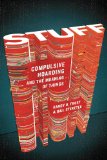
Stuff

Stuff: Compulsive Hoarding and the Meaning of Things by Randy Frost and Gail Steketee for $3.99

Book description from the publisher:

A thoughtfully researched and fascinating appraisal of what happens when our stuff starts to own us

What possesses someone to save every scrap of paper that’s ever come into his home? What compulsions drive a person to sacrifice her marriage or career for an accumulation of seemingly useless things? Randy Frost and Gail Steketee were the first to study hoarding when they began their work a decade ago. They didn’t expect that they would end up treating hundreds of patients and fielding thousands of calls from the families of hoarders. Their vivid case studies (reminiscent of Oliver Sacks) in Stuff show how you can identify a hoarder—piles on sofas and beds that make the furniture useless, houses that can be navigated only by following small paths called goat trails, vast piles of paper that the hoarders “churn” but never discard, even collections of animals and garbage—and illuminate the pull that possessions exert over all of us. Whether we’re savers, collectors, or compulsive cleaners, very few of us are in fact free of the impulses that drive hoarders to extremes.
Comments (0) - Uncategorized

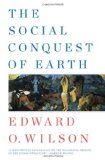
new book – ‘The Social Conquest of Earth’ by Edward O. Wilson

Social Conquest of Earth

The Social Conquest of Earth by Edward O. Wilson (Liveright, 2012)

(kindle ed.), (amazon.co.uk)

Book description from the publisher:

From the most celebrated heir to Darwin comes a groundbreaking book on evolution, the summa work of Edward O. Wilson’s legendary career.
Where did we come from? What are we? Where are we going? In a generational work of clarity and passion, one of our greatest living scientists directly addresses these three fundamental questions of religion, philosophy, and science while “overturning the famous theory that evolution naturally encourages creatures to put family first” (Discover magazine). Refashioning the story of human evolution in a work that is certain to generate headlines, Wilson draws on his remarkable knowledge of biology and social behavior to show that group selection, not kin selection, is the primary driving force of human evolution. He proves that history makes no sense without prehistory, and prehistory makes no sense without biology. Demonstrating that the sources of morality, religion, and the creative arts are fundamentally biological in nature, Wilson presents us with the clearest explanation ever produced as to the origin of the human condition and why it resulted in our domination of the Earth’s biosphere. 90 illustrations

Google books preview:

See also: Smithsonian Magazine interview, Author website

Comments (0) - human evolution,new books

free kindle ebook – ‘The Addicted Brain: Why We Abuse Drugs, Alcohol, and Nicotine’

March 29, 2012

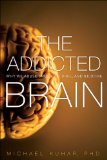
The Addicted Brain

The Addicted Brain: Why We Abuse Drugs, Alcohol, and Nicotine (FT Press Science) by Michael Kuhar is currently free on Kindle (US). Price is subject to change so be sure to check before you buy.

Book description from the publisher:

This is the eBook version of the printed book.

Addiction destroys lives. In The Addicted Brain, a leading neuroscientist explains how and why this happens–and presents advances in treatment and prevention. Using breathtaking brain imagery and other research, Michael Kuhar, Ph.D., shows the powerful, long-term brain changes that drugs can cause, revealing why it can be so difficult for addicts to escape their grip.

In plain English, Kuhar describes why some people are far more susceptible to addiction than others. He illuminates striking neural similarities between drugs and other pleasures potentially capable of causing abuse or addiction–including alcohol, gambling, sex, caffeine, and even Internet overuse. Finally, he outlines the 12 characteristics most often associated with successful treatment.

Authoritative and easy to understand, The Addicted Brain offers today’s most up-to-date scientific explanation of addiction–and what addicts, their families, and society can do about it.

Comments (1) - cognitive science,psychology

new book – ‘In Praise of Reason’ by Michael P. Lynch

In Praise of Reason

In Praise of Reason by Michael P. Lynch (MIT Press, 2012)

(kindle ed.), (amazon.co.uk – 20 April 2012)

Book description from the publisher:

Why does reason matter, if (as many people seem to think) in the end everything comes down to blind faith or gut instinct? Why not just go with what you believe even if it contradicts the evidence? Why bother with rational explanation when name-calling, manipulation, and force are so much more effective in our current cultural and political landscape? Michael Lynch’s In Praise of Reason offers a spirited defense of reason and rationality in an era of widespread skepticism–when, for example, people reject scientific evidence about such matters as evolution, climate change, and vaccines when it doesn’t jibe with their beliefs and opinions.

In recent years, skepticism about the practical value of reason has emerged even within the scientific academy. Many philosophers and psychologists claim that the reasons we give for our most deeply held views are often little more than rationalizations of our prior convictions. In Praise of Reason gives us a counterargument. Although skeptical questions about reason have a deep and interesting history, they can be answered. In particular, appeals to scientific principles of rationality are part of the essential common currency of any civil democratic society. The idea that everything is arbitrary–that reason has no more weight than blind faith–undermines a key principle of a civil society: that we owe our fellow citizens explanations for what we do. Reason matters–not just for the noble ideal of truth, but for the everyday world in which we live.

Google books preview:

See also: Author’s homepage

Comments (0) - new books

new book – ‘Born Believers: The Science of Children’s Religious Belief’

March 28, 2012

Born Believers

Born Believers: The Science of Children’s Religious Belief by Justin L. Barrett (Basic Books, 2012)

(kindle ed.), (amazon.co.uk)

Book description from the publisher:

Infants have a lot to make sense of in the world: Why does the sun shine and night fall; why do some objects move in response to words, while others won’t budge; who is it that looks over them and cares for them? How the developing brain grapples with these and other questions leads children, across cultures, to naturally develop a belief in a divine power of remarkably consistent traits––a god that is a powerful creator, knowing, immortal, and good—explains noted developmental psychologist and anthropologist Justin L. Barrett in this enlightening and provocative book. In short, we are all born believers.

Belief begins in the brain. Under the sway of powerful internal and external influences, children understand their environments by imagining at least one creative and intelligent agent, a grand creator and controller that brings order and purpose to the world. Further, these beliefs in unseen super beings help organize children’s intuitions about morality and surprising life events, making life meaningful. Summarizing scientific experiments conducted with children across the globe, Professor Barrett illustrates the ways human beings have come to develop complex belief systems about God’s omniscience, the afterlife, and the immortality of deities. He shows how the science of childhood religiosity reveals, across humanity, a “natural religion,” the organization of those beliefs that humans gravitate to organically, and how it underlies all of the world’s major religions, uniting them under one common source.

For believers and nonbelievers alike, Barrett offers a compelling argument for the human instinct for religion, as he guides all parents in how to effectively encourage children in developing a healthy constellation of beliefs about the world around them.

Google books preview:

The Cognitive Science of Religion (with Justin L. Barrett) from The Berkley Center on Vimeo:

See also: Daily Beast article

Comments (0) - cognitive science,culture,new books,psychology