[ View menu ]

Archive

new book – ‘Brains, Buddhas, and Believing: The Problem of Intentionality in Classical Buddhist and Cognitive-Scientific Philosophy of Mind’

April 11, 2012

Brains, Buddhas and Believing

Brains, Buddhas, and Believing: The Problem of Intentionality in Classical Buddhist and Cognitive-Scientific Philosophy of Mind by Dan Arnold (Columbia University Press, 2012)

(amazon.co.uk – 1 May 2012)

Book description from the publisher:

In the recent, burgeoning discourse on Buddhist thought and cognitive science, premodern Buddhists are sometimes characterized as veritable “mind scientists” whose insights anticipate modern research on the brain and mind. Aiming to complicate this story, Dan Arnold confronts a significant obstacle to popular attempts at harmonizing classical Buddhist and modern scientific thought: since most Indian Buddhists believe that the mental continuum is uninterrupted by death (its continuity is what Buddhists mean by “rebirth”), they would have no truck with claims that everything about the mental is explicable with reference to brain events. Yet despite this significant divergence, a predominant stream of Indian Buddhist thought, associated with the seventh-century thinker Dharmakirti, turns out to be vulnerable to arguments modern philosophers have leveled against physicalism.

By characterizing the philosophical problems commonly faced by Dharmakirti and contemporary philosophers such as Jerry Fodor and Daniel Dennett, Arnold seeks to advance an understanding of both first-millennium Indian arguments and contemporary debates in philosophy of mind. The issues center on what modern philosophers have called intentionality — the fact that the mind can be about (or represent or mean) other things. Tracing an account of intentionality through Kant, Wilfrid Sellars, and John McDowell, Arnold argues that intentionality cannot, in principle, be explained in causal terms. Elaborating some of Dharmakirti’s central commitments (chiefly his apoha theory of meaning and his account of self-awareness), Arnold shows that despite Dharmakirti’s interest in refuting physicalism, his causal explanations of the mental mean that modern arguments from intentionality cut as much against his project as they do against physicalist philosophies of mind. This is evident in the arguments of some of Dharmakirti’s contemporaneous Indian critics (proponents of the orthodox Brahmanical Mimamsa school as well as fellow Buddhists from the Madhyamaka school of thought), whose critiques exemplify the same logic as modern arguments from intentionality. Arnold’s complex study shows that seemingly arcane arguments among first-millennium Indian thinkers illuminate matters still very much at issue among contemporary philosophers.

Comments (0) - cognitive science,consciousness,new books,philosophy of mind
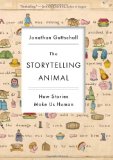
new book – ‘The Storytelling Animal: How Stories Make Us Human’

April 10, 2012

The Storytelling Animal

The Storytelling Animal: How Stories Make Us Human by Jonathan Gottschall (Houghton Mifflin Harcourt, 2012)

(kindle ed.), (amazon.co.uk)

Humans live in landscapes of make-believe. We spin fantasies. We devour novels, films, and plays. Even sporting events and criminal trials unfold as narratives. Yet the world of story has long remained an undiscovered and unmapped country. It’s easy to say that humans are “wired” for story, but why?

In this delightful and original book, Jonathan Gottschall offers the first unified theory of storytelling. He argues that stories help us navigate life’s complex social problems — just as flight simulators prepare pilots for difficult situations. Storytelling has evolved, like other behaviors, to ensure our survival.

Drawing on the latest research in neuroscience, psychology, and evolutionary biology, Gottschall tells us what it means to be a storytelling animal. Did you know that the more absorbed you are in a story, the more it changes your behavior? That all children act out the same kinds of stories, whether they grow up in a slum or a suburb? That people who read more fiction are more empathetic?

Of course, our story instinct has a darker side. It makes us vulnerable to conspiracy theories, advertisements, and narratives about ourselves that are more “truthy” than true. National myths can also be terribly dangerous: Hitler’s ambitions were partly fueled by a story.

But as Gottschall shows in this remarkable book, stories can also change the world for the better. Most successful stories are moral—they teach us how to live, whether explicitly or implicitly, and bind us together around common values. We know we are master shapers of story. The Storytelling Animal finally reveals how stories shape us.

Google books preview (scroll down):

See also: Author’s website

Comments (0) - culture,fiction,new books

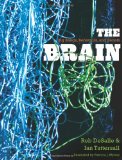
new book – ‘The Brain: Big Bangs, Behaviors, and Beliefs’ by Rob DeSalle and Ian Tattersall

April 9, 2012

The Brain: Big Bangs, Behaviors, and Beliefs

The Brain: Big Bangs, Behaviors, and Beliefs by Rob DeSalle and Ian Tattersall, ill. by Patricia J. Wynne (Yale University Press, 2011)

(amazon.co.uk – 31 May 2012)

Book description from the publisher:

After several million years of jostling for ecological space, only one survivor from a host of hominid species remains standing: us. Human beings are extraordinary creatures, and it is the unprecedented human brain that makes them so. In this delightfully accessible book, the authors present the first full, step-by-step account of the evolution of the brain and nervous system.

Tapping the very latest findings in evolutionary biology, neuroscience, and molecular biology, Rob DeSalle and Ian Tattersall explain how the cognitive gulf that separates us from all other living creatures could have occurred. They discuss the development and uniqueness of human consciousness, how human and nonhuman brains work, the roles of different nerve cells, the importance of memory and language in brain functions, and much more. Our brains, they conclude, are the product of a lengthy and supremely untidy history—an evolutionary process of many zigs and zags—that has accidentally resulted in a splendidly eccentric and creative product.

Comments (0) - cognitive science,human evolution,new books

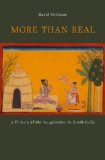
new book – ‘More Than Real: A History of the Imagination in South India’ by David Shulman

More Than Real

More than Real: A History of the Imagination in South India by David Shulman (Harvard University Press, 2012)

(amazon.co.uk)

Book description from the publisher:

From the fifteenth to the eighteenth centuries, the major cultures of southern India underwent a revolution in sensibility reminiscent of what had occurred in Renaissance Italy. During this time, the imagination came to be recognized as the defining feature of human beings. More than Real draws our attention to a period in Indian history that signified major civilizational change and the emergence of a new, proto-modern vision.

In general, India conceived of the imagination as a causative agent: things we perceive are real because we imagine them. David Shulman illuminates this distinctiveness and shows how it differed radically from Western notions of reality and models of the mind. Shulman’s explication offers insightful points of comparison with ancient Greek, medieval Islamic, and early modern European theories of mind, and returns Indology to its rightful position of intellectual relevance in the humanities.

At a time when contemporary ideologies and language wars threaten to segregate the study of pre-modern India into linguistic silos, Shulman demonstrates through his virtuoso readings of important literary works—works translated lyrically by the author from Sanskrit, Tamil, Telugu, and Malayalam—that Sanskrit and the classical languages of southern India have been intimately interwoven for centuries.

See also: Author’s homepage

Comments (0) - culture,mind,new books,reality

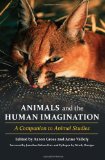
new book – ‘Animals and the Human Imagination: A Companion to Animal Studies’

April 5, 2012

Animals and the Human Imagination

Animals and the Human Imagination: A Companion to Animal Studies ed. by Aaron Gross and Anne Vallely (Columbia University Press, 2012)

(amazon.co.uk)

Book information from the publisher:

Human beings have long imagined their subjectivity, ethics, and ancestry with and through animals, yet not until the mid-twentieth century did contemporary thought reflect critically on animals’ significance in human self-conception. Thinkers such as French philosopher Jacques Derrida, South African novelist J. M. Coetzee, and American theorist Donna Haraway have initiated rigorous inquiries into the question of the animal, now blossoming in a number of directions. It is no longer strange to say that if animals did not exist, we would have to invent them.

This interdisciplinary and cross-cultural collection reflects the growth of animal studies as an independent field and the rise of “animality” as a critical lens through which to analyze society and culture, on a par with race and gender. Essays consider the role of animals in the human imagination and the imagination of the human; the worldviews of indigenous peoples; animal-human mythology in early modern China; and political uses of the animal in postcolonial India. They engage with the theoretical underpinnings of the animal protection movement, representations of animals in children’s literature, depictions of animals in contemporary art, and the philosophical positioning of the animal from Aristotle to Derrida. The strength of this companion lies in its timeliness and contextual diversity, which makes it essential reading for students and researchers while further developing the parameters of the discipline.

Comments (0) - culture,new books