From the age of Darwin to the present day, biologists have been grappling with the origins of our moral sense. Why, if the human instinct to survive and reproduce is “selfish,” do people engage in self-sacrifice, and even develop ideas like virtue and shame to justify that altruism? Many theories have been put forth, some emphasizing the role of nepotism, others emphasizing the advantages of reciprocation or group selection effects. But evolutionary anthropologist Christopher Boehm finds existing explanations lacking, and in Moral Origins, he offers an elegant new theory.
Tracing the development of altruism and group social control over 6 million years, Boehm argues that our moral sense is a sophisticated defense mechanism that enables individuals to survive and thrive in groups. One of the biggest risks of group living is the possibility of being punished for our misdeeds by those around us. Bullies, thieves, free-riders, and especially psychopaths—those who make it difficult for others to go about their lives—are the most likely to suffer this fate. Getting by requires getting along, and this social type of selection, Boehm shows, singles out altruists for survival. This selection pressure has been unique in shaping human nature, and it bred the first stirrings of conscience in the human species. Ultimately, it led to the fully developed sense of virtue and shame that we know today.
A groundbreaking exploration of the evolution of human generosity and cooperation, Moral Origins offers profound insight into humanity’s moral past—and how it might shape our moral future.
See also: Christopher Boehm on “Social Selection Versus the Notorious Free Rider” (12/10/2010)
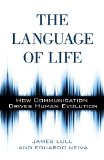
Introducing “evolutionary communication” and a brilliant interpretation of life
Communication in its most basic form—the sending of signals and exchange of messages within and between organisms—is the heart of evolution. From the earliest life-forms to Homo sapiens, the great chain of communication drives the evolutionary process and is the indispensable component of human culture.
That is the central message of The Language of Life. In this unique perspective on both the biological evolution of life and the human development of culture, James Lull and Eduardo Neiva explore the totality of communication processes that create and sustain biological equilibrium and social stability. The authors, two international authorities on communication and culture, argue that this ubiquitous connectivity is the elemental unity of life.
Introducing a new subdiscipline—evolutionary communication—the authors analyze the core domains of life—sheer survival, sex, culture, morality, religion, and technological change—as communications phenomena. What emerges from their analysis is a brilliant interpretation of life interconnected through communication from the basic molecular level to the most sophisticated manifestations of culture.
Challenging the boundaries of conventional approaches to cultural analysis, The Language of Life presents an original and engaging view of evolution and an encouraging prognosis for our collective future.
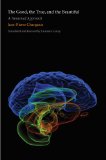
In this fascinating and bold discussion, a renowned neurobiologist serves as guide to the most complex physical object in the living world: the human brain. Taking into account the newest brain research—morphological, physiological, chemical, genetic—and placing these findings in the context of psychology, philosophy, art, and literature, Changeux ventures into the unexplored territories where these diverse disciplines intersect.
Changeux’s book draws on Plato’s notion that the Good, the True, and the Beautiful are celestial essences or ideas, independent but so intertwined as to be inseparable. Placing these essences within the characteristic features of the human brain’s neuronal organization, the author addresses unsolved questions in neuroscience today. With imagination and deep insight, Changeux illuminates the evolution of the brain and deciphers what new developments in neuroscience may portend for the future of humanity.
Leonard Mlodinow, the best-selling author of The Drunkard’s Walk and coauthor of The Grand Design (with Stephen Hawking), gives us a startling and eye-opening examination of how the unconscious mind shapes our experience of the world and how, for instance, we often misperceive our relationships with family, friends, and business associates, misunderstand the reasons for our investment decisions, and misremember important events.
Your preference in politicians, the amount you tip your waiter—all judgments and perceptions reflect the workings of our mind on two levels: the conscious, of which we are aware, and the unconscious, which is hidden from us. The latter has long been the subject of speculation, but over the past two decades researchers have developed remarkable new tools for probing the hidden, or subliminal, workings of the mind. The result of this explosion of research is a new science of the unconscious and a sea change in our understanding of how the subliminal mind affects the way we live.
Employing his trademark wit and lucid, accessible explanations of the most obscure scientific subjects, Leonard Mlodinow takes us on a tour of this research, unraveling the complexities of the subliminal self and increasing our understanding of how the human mind works and how we interact with friends, strangers, spouses, and coworkers. In the process he changes our view of ourselves and the world around us.