May 23, 2012
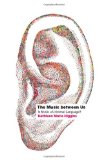
The Music between Us: Is Music a Universal Language? by Kathleen Marie Higgins (University of Chicago Press, 2012)
(kindle ed.), (amazon.co.uk)
Book description from the publisher:
From our first social bonding as infants to the funeral rites that mark our passing, music plays an important role in our lives, bringing us closer to one another. In The Music between Us, philosopher Kathleen Marie Higgins investigates this role, examining the features of human perception that enable music’s uncanny ability to provoke, despite its myriad forms across continents and throughout centuries, the sense of a shared human experience.
Drawing on disciplines such as philosophy, psychology, musicology, linguistics, and anthropology, Higgins’s richly researched study showcases the ways music is used in rituals, education, work, healing, and as a source of security and—perhaps most importantly—joy. By participating so integrally in such meaningful facets of society, Higgins argues, music situates itself as one of the most fundamental bridges between people, a truly cross-cultural form of communication that can create solidarity across political divides. Moving beyond the well-worn takes on music’s universality, The Music between Us provides a new understanding of what it means to be musical and, in turn, human.
Google Books preview:
Comments (0)
- cognitive science,culture,new books,psychology
May 21, 2012
(Price is subject to change, so be sure to check before buying.)
Comments (0)
- cognitive science
May 19, 2012
(This was free when I posted, but price is subject to change so always be sure to check.)
Comments (0)
- cognitive science
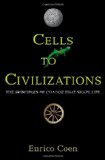
Cells to Civilizations: The Principles of Change That Shape Life by Enrico Coen (Princeton University Press, 2012)
(kindle ed. – 27 May), (amazon.co.uk)
Book description from the publisher:
Cells to Civilizations is the first unified account of how life transforms itself–from the production of bacteria to the emergence of complex civilizations. What are the connections between evolving microbes, an egg that develops into an infant, and a child who learns to walk and talk? Award-winning scientist Enrico Coen synthesizes the growth of living systems and creative processes, and he reveals that the four great life transformations–evolution, development, learning, and human culture–while typically understood separately, actually all revolve around shared core principles and manifest the same fundamental recipe. Coen blends provocative discussion, the latest scientific research, and colorful examples to demonstrate the links between these critical stages in the history of life.
Coen tells a story rich with genes, embryos, neurons, and fascinating discoveries. He examines the development of the zebra, the adaptations of seaweed, the cave paintings of Lascaux, and the formulations of Alan Turing. He explores how dogs make predictions, how weeds tell the time of day, and how our brains distinguish a Modigliani from a Rembrandt. Locating commonalities in important findings, Coen gives readers a deeper understanding of key transformations and provides a bold portrait for how science both frames and is framed by human culture.
A compelling investigation into the relationships between our biological past and cultural progress, Cells to Civilizations presents a remarkable story of living change.
Google Books preview:
See also: Author’s webpage
Comments (0)
- culture