[ View menu ]

Archive

new book – ‘The Self: Naturalism, Consciousness, and the First-Person Stance’ by Jonardon Ganeri

June 13, 2012
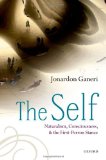
The Self

The Self: Naturalism, Consciousness, and the First-Person Stance by Jonardon Ganeri (Oxford University Press, USA)

(amazon.co.uk – Apr 2012)

Book details from the publisher:

What is it to occupy a first-person stance? Is the first-personal idea one has of oneself in conflict with the idea of oneself as a physical being? How, if there is a conflict, is it to be resolved? The Self recommends a new way to approach those questions, finding inspiration in theories about consciousness and mind in first millennial India. These philosophers do not regard the first-person stance as in conflict with the natural–their idea of nature is not that of scientific naturalism, but rather a liberal naturalism non-exclusive of the normative. Jonardon Ganeri explores a wide range of ideas about the self: reflexive self-representation, mental files, and quasi-subject analyses of subjective consciousness; the theory of emergence as transformation; embodiment and the idea of a bodily self; the centrality of the emotions to the unity of self. Buddhism’s claim that there is no self too readily assumes an account of what a self must be. Ganeri argues instead that the self is a negotiation between self-presentation and normative avowal, a transaction grounded in unconscious mind. Immersion, participation, and coordination are jointly constitutive of self, the first-person stance at once lived, engaged, and underwritten. And all is in harmony with the idea of the natural.

Google Books preview:

See also: Author’s webpage

Comments (0) - consciousness,self

another $6.41 kindle ebook: ‘Stoicism and Emotion’ by Margaret R. Graver

June 7, 2012

($6.41 is the current US price, but prices may vary by region and are subject to change, so be sure to check before purchasing.)

Google Books preview:

University of Chicago Press is currently offering lots of low-priced kindle ebooks! Browse more titles – (Kindle ebooks from University of Chicago Press arranged from low price to high; use the subjects menu at the left to narrow down to your favorite topics.)

Comments (0) - psychology

$6.41 kindle ebook: ‘The Secret History of Emotion: From Aristotle’s Rhetoric to Modern Brain Science’ by Daniel M. Gross

($6.41 is the current US price, but prices may vary by region and are subject to change, so be sure to check before purchasing.)

Google Books preview:

Comments (0) - Uncategorized

new book – ‘The Mansion of Happiness: A History of Life and Death’ by Jill Lepore

June 6, 2012

The Mansion of Happiness

The Mansion of Happiness: A History of Life and Death by Jill Lepore (Knopf, 2012)

(kindle ed.), (amazon.co.uk)

Book description from the publisher:

Renowned Harvard scholar and New Yorker staff writer Jill Lepore has composed a strikingly original, ingeniously conceived, and beautifully crafted history of American ideas about life and death from before the cradle to beyond the grave.

How does life begin? What does it mean? What happens when we die? “All anyone can do is ask,” Lepore writes. “That’s why any history of ideas about life and death has to be, like this book, a history of curiosity.” Lepore starts that history with the story of a seventeenth-century Englishman who had the idea that all life begins with an egg and ends it with an American who, in the 1970s, began freezing the dead. In between, life got longer, the stages of life multiplied, and matters of life and death moved from the library to the laboratory, from the humanities to the sciences. Lately, debates about life and death have determined the course of American politics. Each of these debates has a history. Investigating the surprising origins of the stuff of everyday life—from board games to breast pumps—Lepore argues that the age of discovery, Darwin, and the Space Age turned ideas about life on earth topsy-turvy. “New worlds were found,” she writes, and “old paradises were lost.” As much a meditation on the present as an excavation of the past, The Mansion of Happiness is delightful, learned, and altogether beguiling.

Google books preview:

See also: Author Q & A at The New York Times, video lecture “The Meaning of Life – Jill Lepore – Harvard Thinks Big”, author’s webpages at Harvard

Comments (0) - culture,happiness,new books

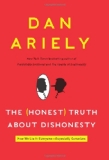
new book – ‘The Honest Truth About Dishonesty: How We Lie to Everyone—Especially Ourselves’ by Dan Ariely

June 5, 2012

The (Honest) Truth About Dishonesty

The Honest Truth About Dishonesty: How We Lie to Everyone—Especially Ourselves by Dan Ariely (Harper)

(kindle ed.), (amazon.co.uk)

Book description from the publisher:

The New York Times bestselling author of Predictably Irrational and The Upside of Irrationality returns with thought-provoking work to challenge our preconceptions about dishonesty and urge us to take an honest look at ourselves.

  • Does the chance of getting caught affect how likely we are to cheat?
  • How do companies pave the way for dishonesty?
  • Does collaboration make us more honest or less so?
  • Does religion improve our honesty?

Most of us think of ourselves as honest, but, in fact, we all cheat. From Washington to Wall Street, the classroom to the workplace, unethical behavior is everywhere. None of us is immune, whether it’s the white lie to head off trouble or padding our expense reports. In The (Honest) Truth About Dishonesty, award-winning, bestselling author Dan Ariely turns his unique insight and innovative research to the question of dishonesty.

Generally, we assume that cheating, like most other decisions, is based on a rational cost-benefit analysis. But Ariely argues, and then demonstrates, that it’s actually the irrational forces that we don’t take into account that often determine whether we behave ethically or not. For every Enron or political bribe, there are countless puffed rÉsumÉs, hidden commissions, and knockoff purses. In The (Honest) Truth About Dishonesty, Ariely shows why some things are easier to lie about; how getting caught matters less than we think; and how business practices pave the way for unethical behavior, both intentionally and unintentionally. Ariely explores how unethical behavior works in the personal, professional, and political worlds, and how it affects all of us, even as we think of ourselves as having high moral standards.

But all is not lost. Ariely also identifies what keeps us honest, pointing the way for achieving higher ethics in our everyday lives. With compelling personal and academic findings, The (Honest) Truth About Dishonesty will change the way we see ourselves, our actions, and others.

See also: Author’s website

Google Books preview

Comments (0) - new books,psychology