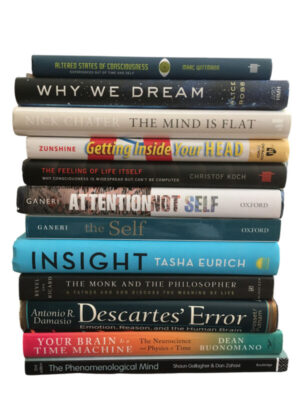
July’s selection of “100 Kindle Books for $3.99 or Less” at Amazon.com
July 1, 2012
July’s selection of “100 Kindle Books for $3.99 or Less” amazon.com/gp/feature.htm… via @amazon
— Debbie A Foster (@mymindonbooks) July 1, 2012
books on the mind, consciousness, cognitive science…
July 1, 2012
July’s selection of “100 Kindle Books for $3.99 or Less” amazon.com/gp/feature.htm… via @amazon
— Debbie A Foster (@mymindonbooks) July 1, 2012
June 30, 2012
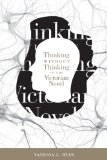
Thinking without Thinking in the Victorian Novel by Vanessa L. Ryan (Johns Hopkins University Press, 2012)
Product description from the publisher:
In Thinking without Thinking in the Victorian Novel, Vanessa L. Ryan demonstrates how both the form and the experience of reading novels played an important role in ongoing debates about the nature of consciousness during the Victorian era.
Revolutionary developments in science during the mid- and late nineteenth century—including the discoveries and writings of Herbert Spencer, William Carpenter, and George Henry Lewes—had a vital impact on fiction writers of the time. Wilkie Collins, George Eliot, George Meredith, and Henry James read contributions in what we now call cognitive science that asked, “what is the mind?” These Victorian fiction writers took a crucial step, asking how we experience our minds, how that experience relates to our behavior and questions of responsibility, how we can gain control over our mental reflexes, and finally how fiction plays a special role in understanding and training our minds.
Victorian fiction writers focus not only on the question of how the mind works but also on how it seems to work and how we ought to make it work. Ryan shows how the novelistic emphasis on dynamic processes and functions—on the activity of the mind, rather than its structure or essence—can also be seen in some of the most exciting and comprehensive scientific revisions of the understanding of “thinking” in the Victorian period. This book studies the way in which the mind in the nineteenth-century view is embedded not just in the body but also in behavior, in social structures, and finally in fiction.
Comments (0) - cognitive science,consciousness,culture,fiction,new books
June 26, 2012
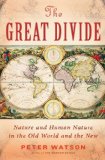
The Great Divide: Nature and Human Nature in the Old World and the New by Peter Watson (Harper, 2012)
(kindle ed.), (amazon.co.uk – 12 Jan 2012)
Product description from the publisher:
Exploring the development of humankind between the Old World and the New—from 15,000 BC to AD 1500—the acclaimed author of Ideas and The German Genius offers a groundbreaking new understanding of human history.
Why did Asia and Europe develop far earlier than the Americas? What were the factors that accelerated—or impeded— development? How did the experiences of Old World inhabitants differ from their New World counterparts—and what factors influenced those differences?
In this fascinating and erudite history, Peter Watson ponders these questions central to the human story. By 15,000 BC, humans had migrated from northeastern Asia across the frozen Bering land bridge to the Americas. When the world warmed up and the last Ice Age came to an end, the Bering Strait refilled with water, dividing America from Eurasia. This division—with two great populations on Earth, each unaware of the other—continued until Christopher Columbus voyaged to the New World in the fifteenth century.
The Great Divide compares the development of humankind in the Old World and the New between 15,000 BC and AD 1500. Watson identifies three major differences between the two worlds—climate, domesticable mammals, and hallucinogenic plants—that combined to produce very different trajectories of civilization in the two hemispheres. Combining the most up-to-date knowledge in archaeology, anthropology, geology, meteorology, cosmology, and mythology, this unprecedented, masterful study offers uniquely revealing insight into what it means to be human.
June 23, 2012
free kindle ebook: How to Argue: Powerfully, Persuasively, Positively by Jonathan Herring amazon.com/gp/product/B00… via @amazon
— Debbie A Foster (@mymindonbooks) June 24, 2012
(currently free in the US but prices are subject to change and may vary by region)
June 19, 2012
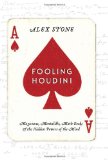
One of Amazon’s Best Books of the Month for June 2012: Fooling Houdini: Magicians, Mentalists, Math Geeks, and the Hidden Powers of the Mind by Alex Stone (Harper, 2012)
(kindle ed.), (amazon.co.uk – 5 July)
Book description from the publisher:
When Alex Stone was five years old, his father bought him a magic kit—a gift that would spark a lifelong love. Years later, while living in New York City, he discovered a vibrant underground magic scene exploding with creativity and innovation and populated by a fascinating cast of characters: from his gruff mentor, who holds court in the back of a rundown pizza shop, to one of the world’s greatest card cheats, who also happens to be blind. Captivated, he plunged headlong into this mysterious world, eventually competing at the Magic Olympics and training with great magicians around the globe to perfect his craft.
From the back rooms of New York City’s century-old magic societies to cutting-edge psychology labs; three-card monte on Canal Street to glossy Las Vegas casinos; Fooling Houdini recounts Stone’s quest to join the ranks of master magicians. As he navigates this quirky and occasionally hilarious subculture, Stone pulls back the curtain on a community shrouded in secrecy, fueled by obsession and brilliance, and organized around a single overriding need: to prove one’s worth by deceiving others.
But his journey is more than a tale of tricks, gigs, and geeks. In trying to understand how expert magicians manipulate our minds to create their astonishing illusions, Stone uncovers a wealth of insight into human nature and the nature of perception. Every turn leads to questions about how the mind perceives the world and processes everyday experiences. By investigating some of the lesser-known corners of psychology, neuroscience, physics, history, and even crime, all through the lens of trickery and illusion, Fooling Houdini arrives at a host of startling revelations about how the mind works—and why, sometimes, it doesn’t.
See also: Book website