[ View menu ]

Archive

new book – ‘Genesis of Symbolic Thought’ by Alan Bernard

August 3, 2012

Genesis of Symbolic Thought

Genesis of Symbolic Thought by Alan Barnard (Columbia University Press, 2012)

(kindle ed.), (amazon.co.uk)

Book description from the publisher:

Symbolic thought is what makes us human. Claude Lévi-Strauss stated that we can never know the genesis of symbolic thought, but in this powerful new study Alan Barnard argues that we can. Continuing the line of analysis initiated in Social Anthropology and Human Origins (Cambridge University Press, 2011), The Genesis of Symbolic Thought applies ideas from social anthropology, old and new, to understand some of the areas also being explored in fields as diverse as archaeology, linguistics, genetics and neuroscience. Barnard aims to answer questions including: when and why did language come into being? What was the earliest religion? And what form did social organization take before humanity dispersed from the African continent? Rejecting the notion of hunter-gatherers as ‘primitive’, Barnard hails the great sophistication of the complex means of their linguistic and symbolic expression and places the possible origin of symbolic thought at as early as 130,000 years ago.

Comments (0) - culture,human evolution,language,new books

some kindle deals

August 2, 2012

This month’s 100 Kindle Books for $3.99 or Less at Amazon.com includes:
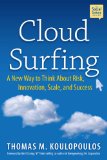
Cloud Surfing

Cloud Surfing: A New Way to Think About Risk, Innovation, Scale and Success (Social Century) by Thomas M. Koulopoulos (Bibliomotion, 2012) for $2.99 through August.

Book description from the publisher:

When people hear “the Cloud,” they think of cloud computing and salesforce.com, just a sliver of what the Cloud is today. The Cloud has grown: it represents the consummate disruptor to structure; a pervasive social and economic network that will soon connect and define more of the world than any other political, social, or economic organization. The Cloud is the first megatrend of the twenty-first century, one that will shape the way we will address virtually every challenge we face for at least the next 100 years. It is where we will all live, work, and play in the coming decades. The Cloud is ?where your kids go to dive into online play. It’s where you meet and make friends in social networks. It’s where companies find the next big idea. It’s where political campaigns are won and lost. Cloud Surfing is the groundbreaking book that will explain how to access the full value of the Cloud and how to embrace its possibilities. Video and audio enhanced version also available.

Some Kindle bargains from HarperCollins (prices may vary by region and are subject to change):
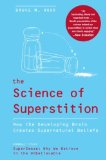
Science of Superstition
The Science of Superstition: How the Developing Brain Creates Supernatural Beliefs by Bruce Hood (2010) for $1.99

Book description from the publisher:

The majority of the world’s population is religious or believes in supernatural phenomena. In the United States, nine out of every ten adults believe in God, and a recent Gallup poll found that about three out of four Americans believe in some form of telepathy, déjà vu, ghosts, or past lives. Where does such supernatural thinking come from? Are we indoctrinated by our parents, churches, and media, or do such beliefs originate somewhere else? In SuperSense, award-winning cognitive scientist Bruce M. Hood reveals the science behind our beliefs in the supernatural.

Superstitions are common. Many of us cross our fingers, knock on wood, step around black cats, and avoid walking under ladders. John McEnroe refused to step on the white lines of a tennis court between points. Wade Boggs insisted on eating a chicken dinner before every Boston Red Sox game. President Barack Obama played a game of basketball the morning of his victory in the Iowa primary and continued the tradition on every subsequent election day.

Supernatural thinking includes loftier beliefs as well, such as the sentimental value we place on photos of loved ones, wedding rings, and teddy bears. It also includes spiritual beliefs and the hope for an afterlife. But in this modern, scientific age, why do we hold on to these behaviors and beliefs?

It turns out that belief in things beyond what is rational or natural is common to humans and appears very early in childhood. In fact, according to Hood, this “super sense” is something we’re born with to develop and is essential to the way we learn to understand the world. We couldn’t live without it!

Our minds are designed from the very start to think there are unseen patterns, forces, and essences inhabiting the world, and it is unlikely that any effort to get rid of supernatural beliefs, or the superstitious behaviors that accompany them, will be successful. These common beliefs and sacred values are essential in binding us together as a society because they help us to see ourselves connected to each other at a deeper level.
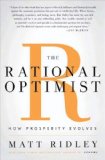
The Rational Optimist


The Rational Optimist (P.S.) by Matt Ridley (2010) for $1.99

Book description from the publisher:

Life is getting better—and at an accelerating rate. Food availability, income, and life span are up; disease, child mortality, and violence are down — all across the globe. Though the world is far from perfect, necessities and luxuries alike are getting cheaper; population growth is slowing; Africa is following Asia out of poverty; the Internet, the mobile phone, and container shipping are enriching people’s lives as never before. The pessimists who dominate public discourse insist that we will soon reach a turning point and things will start to get worse. But they have been saying this for two hundred years.

Yet Matt Ridley does more than describe how things are getting better. He explains why. Prosperity comes from everybody working for everybody else. The habit of exchange and specialization—which started more than 100,000 years ago—has created a collective brain that sets human living standards on a rising trend. The mutual dependence, trust, and sharing that result are causes for hope, not despair.

This bold book covers the entire sweep of human history, from the Stone Age to the Internet, from the stagnation of the Ming empire to the invention of the steam engine, from the population explosion to the likely consequences of climate change. It ends with a confident assertion that thanks to the ceaseless capacity of the human race for innovative change, and despite inevitable disasters along the way, the twenty-first century will see both human prosperity and natural biodiversity enhanced. Acute, refreshing, and revelatory, The Rational Optimist will change your way of thinking about the world for the better.

Also: Being Wrong: Adventures in the Margin of Error by Kathryn Schulz (2010) for $1.99

Comments (0) - Uncategorized

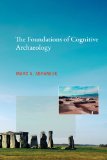
new book – ‘The Foundations of Cognitive Archaeology’ by Marc A. Abramiuk

July 30, 2012

Foundations of Cognitive Archaeology

The Foundations of Cognitive Archaeology by Marc A. Abramiuk (MIT Press, 2012)

(amazon.co.uk)

Book description from the publisher:

In The Foundations of Cognitive Archaeology, Marc Abramiuk proposes a multidisciplinary basis for the study of the mind in the past, arguing that archaeology and the cognitive sciences have much to offer one another. Abramiuk draws on relevant topics from philosophy, biological anthropology, cognitive psychology, cognitive anthropology, and archaeology to establish theoretically founded and empirically substantiated principles of a discipline that integrates different approaches to mind-related archaeological research.

Abramiuk discusses the two ways that archaeologists have traditionally viewed the human mind: as a universal or as a relative interface with the environment. He argues that neither view by itself can satisfactorily serve as a basis for gleaning insight into all aspects of the mind in the past and, therefore, the mind is more appropriately studied using multiple approaches. He explains the rationale for using these approaches in mind-related archaeological research, reviewing the literature in both cognitive psychology and cognitive anthropology on human memory, perception, and reasoning. Drawing on archaeological and genetic evidence, Abramiuk investigates the evolution of the mind through the Upper Paleolithic era–when the ancient mind became functionally comparable to the modern human mind. Finally, Abramiuk offers a model for the establishment of a discipline dealing with the study of the mind in the past that integrates all the approaches discussed.

Google Books preview:

Comments (0) - cognitive science,culture,human evolution,new books

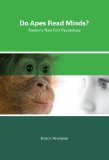
new book – ‘Do Apes Read Minds?: Toward a New Folk Psychology’ by Kristin Andrews

July 29, 2012

Do Apes Read Minds?

Do Apes Read Minds?: Toward a New Folk Psychology by Kristin Andrews (MIT Press, 2012)

(amazon.co.uk)

Book description from the publisher:

By adulthood, most of us have become experts in human behavior, able to make sense of the myriad behaviors we find in environments ranging from the family home to the local mall and beyond. In philosophy of mind, our understanding of others has been largely explained in terms of knowing others’ beliefs and desires; describing others’ behavior in these terms is the core of what is known as folk psychology. In Do Apes Read Minds? Kristin Andrews challenges this view of folk psychology, arguing that we don’t consider others’ beliefs and desires when predicting most quotidian behavior, and that our explanations in these terms are often inaccurate or unhelpful. Rather than mindreading, or understanding others as receptacles for propositional attitudes, Andrews claims that folk psychologists see others first as whole persons with traits, emotions, and social relations. Drawing on research in developmental psychology, social psychology, and animal cognition, Andrews argues for a pluralistic folk psychology that employs different kinds of practices (including prediction, explanation, and justification) and different kinds of cognitive tools (including personality trait attribution, stereotype activation, inductive reasoning about past behavior, and generalization from self) that are involved in our folk psychological practices. According to this understanding of folk psychology–which does not require the sophisticated cognitive machinery of second-order metacognition associated with having a theory of mind–animals (including the other great apes) may be folk psychologists, too.

Google Books preview:

See also: Kristin Andrews and Robert Lurz on animals and mindreading at Philosophy TV, author’s articles at PhilPapers

Comments (0) - cognitive science,new books,philosophy of mind

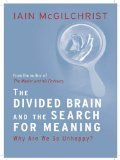
$1.50 kindle ebook (essay) – ‘The Divided Brain and the Search for Meaning’ by Iain McGilchrist

July 28, 2012

The Divided Brain and the Search for Meaning

The Divided Brain and the Search for Meaning by Iain McGilchrist is currently $1.50 in the US Kindle store (or £1.02 at amazon.co.uk). (Price is subject to change and may vary by region.)

Book description from the publisher:

In this 10,000-word essay, written to complement Iain McGilchrist’s acclaimed The Master and His Emissary, the author asks why – despite the vast increase in material well-being – people are less happy today than they were half a century ago, and suggests that the division between the two hemispheres of the brain has a critical effect on how we see and understand the world around us. In particular, McGilchrist suggests, the left hemisphere’s obsession with reducing everything it sees to the level of minute, mechanistic detail is robbing modern society of the ability to understand and appreciate deeper human values. Accessible to readers who haven’t yet read The Master and His Emissary as well as those who have, this is a fascinating, immensely thought-provoking essay that delves to the very heart of what it means to be human.

Comments (0) - consciousness,culture,happiness