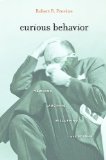
Robert Provine boldly goes where other scientists seldom tread—in search of hiccups, coughs, yawns, sneezes, and other lowly, undignified human behaviors. Upon investigation, these instinctive acts bear the imprint of our evolutionary origins and can be uniquely valuable tools for understanding how the human brain works and what makes us different from other species.
Many activities showcased in Curious Behavior are contagious, but none surpasses yawning in this regard—just reading the word can make one succumb. Though we often take it as a sign of sleepiness or boredom, yawning holds clues to the development of our sociality and ability to empathize with others. Its inescapable transmission reminds us that we are sometimes unaware, neurologically programmed beasts of the herd. Other neglected behaviors yield similar revelations. Tickling, we learn, may be the key to programming personhood into robots. Coughing comes in musical, medical, and social varieties. Farting and belching have import for the evolution of human speech. And prenatal behavior is offered as the strangest exhibit of all, defying postnatal logic in every way. Our earthiest acts define Homo sapiens as much as language, bipedalism, tool use, and other more studied characteristics.
As Provine guides us through peculiarities right under our noses, he beckons us to follow with self-experiments: tickling our own feet, keeping a log of when we laugh, and attempting to suppress yawns and sneezes. Such humble investigations provide fodder for grade school science projects as well as doctoral dissertations. Small Science can yield big rewards.
From one of the most original and influential neuroscientists at work today, here is an exploration of consciousness unlike any other—as told by Galileo, who opened the way for the objectivity of science and is now intent on making subjective experience a part of science as well.
Galileo’s journey has three parts, each with a different guide. In the first, accompanied by a scientist who resembles Francis Crick, he learns why certain parts of the brain are important and not others, and why consciousness fades with sleep. In the second part, when his companion seems to be named Alturi (Galileo is hard of hearing; his companion’s name is actually Alan Turing), he sees how the facts assembled in the first part can be unified and understood through a scientific theory—a theory that links consciousness to the notion of integrated information (also known as phi). In the third part, accompanied by a bearded man who can only be Charles Darwin, he meditates on how consciousness is an evolving, developing, ever-deepening awareness of ourselves in history and culture—that it is everything we have and everything we are.
Not since Gödel, Escher, Bach has there been a book that interweaves science, art, and the imagination with such originality. This beautiful and arresting narrative will transform the way we think of ourselves and the world.
Google Books preview:
See also: Excerpt (“What Is the Fundamental Nature of Consciousness”) published in Scientific American
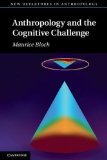
In this provocative new study one of the world’s most distinguished anthropologists proposes that an understanding of cognitive science enriches, rather than threatens, the work of social scientists. Maurice Bloch argues for a naturalist approach to social and cultural anthropology, introducing developments in cognitive sciences such as psychology and neurology and exploring the relevance of these developments for central anthropological concerns: the person or the self, cosmology, kinship, memory and globalisation. Opening with an exploration of the history of anthropology, Bloch shows why and how naturalist approaches were abandoned and argues that these once valid reasons are no longer relevant. Bloch then shows how such subjects as the self, memory and the conceptualisation of time benefit from being simultaneously approached with the tools of social and cognitive science. Anthropology and the Cognitive Challenge will stimulate fresh debate among scholars and students across a wide range of disciplines.
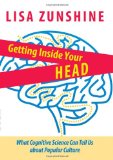
We live in other people’s heads: avidly, reluctantly, consciously, unaware, mistakenly, and inescapably. Our social life is a constant negotiation among what we think we know about each other’s thoughts and feelings, what we want each other to think we know, and what we would dearly love to know but don’t.
Cognitive scientists have a special term for the evolved cognitive adaptation that makes us attribute mental states to other people through observation of their body language; they call it theory of mind. Getting Inside Your Head uses research in theory of mind to look at movies, musicals, novels, classic Chinese opera, stand-up comedy, mock-documentaries, photography, and reality television. It follows Pride and Prejudice’s Mr. Darcy as he tries to conceal his anger, Tyler Durden as he lectures a stranger at gunpoint in Fight Club, and Ingrid Bergman as she fakes interest in horse races in Notorious.
This engaging book exemplifies the new interdisciplinary field of cognitive cultural studies, demonstrating that collaboration between cognitive science and cultural studies is both exciting and productive.