[ View menu ]

Archive

new book – ‘The Ego Trick’ by Julian Baggini

August 16, 2012
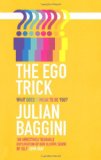
The Ego Trick

The Ego Trick by Julian Baggini (Granta Books, 2012)

(amazon.co.uk)


Book description from the publisher:

Are you still the person who lived fifteen, ten or five years ago? Fifteen, ten or five minutes ago? Can you plan for your retirement if the you of thirty years hence is in some sense a different person? What and who is the real you? Does it remain constant over time and place, or is it something much more fragmented and fluid? Is it known to you, or are you as much a mystery to yourself as others are to you? With his usual wit, infectious curiosity and bracing scepticism, Julian Baggini sets out to answer these fundamental and unsettling questions. His fascinating quest draws on the history of philosophy, but also anthropology, sociology, psychology and neurology; he talks to theologians, priests, allegedly reincarnated Lamas, and delves into real-life cases of lost memory, personality disorders and personal transformation; and, candidly and engagingly, he describes his own experiences. After reading The Ego Trick, you will never see yourself in the same way again.

See also: Author’s website
Comments (0) - new books,self

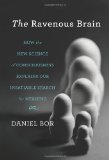
new book – ‘The Ravenous Brain: How the New Science of Consciousness Explains Our Insatiable Search for Meaning’ by Daniel Bor

August 15, 2012

The Ravenous Brain

The Ravenous Brain: How the New Science of Consciousness Explains Our Insatiable Search for Meaning by Daniel Bor (Basic Books, 2012)

(kindle ed. – Aug. 28), (amazon.co.uk – 13 Sep 2012)

Book description from the publisher:

A brash young neuroscientist presents his solution to biology’s hardest problem – what consciousness is, and why we have it, and what it means for our self perception and our mental health. Neuroscientist Daniel Bor was long troubled by the fact that once all our physical needs have been met, humans – uniquely among animals – engage in mentally (and thus biologically) wasteful behaviour, such as solving crossword puzzles and reading. This observation set him on a path toward a new theory of consciousness. In “The Ravenous Brain”, Bor argues that human knowledge evolved to gather knowledge, specifically to extract meaningful patterns from raw information (as we do while playing word games). The ability to structure information offered individuals a distinct evolutionary advantage. Consciousness, therefore, emerged as a natural extension of our drive to innovate. A controversial argument from an up-and-coming researcher, “The Ravenous Brain” is a wide-ranging attempt to elucidate one of science’s biggest mysteries.

See also: Author’s website

Comments (0) - consciousness,new books

Kindle “Big Deal” – More Than 500 Books as Low as $0.99 at Amazon.com

August 14, 2012

From now until August 23, Amazon.com’s Kindle store is offering “The Big Deal” – over 500 ebooks from $0.99 to $3.99. As Amazon states: “Individual titles may have additional territory restrictions, and not all deals are available in all territories.”

Browse the “Big Deal” selections in General Nonfiction; Health, Mind and Body; Business & Investing.

Selections include:

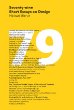
79 Short Essays on Design

79 Short Essays on Design by Michael Bierut for $3.99

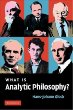
What Is Analytic Philosophy?

What is Analytic Philosophy? by Hans-Johann Glock for $3.99

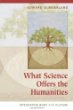
What Science Offers the Humanities

What Science Offers the Humanities by Edward Slingerland for $3.99

What Philosophers Know: Case Studies in Recent Analytic Philosophy by Gary Gutting for $3.99


The Selfish Meme: A Critical Reassessment by Kate Distin for $3.99

The Normal Personality: A New Way of Thinking about People by Steven Reiss for $3.99

A Unified Theory of Happiness by Andrea F. Polard for $3.99

Why Life Speeds Up As You Get Older: How Memory Shapes our Past by Douwe Draaisma for $3.99

Richard Rorty (Contemporary Philosophy in Focus) ed. by Charles Guignon and David R. Hiley for $3.99

Religion and Anthropology: A Critical Introduction by Brian Morris for $3.99

Comments (0) - Uncategorized

new book – ‘Archaeology of Mind: Neuroevolutionary Origins of Human Emotions’ by Jaak Panksepp and Lucy Biven

August 13, 2012

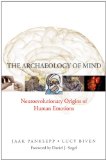
Archaeology of Mind

The Archaeology of Mind: Neuroevolutionary Origins of Human Emotions (Norton Series on Interpersonal Neurobiology) by Jaak Panksepp and Lucy Biven (W.W. Norton, 2012)

(kindle ed.), (amazon.co.uk)

Book description from the publisher:

A look at the seven emotional systems of the brain by the researcher who discovered them.

What makes us happy? What makes us sad? How do we come to feel a sense of enthusiasm? What fills us with lust, anger, fear, or tenderness? Traditional behavioral and cognitive neuroscience have yet to provide satisfactory answers. The Archaeology of Mind presents an affective neuroscience approach—which takes into consideration basic mental processes, brain functions, and emotional behaviors that all mammals share—to locate the neural mechanisms of emotional expression. It reveals—for the first time—the deep neural sources of our values and basic emotional feelings.

This book elaborates on the seven emotional systems that explain how we live and behave. These systems originate in deep areas of the brain that are remarkably similar across all mammalian species. When they are disrupted, we find the origins of emotional disorders:

– SEEKING: how the brain generates a euphoric and expectant response

– FEAR: how the brain responds to the threat of physical danger and death

– RAGE: sources of irritation and fury in the brain

– LUST: how sexual desire and attachments are elaborated in the brain

– CARE: sources of maternal nurturance

– GRIEF: sources of non-sexual attachments

– PLAY: how the brain generates joyous, rough-and-tumble interactions

– SELF: a hypothesis explaining how affects might be elaborated in the brain

The book offers an evidence-based evolutionary taxonomy of emotions and affects and, as such, a brand-new clinical paradigm for treating psychiatric disorders in clinical practice.

Google Books preview:

Comments (0) - human evolution,mind

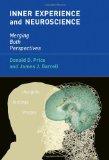
new book – ‘Inner Experience and Neuroscience: Merging Both Perspectives’ by Donald D. Price and James J. Barrell

August 11, 2012

Inner Experience and Neuroscience

Inner Experience and Neuroscience: Merging Both Perspectives by Donald D. Price and James J. Barrell (MIT Press, 2012)

(amazon.co.uk)

Book description from the publisher:

The study of consciousness has advanced rapidly over the last two decades. And yet there is no clear path to creating models for a direct science of human experience or for integrating its insights with those of neuroscience, psychology, and philosophy. In Inner Experience and Neuroscience, Donald Price and James Barrell show how a science of human experience can be developed through a strategy that integrates experiential paradigms with methods from the natural sciences. They argue that the accuracy and results of both psychology and neuroscience would benefit from an experiential perspective and methods. Price and Barrell describe phenomenologically based methods for scientific research on human experience, as well as their philosophical underpinnings, and relate these to empirical results associated with such phenomena as pain and suffering, emotions, and volition. They argue that the methods of psychophysics are critical for integrating experiential and natural sciences, describe how qualitative and quantitative methods can be merged, and then apply this approach to the phenomena of pain, placebo responses, and background states of consciousness. In the course of their argument, they draw on empirical results that include qualitative studies, quantitative studies, and neuroimaging studies. Finally, they propose that the integration of experiential and natural science can extend efforts to understand such difficult issues as free will and complex negative emotions including jealousy and greed.

Comments (0) - cognitive science,consciousness,new books