[ View menu ]

Archive

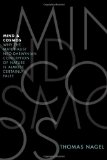
new book – ‘Mind and Cosmos: Why the Materialist Neo-Darwinian Conception of Nature is Almost Certainly False’ by Thomas Nagel

September 3, 2012

Mind and Cosmos

Mind and Cosmos: Why the Materialist Neo-Darwinian Conception of Nature is Almost Certainly False by Thomas Nagel (Oxford University Press)

(kindle ed.), (amazon.co.uk – Nov 2012)

Book description from the publisher:

The modern materialist approach to life has conspicuously failed to explain such central mind-related features of our world as consciousness, intentionality, meaning, and value. This failure to account for something so integral to nature as mind, argues philosopher Thomas Nagel, is a major problem, threatening to unravel the entire naturalistic world picture, extending to biology, evolutionary theory, and cosmology.

Since minds are features of biological systems that have developed through evolution, the standard materialist version of evolutionary biology is fundamentally incomplete. And the cosmological history that led to the origin of life and the coming into existence of the conditions for evolution cannot be a merely materialist history, either. An adequate conception of nature would have to explain the appearance in the universe of materially irreducible conscious minds, as such.

Nagel’s skepticism is not based on religious belief or on a belief in any definite alternative. In Mind and Cosmos, he does suggest that if the materialist account is wrong, then principles of a different kind may also be at work in the history of nature, principles of the growth of order that are in their logical form teleological rather than mechanistic.

In spite of the great achievements of the physical sciences, reductive materialism is a world view ripe for displacement. Nagel shows that to recognize its limits is the first step in looking for alternatives, or at least in being open to their possibility.

Google Books preview:

See also: Thomas Nagel at Wikipedia

Comments (1) - consciousness,philosophy of mind,reality

September’s “100 Kindle Books for $3.99 or Less” at Amazon.com

September 1, 2012

The new month brings a fresh batch of 100 Kindle Books for $3.99 or Less at Amazon.com. (“Individual books may have additional territory restrictions, and not all deals are available in all territories. Amazon may modify the selection of books offered at any time.”)

Selections for September include:
Cro-Magnon

Cro-Magnon: How the Ice Age Gave Birth to the First Modern Humans by Brian Fagan for $2.99.


Book description from the publisher:

Cro-Magnons were the first fully modern Europeans-not only the creators of the stunning cave paintings at Lascaux and elsewhere, but the most adaptable and technologically inventive people that had yet lived on earth. The prolonged encounter between the Cro-Magnons and the archaic Neanderthals and between 45,000 and 30,000 years ago was one of the defining moments of history. The Neanderthals survived for some 15,000 years in the face of the newcomers, but were finally pushed aside by the Cro-Magnons’ vastly superior intellectual abilities and cutting-edge technologies, which allowed them to thrive in the intensely challenging climate of the Ice Age.

What do we know about this remarkable takeover? Who were the first modern Europeans and what were they like? How did they manage to thrive in such an extreme environment? And what legacy did they leave behind them after the cold millennia? The age of the Cro-Magnons lasted some 30,000 years-longer than all of recorded history. Cro-Magnon is the story of a little known, yet seminal, chapter of human experience.
Essays on Humanism

Essays in Humanism by Albert Einstein for $1.99

An inspiring collection of the great thinker’s views on a rapidly changing world

Nuclear proliferation, Zionism, and the global economy are just a few of the insightful and surprisingly prescient topics scientist Albert Einstein discusses in this volume of collected essays from between 1931 and 1950. Written with a clear voice and a thoughtful perspective on the effects of science, economics, and politics in daily life, Einstein’s writings provide an intriguing view inside the mind of a genius addressing the philosophical challenges presented during the turbulence of the Great Depression, the Second World War, and the dawn of the Cold War.

This authorized Philosophical Library ebook features rare photos and never-before-seen documents from the Albert Einstein Archives at the Hebrew University of Jerusalem.
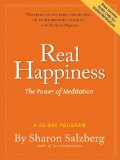
Real Happiness

Real Happiness: The Power of Meditation by Sharon Salzburg for $2.99

Book description from the publisher:


Thousands of years prove it, and Western science backs it: Meditation sharpens focus. Meditation lowers blood pressure, relieves chronic pain, reduces stress. Meditation helps us experience greater calm. Meditation connects us to our inner-most feelings and challenges our habits of self-judgment. Meditation helps protect the brain against aging and improves our capacity for learning new things. Meditation opens the door to real and accessible happiness.

There is no better person to show a beginner how to harness the power of meditation than Sharon Salzberg, one of the world’s foremost meditation teachers and spiritual authors. Cofounder of the Insight Meditation Society, author of Lovingkindness, Faith, and other books, Ms. Salzberg distills 30 years of teaching meditation into a 28-day program that will change lives. It is not about Buddhism, it’s not esoteric—it is closer to an exercise, like running or riding a bike. From the basics of posture, breathing, and the daily schedule to the finer points of calming the mind, distraction, dealing with specific problem areas (pain in the legs? falling asleep?) to the larger issues of compassion and awareness, Real Happiness is a complete guide. It explains how meditation works; why a daily meditation practice results in more resiliency, creativity, peace, clarity, and balance; and gives twelve meditation practices, including mindfulness meditation and walking meditation. An extensive selection of her students’ FAQs cover the most frequent concerns of beginners who meditate—“Is meditation selfish?” “How do I know if I’m doing it right?” “Can I use meditation to manage weight?”
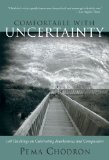
Comfortable with Uncertainty

Comfortable with Uncertainty: 108 Teachings on Cultivating Fearlessness and Compassion by Pema Chodron for $2.99

Book description from the publisher:

This book offers short, stand-alone readings designed to help us cultivate compassion and awareness amid the challenges of daily living. More than a collection of thoughts for the day, Comfortable with Uncertainty offers a progressive program of spiritual study, leading the reader through essential concepts, themes, and practices on the Buddhist path.

Comfortable with Uncertainty does not assume prior knowledge of Buddhist thought or practice, making it a perfect introduction to Chödrön’s teaching. It features the most essential and stirring passages from Chödrön’s previous books, exploring topics such as lovingkindness, meditation, mindfulness, “nowness,” letting go, and working with fear and other painful emotions. Through the course of this book, readers will learn practical methods for heightening awareness and overcoming habitual patterns that block compassion.

Comments (0) - happiness,human evolution,meditation

out in paperback – ‘The Master and His Emissary: The Divided Brain and the Making of the Western World’ by Iain McGilchrist

August 31, 2012

Comments (0) - Uncategorized

new book – ‘How Music Works’ by David Byrne

August 30, 2012

How Music Works

One of Amazon’s Best Books of September is already in stock: How Music Works by David Byrne (McSweeney’s, 2012)

(amazon.co.uk – 13 Sep)

Book description from the publisher:

How Music Works is David Byrne’s remarkable and buoyant celebration of a subject he has spent a lifetime thinking about. In it he explores how profoundly music is shaped by its time and place, and he explains how the advent of recording technology in the twentieth century forever changed our relationship to playing, performing, and listening to music.

Acting as historian and anthropologist, raconteur and social scientist, he searches for patterns—and shows how those patterns have affected his own work over the years with Talking Heads and his many collaborators, from Brian Eno to Caetano Veloso. Byrne sees music as part of a larger, almost Darwinian pattern of adaptations and responses to its cultural and physical context. His range is panoptic, taking us from Wagnerian opera houses to African villages, from his earliest high school reel-to-reel recordings to his latest work in a home music studio (and all the big studios in between).

Touching on the joy, the physics, and even the business of making music, How Music Works is a brainy, irresistible adventure and an impassioned argument about music’s liberating, life-affirming power.

See also: Author’s website

Comments (0) - culture,new books

new book – ‘How Ancient Europeans Saw the World: Vision, Patterns, and the Shaping of the Mind in Prehistoric Times’ by Peter S. Wells

August 29, 2012

How Ancient Europeans Saw the World

How Ancient Europeans Saw the World: Vision, Patterns, and the Shaping of the Mind in Prehistoric Times by Peter S. Wells (Princeton University Press, 2012)

(kindle ed.), (amazon.co.uk)

Book description from the publisher:

The peoples who inhabited Europe during the two millennia before the Roman conquests had established urban centers, large-scale production of goods such as pottery and iron tools, a money economy, and elaborate rituals and ceremonies. Yet as Peter Wells argues here, the visual world of these late prehistoric communities was profoundly different from those of ancient Rome’s literate civilization and today’s industrialized societies. Drawing on startling new research in neuroscience and cognitive psychology, Wells reconstructs how the peoples of pre-Roman Europe saw the world and their place in it. He sheds new light on how they communicated their thoughts, feelings, and visual perceptions through the everyday tools they shaped, the pottery and metal ornaments they decorated, and the arrangements of objects they made in their ritual places–and how these forms and patterns in turn shaped their experience.

How Ancient Europeans Saw the World offers a completely new approach to the study of Bronze Age and Iron Age Europe, and represents a major challenge to existing views about prehistoric cultures. The book demonstrates why we cannot interpret the structures that Europe’s pre-Roman inhabitants built in the landscape, the ways they arranged their settlements and burial sites, or the complex patterning of their art on the basis of what these things look like to us. Rather, we must view these objects and visual patterns as they were meant to be seen by the ancient peoples who fashioned them.

Google Books preview (scroll past blank page):

See also: Book’s Facebook page

Comments (0) - culture,new books