[ View menu ]

Archive

now on Kindle – ‘Irreducible Mind: Toward a Psychology for the 21st Century’ by Edward F Kelly et al.

February 4, 2013

Comments (0) - Uncategorized

February’s “100 Kindle books for $3.99 or less” at Amazon.com

February 1, 2013

This month’s 100 Kindle books for $3.99 or less includes:

Sex at Dawn: How We Mate, Why We Stray, and What It Means for Modern Relationships (P.S.) by Christopher Ryan and Cacilda Jethá for $2.99 (originally published in 2010).
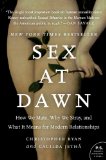
Sex at Dawn
Book description from the publisher:

Since Darwin’s day, we’ve been told that sexual monogamy comes naturally to our species. Mainstream science–as well as religious and cultural institutions–has maintained that men and women evolved in families in which a man’s possessions and protection were exchanged for a woman’s fertility and fidelity. But this narrative is collapsing. Fewer and fewer couples are getting married, and divorce rates keep climbing as adultery and flagging libido drag down even seemingly solid marriages.
How can reality be reconciled with the accepted narrative? It can’t be, according to renegade thinkers Christopher Ryan and Cacilda Jethá. While debunking almost everything we “know” about sex, they offer a bold alternative explanation in this provocative and brilliant book.
Ryan and Jethá’s central contention is that human beings evolved in egalitarian groups that shared food, child care, and, often, sexual partners. Weaving together convergent, frequently overlooked evidence from anthropology, archaeology, primatology, anatomy, and psychosexuality, the authors show how far from human nature monogamy really is. Human beings everywhere and in every era have confronted the same familiar, intimate situations in surprisingly different ways. The authors expose the ancient roots of human sexuality while pointing toward a more optimistic future illuminated by our innate capacities for love, cooperation, and generosity.
With intelligence, humor, and wonder, Ryan and Jethá show how our promiscuous past haunts our struggles over monogamy, sexual orientation, and family dynamics. They explore why long-term fidelity can be so difficult for so many; why sexual passion tends to fade even as love deepens; why many middle-aged men risk everything for transient affairs with younger women; why homosexuality persists in the face of standard evolutionary logic; and what the human body reveals about the prehistoric origins of modern sexuality.
In the tradition of the best historical and scientific writing, Sex at Dawn unapologetically upends unwarranted assumptions and unfounded conclusions while offering a revolutionary understanding of why we live and love as we do.

Brain Rules for Baby: How to Raise a Smart and Happy Child from Zero to Five by John Medina for $2.99 (originally published in 2010)
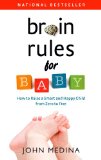
Brain Rules for Baby

Book description from the publisher:

What’s the single most important thing you can do during pregnancy? How much TV is OK for a baby? What’s the best way to handle temper tantrums? Scientists know.

In his New York Times bestseller Brain Rules, Dr. John Medina showed us how our brains really work—and why we ought to redesign our workplaces and schools. Now, in Brain Rules for Baby, he bridges the gap between what scientists know and parents practice. Just one of the surprises: The best way to get your children into the college? Teach them impulse control.

Through fascinating and funny stories, Medina, a developmental molecular biologist and dad, unravels how a child’s brain develops. You will view your children–and how to raise them–in a whole new light.

You will view your children—and how to raise them—in a whole new light. You’ll learn:

Where nature ends and nurture begins
Why men should do more household chores
What to do when emotions run hot
The importance of your child’s ability to relate to others
Smart and happy are inseparable in the brain
The best predictor of academic performance
The only parenting style proven to produce great kids
What you do right now—before pregnancy, during pregnancy, and through the first five years—will affect your children for the rest of their lives. Brain Rules for Baby is an indispensable guide.
Comments (0) - Uncategorized

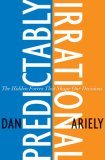
‘Predictably Irrational’ by Dan Ariely for $2.99 – today’s Kindle Daily Deal (Wed. 1/30)

January 30, 2013

Predictably Irrational

Predictably Irrational, Revised and Expanded Edition: The Hidden Forces That Shape Our Decisions by Dan Ariely (2009) is today’s Kindle Daily Deal for $2.99. (Thanks to Daniel M. Barros for the tip!)

Book description from the publisher:

How do we think about money?
What caused bankers to lose sight of the economy?
What caused individuals to take on mortgages that were not within their means?
What irrational forces guided our decisions?
And how can we recover from an economic crisis?

In this revised and expanded edition of the New York Times and Wall Street Journal bestseller Predictably Irrational, Duke University’s behavioral economist Dan Ariely explores the hidden forces that shape our decisions, including some of the causes responsible for the current economic crisis. Bringing a much-needed dose of sophisticated psychological study to the realm of public policy, Ariely offers his own insights into the irrationalities of everyday life, the decisions that led us to the financial meltdown of 2008, and the general ways we get ourselves into trouble.
Blending common experiences and clever experiments with groundbreaking analysis, Ariely demonstrates how expectations, emotions, social norms, and other invisible, seemingly illogical forces skew our reasoning abilities. As he explains, our reliance on standard economic theory to design personal, national, and global policies may, in fact, be dangerous. The mistakes that we make as individuals and institutions are not random, and they can aggregate in the market—with devastating results. In light of our current economic crisis, the consequences of these systematic and predictable mistakes have never been clearer.
Packed with new studies and thought-provoking responses to readers’ questions and comments, this revised and expanded edition of Predictably Irrational will change the way we interact with the world—from the small decisions we make in our own lives to the individual and collective choices that shape our economy.

Comments (0) - psychology

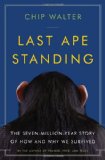
new book – ‘Last Ape Standing: The Seven-Million-Year Story of How and Why We Survived’ by Chip Walter

Last Ape Standing

Last Ape Standing: The Seven-Million-Year Story of How and Why We Survived by Chip Walter (Walker & Co., 2013)

(kindle ed.), (amazon.co.uk)

Book description from the publisher:

Over the past 180 years scientists have sifted through evidence that at least twenty-seven human species have evolved on planet Earth. And as you may have noticed, twenty-six of them are no longer with us, done in by their environment, predators, disease, or the unfortunate shortcomings of their DNA. What enabled us to survive when so many other human species were shown the evolutionary door? Last Ape Standing: The Seven-Million-Year Story of How and Why We Survived by acclaimed science journalist Chip Walter tells the intriguing tale of how against all odds and despite nature’s brutal and capricious ways we stand here today, the only surviving humans, and the planet’s most dominant species.Drawing on a wide variety of scientific disciplines, Walter reveals how a rare evolutionary phenomenon led to the uniquely long childhoods that make us so resourceful and emotionally complex. He looks at why we developed a new kind of mind and how our highly social nature has shaped our moral (and immoral) behavior. And in exploring the traits that enabled our success, he plumbs the roots of our creativity and investigates why we became self-aware in ways that no other animal is. Along the way, Last Ape Standing profiles other human species who evolved with us and who have also shaped our kind in startling ways – the Neanderthals of Europe, the “Hobbits” of Indonesia, the Denisovans of Siberia, and the recently discovered Red Deer Cave people of China, who died off just as we stood at the brink of civilizations eleven thousand years ago.Last Ape Standing is an engaging and accessible story that explores the forces that molded us into the peculiar and astonishing creature that we are.

See also: Author’s website All Things Human

Comments (0) - human evolution,new books

new book – ‘Physics in Mind: A Quantum View of the Brain’ by Werner R. Loewenstein

January 28, 2013

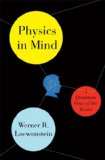
Physics in Mind

Physics in Mind: A Quantum View of the Brain by Werner R. Loewenstein (Basic Books, 2013)

(amazon.co.uk)

Book description from the publisher:

No one can escape a sense of awe when reflecting on the workings of the mind: we see, we hear, we feel, we are aware of the world around us. But what is the mind? What do we mean when we say we are “aware” of something? What is this peculiar state in our heads, at once utterly familiar and bewilderingly mysterious, that we call awareness or consciousness?

In Physics in Mind, eminent biophysicist Werner R. Loewenstein argues that to answer these questions, we must first understand the physical mechanisms that underlie the workings of the mind. And so begins an exhilarating journey along the sensory data stream of the brain, which shows how our most complex organ processes the vast amounts of information coming in through our senses to create a coherent, meaningful picture of the world. Bringing information theory to bear on recent advances in the neurosciences, Loewenstein reveals a web of immense computational power inside the brain. He introduces the revolutionary idea that quantum mechanics could be fundamental to how our minds almost instantaneously deal with staggering amounts of information, as in the case of the information streaming through our eyes.

Combining cutting-edge research in neuroscience and physics, Loewenstein presents an ambitious hypothesis about the parallel processing of sensory information that is the heart, hub, and pivot of the cognitive brain. Wide-ranging and brimming with insight, Physics in Mind breaks new ground in our understanding of how the mind works.

Google Books preview:

See also: Book website

Comments (0) - cognitive science,new books