February 12, 2013
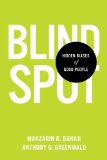
Blindspot: Hidden Biases of Good People by Mahzarin R. Banaji and Anthony G. Greenwald (Delacorte Press, 2013)
(kindle ed.), (amazon.co.uk)
Product description from the publisher:
I know my own mind.
I am able to assess others in a fair and accurate way.
These self-perceptions are challenged by leading psychologists Mahzarin R. Banaji and Anthony G. Greenwald as they explore the hidden biases we all carry from a lifetime of exposure to cultural attitudes about age, gender, race, ethnicity, religion, social class, sexuality, disability status, and nationality.
“Blindspot” is the authors’ metaphor for the portion of the mind that houses hidden biases. Writing with simplicity and verve, Banaji and Greenwald question the extent to which our perceptions of social groups—without our awareness or conscious control—shape our likes and dislikes and our judgments about people’s character, abilities, and potential.
In Blindspot, the authors reveal hidden biases based on their experience with the Implicit Association Test, a method that has revolutionized the way scientists learn about the human mind and that gives us a glimpse into what lies within the metaphoric blindspot.
The title’s “good people” are those of us who strive to align our behavior with our intentions. The aim of Blindspot is to explain the science in plain enough language to help well-intentioned people achieve that alignment. By gaining awareness, we can adapt beliefs and behavior and “outsmart the machine” in our heads so we can be fairer to those around us. Venturing into this book is an invitation to understand our own minds.
Brilliant, authoritative, and utterly accessible, Blindspot is a book that will challenge and change readers for years to come.
Google Books preview:
See also: Book website
Comments (0)
- cognitive science,culture,new books,psychology
February 8, 2013
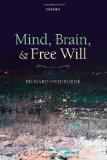
Mind, Brain, and Free Will by Richard Swinburne (Oxford University Press, USA, 2013)
(amazon.co.uk)
Book description from the publisher:
Mind, Brain, and Free Will presents a powerful new case for substance dualism (the idea that humans consist of two parts–body and soul) and for libertarian free will (that humans have some freedom to choose between alternatives, independently of the causes which influence them). Richard Swinburne argues that answers to questions about mind, body, and free will depend crucially on the answers to more general philosophical questions. He begins by analyzing the criteria for one event being the same as another, one substance being the same as another, and a state of affairs being metaphysically possible; and then goes on to analyze the criteria for a belief about these issues being justified. Pure mental events (including conscious events) are distinct from physical events and interact with them. Swinburne claims that no result from neuroscience or any other science could show that interaction does not take place; and illustrates this claim by showing that recent scientific work (such as Libet’s experiments) has no tendency whatever to show that our intentions do not cause brain events. He goes on to argue for agent causation, and claims that–to speak precisely–it is we, and not our intentions, that cause our brain events. It is metaphysically possible that each of us could acquire a new brain or continue to exist without a brain; and so we are essentially souls. Brain events and conscious events are so different from each other that it would not be possible to establish a scientific theory which would predict what each of us would do in situations of moral conflict. Hence given a crucial epistemological principle (the Principle of Credulity) we should believe that things are as they seem to be: that we make choices independently of the causes which influence us. According to Swinburne’s lucid and ambitious account, it follows that we are morally responsible for our actions.
Comments (0)
- new books,philosophy of mind
February 5, 2013
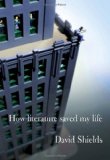
How Literature Saved My Life by David Shields (Knopf, 2013)
(kindle ed.), (amazon.co.uk)
Book description from the publisher:
In this wonderfully intelligent, stunningly honest, and painfully funny book, acclaimed writer David Shields uses himself as a representative for all readers and writers who seek to find salvation in literature.
Blending confessional criticism and anthropological autobiography, Shields explores the power of literature (from Blaise Pascal’s Pensées to Maggie Nelson’s Bluets, Renata Adler’s Speedboat to Proust’s A Remembrance of Things Past) to make life survivable, maybe even endurable. Shields evokes his deeply divided personality (his “ridiculous” ambivalence), his character flaws, his woes, his serious despairs. Books are his life, but when they come to feel unlifelike and archaic, he revels in a new kind of art that is based heavily on quotation and consciousness and self-consciousness–perfect, since so much of what ails him is acute self-consciousness. And he shares with us a final irony: he wants “literature to assuage human loneliness, but nothing can assuage human loneliness. Literature doesn’t lie about this–which is what makes it essential.”
A captivating, thought-provoking, utterly original way of thinking about the essential acts of reading and writing.
Google Books preview:
See also: Author’s website
Comments (0)
- culture,new books,reading