[ View menu ]

Archive

new book – ‘Big Data: A Revolution That Will Transform How We Live, Work, and Think’ by Viktor Mayer-Schonberger and Kenneth Cukier

March 9, 2013

Big Data

Big Data: A Revolution That Will Transform How We Live, Work, and Think by Viktor Mayer-Schonberger and Kenneth Cukier (Eamon Dolan/Houghton Mifflin Harcourt, 2013)

(kindle ed.), (amazon.co.uk)

Book description from the publisher:

A revelatory exploration of the hottest trend in technology and the dramatic impact it will have on the economy, science, and society at large.

Which paint color is most likely to tell you that a used car is in good shape? How can officials identify the most dangerous New York City manholes before they explode? And how did Google searches predict the spread of the H1N1 flu outbreak?

The key to answering these questions, and many more, is big data. “Big data” refers to our burgeoning ability to crunch vast collections of information, analyze it instantly, and draw sometimes profoundly surprising conclusions from it. This emerging science can translate myriad phenomena—from the price of airline tickets to the text of millions of books—into searchable form, and uses our increasing computing power to unearth epiphanies that we never could have seen before. A revolution on par with the Internet or perhaps even the printing press, big data will change the way we think about business, health, politics, education, and innovation in the years to come. It also poses fresh threats, from the inevitable end of privacy as we know it to the prospect of being penalized for things we haven’t even done yet, based on big data’s ability to predict our future behavior.

In this brilliantly clear, often surprising work, two leading experts explain what big data is, how it will change our lives, and what we can do to protect ourselves from its hazards. Big Data is the first big book about the next big thing.

Google Books preview:

See also: free Kindle ebook Big Data Now: 2012 Edition from O’Reilly Media

& (amazon.co.uk)

Comments (0) - culture,new books

new book – ‘Creative Intelligence: Harnessing the Power to Create, Connect, and Inspire’ by Bruce Nussbaum

March 5, 2013

Creative Intelligence

Creative Intelligence: Harnessing the Power to Create, Connect, and Inspire by Bruce Nussbaum (HarperBusiness, 2013)

(kindle ed.), (amazon.co.uk)

Book description from the publisher:

Offering insights from the spheres of anthropology, psychology, education, design, and business, Creative Intelligence by Bruce Nussbaum, a leading thinker, commentator, and curator on the subjects of design, creativity, and innovation, is first book to identify and explore creative intelligence as a new form of cultural literacy and as a powerful method for problem-solving, driving innovation, and sparking start-up capitalism.

Nussbaum investigates the ways in which individuals, corporations, and nations are boosting their creative intelligence — CQ—and how that translates into their abilities to make new products and solve new problems. Ultimately, Creative Intelligence shows how to frame problems in new ways and devise solutions that are original and highly social.

Smart and eye opening, Creative Intelligence: Harnessing the Power to Create, Connect, and Inspire illustrates how to connect our creative output with a new type of economic system, Indie Capitalism, where creativity is the source of value, where entrepreneurs drive growth, and where social networks are the building blocks of the economy.

Comments (0) - cognitive science,new books,psychology

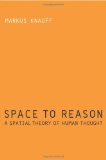
new book – ‘Space to Reason: A Spatial Theory of Human Thought’ by Markus Knauff

March 1, 2013

Space to Reason

Space to Reason: A Spatial Theory of Human Thought by Markus Knauff (MIT Press, 2013)

(amazon.co.uk)

Book description from the publisher:

Many scholars believe that visual mental imagery plays a key role in reasoning. In Space to Reason, Markus Knauff argues against this view, proposing that visual images are not relevant for reasoning and can even impede the process. He also argues against the claim that human thinking is solely based on abstract symbols and is completely embedded in language. Knauff proposes a third way to think about human reasoning that relies on supramodal spatial layout models, which are more abstract than pictorial images and more concrete than linguistic representations. He argues that these spatial layout models are at the heart of human thought, even thought about nonspatial relations in the world.

For Knauff the visual images that we so often associate with reasoning are only in the foreground of conscious experience. Behind the images, the actual logical work is carried out by reasoning-specific operations on these spatial layout models. Knauff also offers a solution to the problem of indeterminacy in human reasoning, introducing the notion of a preferred layout model, which is one layout model among others that has the best chance of being mentally constructed and thus guides the further process of thought. Knauff’s “space to reason” theory covers the functional, the algorithmic, and the implementational level of analysis and is corroborated by psychological experiments, functional brain imaging, and computational modeling.

Google Books preview:

Comments (0) - cognitive science,new books

Amazon’s “Big Spring Books” in Nonfiction

February 28, 2013

Comments (0) - Uncategorized

The Big Deal at Amazon.com: 500+ Kindle ebooks up to 88% off

February 22, 2013

Now through March 10 there’s a “Big Deal” on over 500 Kindle ebooks up to 88% off at Amazon.com. (Note their disclaimer: “Individual books may have additional territory restrictions, and not all deals are available in all territories. Amazon may modify the selection of books offered at any time.”)

Nonfiction selections include:
This Will Make You Smarter

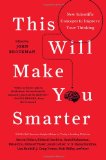
This Will Make You Smarter: 150 New Scientific Concepts to Improve Your Thinking edited by John Brockman for $2.99.

Book description from the publisher:

Edge.org presents brilliant, accessible, cutting-edge ideas to improve our decision-making skills and improve our cognitive toolkits, with contributions by Nassim Nicholas Taleb, Richard Dawkins, Brian Eno, Steven Pinker, and more. Featuring a foreword by New York Times columnist David Brooks and edited by John Brockman, This Will Make You Smarter presents some of the best wisdom from today’s leading thinkers—to make better thinkers out of the leaders of tomorrow.
Labyrinth of Time

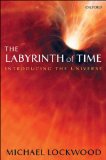
The Labyrinth of Time: Introducing the Universe by Michael Lockwood for $3.99.


Book description from the publisher:


Modern physics has revealed the universe as a much stranger place than we could have imagined. The puzzle at the centre of our knowledge of the universe is time.

Michael Lockwood takes the reader on a fascinating journey into the nature of things. He investigates philosophical questions about past, present, and future, our experience of time, and the possibility of time travel. And he provides the most careful, lively, and up-to-date introduction to the physics of time and the structure of the universe. He guides us step by step through relativity theory and quantum physics, introducing and explaining the ground-breaking ideas of Newton and Boltzmann, Einstein and Schroedinger, Penrose and Hawking. We zoom in on the behaviour of molecules and atoms, and pull back to survey the expansion of the universe. We learn about entropy and gravity, black holes and wormholes, about how it all began and where we are all headed. Lockwood’s aim is not just to boggle the mind but to lead us towards an understanding of the science and philosophy. Things will never seem the same again after a voyage through The Labyrinth of Time.
Magic Universe

Magic Universe: A Grand Tour of Modern Science by Nigel Calder for $2.99.

Book description from the publisher:

As a prolific author, BBC commentator, and magazine editor, Nigel Calder has spent a lifetime spotting and explaining the big discoveries in all branches of science. In Magic Universe, he draws on his vast experience to offer readers a lively, far-reaching look at modern science in all its glory, shedding light on the latest ideas in physics, biology, chemistry, medicine, astronomy, and many other fields.

What is truly magical about Magic Universe is Calder’s incredible breadth. Migrating birds, light sensors in the human eye, black holes, antimatter, buckyballs and nanotubes–with exhilarating sweep, Calder can range from the strings of a piano to the superstrings of modern physics, from Pythagoras’s theory of musical pitch to the most recent ideas about atoms and gravity and a ten-dimensional universe–all in one essay. The great virtue of this wide-ranging style–besides its liveliness and versatility–is that it allows Calder to illuminate how the modern sciences intermingle and cross-fertilize one another. Indeed, whether discussing astronauts or handedness or dinosaurs, Calder manages to tease out hidden connections between disparate fields of study. What is most wondrous about the “magic universe” is that one can begin with stellar dust and finish with life itself.

Drawing on interviews with more than 200 researchers, from graduate students to Nobel prize-winners, Magic Universe takes us on a high-spirited tour through the halls of science, one that will enthrall everyone interested in science, whether a young researcher in a high-tech lab or an amateur buff sitting in the comfort of an armchair.
How Invention Begins

How Invention Begins: Echoes of Old Voices in the Rise of New Machines by John H. Lienhard for $1.99.


Book description from the publisher:


In How Invention Begins, Lienhard reconciles the ends of invention with the individual leaps upon which they are built, illuminating the vast web of individual inspirations that lie behind whole technologies. He traces, for instance, the way in which thousands of people applied their combined inventive genius to airplanes, railroad engines, and automobiles. As he does so, it becomes clear that a collective desire, an upwelling of fascination, a spirit of the times–a Zeitgeist–laid its hold upon inventors. The thing they all sought to create was speed itself. Likewise, Lienhard shows that when we trace the astonishingly complex technology of printing books, we come at last to that which we desire from books–the knowledge, the learning, that they provide. Can we speak of speed or education as inventions? To do so, he concludes, is certainly no greater a stretch than it is to call radio or the telephone an “invention.”

Throughout this marvelous volume, Lienhard illuminates these webs of insight or inspiration by weaving a fabric of anecdote, history, and technical detail–all of which come together to provide a full and satisfying portrait of the true nature of invention.
Comments (0) - Uncategorized