April 18, 2013
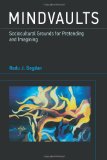
Mindvaults: Sociocultural Grounds for Pretending and Imagining by Radu J. Bogdan (MIT Press, 2013)
(amazon.co.uk)
Book description from the publisher:
The human mind has the capacity to vault over the realm of current perception, motivation, emotion, and action, to leap — consciously and deliberately — to past or future, possible or impossible, abstract or concrete scenarios and situations. In this book, Radu Bogdan examines the roots of this uniquely human ability, which he terms “mindvaulting.” He focuses particularly on the capacities of pretending and imagining, which he identifies as the first forms of mindvaulting to develop in childhood. Pretending and imagining, Bogdan argues, are crucial steps on the ontogenetic staircase to the intellect. Bogdan finds that pretending and then imagining develop from a variety of sources for reasons that are specific and unique to human childhood. He argues that these capacities arise as responses to sociocultural and sociopolitical pressures that emerge at different stages of childhood. Bogdan argues that some of the properties of mindvaulting — including domain versatility and nonmodularity — resist standard evolutionary explanations. To resolve this puzzle, Bogdan reorients the evolutionary analysis toward human ontogeny, construed as a genuine space of evolution with specific pressures and adaptive responses. Bogdan finds that pretending is an ontogenetic response to sociocultural challenges in early childhood, a pre-adaptation for imagining; after age four, the adaptive response to cooperative and competitive sociopolitical pressures is a competence for mental strategizing that morphs into imagining.
Google Books preview:
Comments (0)
- mind,new books,psychology
April 10, 2013
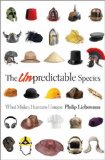
The Unpredictable Species: What Makes Humans Unique by Philip Lieberman (Princeton University Press, 2013)
(amazon.co.uk)
Book description from the publisher:
The Unpredictable Species argues that the human brain evolved in a way that enhances our cognitive flexibility and capacity for innovation and imitation. In doing so, the book challenges the central claim of evolutionary psychology that we are locked into predictable patterns of behavior that were fixed by genes, and refutes the claim that language is innate. Philip Lieberman builds his case with evidence from neuroscience, genetics, and physical anthropology, showing how our basal ganglia–structures deep within the brain whose origins predate the dinosaurs–came to play a key role in human creativity. He demonstrates how the transfer of information in these structures was enhanced by genetic mutation and evolution, giving rise to supercharged neural circuits linking activity in different parts of the brain. Human invention, expressed in different epochs and locales in the form of stone tools, digital computers, new art forms, complex civilizations–even the latest fashions–stems from these supercharged circuits.
The Unpredictable Species boldly upends scientifically controversial yet popular beliefs about how our brains actually work. Along the way, this compelling book provides insights into a host of topics related to human cognition, including associative learning, epigenetics, the skills required to be a samurai, and the causes of cognitive confusion on Mount Everest and of Parkinson’s disease.
See also: Publisher’s webpage, with link to Chapter 1 pdf
Comments (0)
- cognitive science,human evolution,language,new books
April 8, 2013
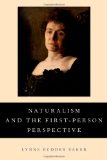
Naturalism and the First-Person Perspective by Lynne Rudder Baker (Oxford University Press, USA, 2013)
(amazon.co.uk)
Book description from the publisher:
Science and its philosophical companion, Naturalism, represent reality in wholly nonpersonal terms. How, if at all, can a nonpersonal scheme accommodate the first-person perspective that we all enjoy? In this volume, Lynne Rudder Baker explores that question by considering both reductive and eliminative approaches to the first-person perspective. After finding both approaches wanting, she mounts an original constructive argument to show that a nonCartesian first-person perspective belongs in the basic inventory of what exists. That is, the world that contains us persons is irreducibly personal.
After arguing for the irreducibilty and ineliminability of the first-person perspective, Baker develops a theory of this perspective. The first-person perspective has two stages, rudimentary and robust. Human infants and nonhuman animals with consciousness and intentionality have rudimentary first-person perspectives. In learning a language, a person acquires a robust first-person perspective: the capacity to conceive of oneself as oneself, in the first person. By developing an account of personal identity, Baker argues that her theory is coherent, and she shows various ways in which first-person perspectives contribute to reality.
Google Books preview:
Comments (0)
- Uncategorized